Mustard Greens: The Production Areas of Mustard Essential Oil and the Benefits and Effects of Mustard Root, plus the Difference Between Mustard Greens and Mustard Cabbage
Where does mustard essential oil come from: Mustard greens grow in plains or low hilly areas. Apart from high-cold and arid regions, mustard greens have no distribution boundary in China. From the coastal provinces in the east to the Xinjiang Uygur Autonomous Region in the west, from Sanya City in Hainan Province in the south to Mohe City in Heilongjiang Province in the north. Mustard greens are cultivated from the middle and lower reaches of the Yangtze River Plain to the Qinghai-Tibet Plateau. They are cultivated most extensively in the four counties of Yunlin, Chiayi, Hsinchu and Miaoli.
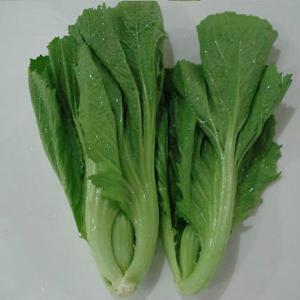
Benefits and Effects of Mustard Root
Mustard root is a vegetable that many people have never eaten. This vegetable helps regulate the stomach and intestines, clears heat and detoxifies, promotes urination and reduces swelling, and stimulates the appetite and aids digestion. It is quite effective at relieving swollen and painful gums, gum ulcers, constipation, diarrhea and abdominal bloating. Although it is a fairly common good food in daily life and is very popular, it can be used not only to make pickles but also to make other snacks.
The Difference Between Mustard Greens and Mustard Cabbage
Mustard greens: an annual herbaceous plant of the genus Brassica in the family Brassicaceae, reaching up to 150 cm in height. The young stems and leaves have bristles and a spicy taste; the stems are erect, and the leaf stalks have small lobes; the lower stem leaves are relatively small with notched or toothed edges, and the upper stem leaves are narrowly lanceolate with inconspicuous sparse teeth or entire margins. The raceme is terminal and elongates after flowering; the flowers are yellow, the sepals pale yellow, oblong-elliptic, upright and spreading; the petals are obovate, the siliques linear, and the seeds spherical and purplish brown. It flowers from March to May and fruits from May to June.
Mustard cabbage: a plant of the genus Brassica in the family Brassicaceae. A biennial herbaceous plant native to Asia. (Also known as large mustard greens or watered salted greens.) It is a leaf mustard belonging to the family Brassicaceae and is a long-day crop. It prefers cool and moist climatic conditions but is not tolerant of frost. Heading mustard cabbage can be eaten like other leafy vegetables, and is especially suitable for processing; it can be processed into more than 20 series of products.