The History of Dill Essential Oil and the Difference Between Dill and Fennel
Historical records of dill essential oil and its development: originally from southwestern Asia, dill is an annual or biennial plant that can grow to about 1m tall, with green, leathery leaves, small yellow umbel flowers, and tiny, flat seeds. It was much loved by the Egyptians, Greeks and Romans, who called it "Anethon," from which the Latin name of the dill plant evolved. Its common name comes from the Anglo-Saxon "dylle or dylla," which later became "dill." The word means "to calm," and it has a soothing effect. In the Middle Ages, it was used as a charm against magic. From 1812 onward, after the Frankish emperor Charlemagne (742-814) ordered this plant to be widely cultivated, it came into widespread use, especially as a culinary plant.
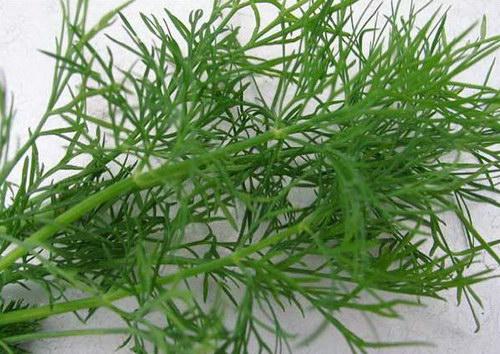
The difference between dill and fennel
1. Differences in shape
Dill and fennel are very similar, and to tell them apart by appearance you can only do so after the seeds have dried. It looks very much like fennel, also bearing small yellow flowers and producing small fruits. Its leaves are bright green and feather-shaped, and from the leaves to the flowers they are basically impossible to distinguish. Once dried, the dill achene has a main ridge and two wing-like side ridges, giving it one more edge than fennel; whereas the fennel schizocarp has only five raised main ridges, and these are not obvious.
2. Differences in taste
The two differ in taste. Dill has a very rich, pungent aroma, but its scent is not harsh; it smells very mild and can help soothe the emotions, and it has a slight creamy note; whereas fennel's scent is sweeter and its flavor is stronger.