Historical records of lemongrass essential oil What are they? Do you know what stories and legends exist? It is often said that drinking lalang grass rhizome infusion has benefits. Let us learn about the benefits of drinking lalang grass rhizome infusion together.
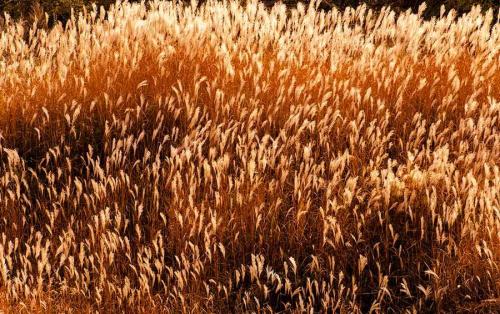
[Song says] It grows everywhere. In spring it sprouts, spreading over the ground like needles; commonly called thatch needle, it can also be eaten, and is very beneficial for children. In summer it produces white flowers in a soft fluffy mass, and by autumn it withers. Its roots are very white; they are harvested in the sixth month. There is also jian, which is likewise a kind of thatch. Lu Ji's Commentary on the Flora of the Classic of Poetry says: ying resembles thatch but is smooth and hairless; within five cun below the root there is a white powder; it is supple and tough and suitable for making ropes, and is especially good when retted. The unretted kind is called wild jian, and when used medicinally its effects equal those of thatch.
[Shizhen says] Thatch includes several kinds: white thatch, jian thatch, yellow thatch, fragrant thatch, and ba thatch; their leaves all resemble one another. White thatch is short and small; in the third and fourth months it opens white flowers in spikes and bears fine seeds. Its roots are very long, white and soft like sinew and jointed, sweet in taste; commonly called silk thatch; it can be used for thatching roofs and for ceremonial wrapping, and the thatch root used in the Materia Medica is this one. When its roots are dried, they shine at night, so when they rot they turn into fireflies. Jian thatch grows only on mountains; it resembles white thatch but is taller; in early autumn it puts out stems and blooms in spikes like silvergrass flowers, and its seeds are pointed and black, about one fen long, sticking to clothes and pricking people. Its roots are short and hard like fine bamboo roots, jointless and slightly sweet; it can also be used medicinally, but its effects do not match white thatch; this is what the Erya calls white-flowered wild jian. Yellow thatch resembles jian thatch, but leaves grow from the stem, there is white powder below the stem, and yellow hairs at the root head; the roots are also short, fine, hard, and jointless; in late autumn it blooms in spikes like jian thatch and can be made into cords; anciently called yellow jian; the jian root used in the Bielu is this one. Fragrant thatch is also called jing thatch, and also qiong thatch; it grows in Hunan and between the Yangtze and Huai rivers; its leaves have three ridges and its scent is fragrant; it can be used for wrapping and for straining wine; this is what the Tribute of Yu calls the wrapped box of jing thatch from Jingzhou. Ba thatch grows in clumps; its leaves are as large as cattail and six or seven chi long; there are two kinds, namely mang. See below under mang.
The Records of the Grand Historian: Basic Annals of Emperor Xiaowu records: "Thereupon the Son of Heaven also carved a jade seal reading 'General of the Heavenly Way,' and sent envoys wearing feather garments to stand at night upon white thatch; the General of the Five Benefits also wore feather garments and stood upon white thatch to receive the seal, to show that he was not treated as a subject."
Benefits of Drinking Lalang Grass Rhizome Infusion
1. Diuretic effect
The diuretic effect is a very notable effect of lalang grass rhizome; research shows this may be related to its rich potassium salts, so clinically it can be used to treat edema, heat strangury, and other diseases.
2. Liver-protective effect
Lalang grass rhizome also has a certain anti-hepatitis effect. Research shows that lalang grass rhizome can increase the rate of hepatitis B surface antigen turning negative, thereby helping to improve the cure rate of hepatitis B patients.
3. Effect of lowering the three highs
The effect of lalang grass rhizome in lowering the three highs is mainly due to its lalang grass rhizome polysaccharides, which have a certain regulating and improving effect on blood sugar and blood lipids, and thus are suitable for patients with cardiovascular disease.
4. Antibacterial effect
Pharmacological research shows that lalang grass rhizome also has a certain antibacterial effect, with an inhibitory effect on Shigella dysenteriae, so in daily life it can prevent diseases of bacterial infection such as dysentery.
5. Immune-regulating effect
Pharmacological research shows that lalang grass rhizome strengthens the phagocytic function of macrophages, so it can enhance the body's immune function and achieve the effect of strengthening physical constitution.