Behind Wintergreen Essential Oil: The History and Story of the Holly Tree
Holly (Ilex chinensis Sims): an evergreen tree, a type of flowering plant, and also the only genus under the family Aquifoliaceae. The bark is gray or light gray, with longitudinal grooves, and the twigs are light green and hairless. The leaves are thinly leathery, narrowly oblong or lanceolate, with acuminate tips, wedge-shaped bases, and shallow rounded serrations along the margins; they turn reddish-brown and glossy when dried. The petals are purplish-red or pale purple and curl outward. The fruit is elliptical or nearly spherical, turning deep red when ripe.
Holly reaches a height of roughly 2 to 25 m and includes both trees and shrubs. It is widely distributed across Asia, Europe, northern Africa, North America and South America. In China it is mainly distributed in the provinces and regions south of the Yangtze River basin. The seeds and bark can be used medicinally as a tonic; the leaves have heat-clearing and detoxifying effects and can treat bronchitis and burns; the bark can be used to extract tannin extract; the wood is hard and can be used as material for fine work. The bark contains tannins, protocatechuic acid, volatile oils and more. This tree is a nationally key protected plant. The holly fruit is a berry-like drupe, usually spherical, red when ripe, rarely black, with a membranous or crustaceous exocarp, a fleshy or distinctly leathery mesocarp, and a woody or stony endocarp.
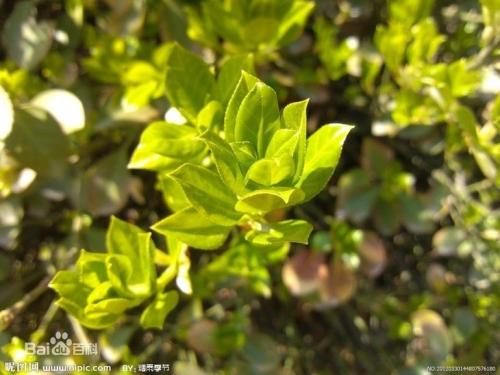
The story of the holly tree:
During the Yuan Dynasty, in Shanyin, Kuaiji, there was a teacher named Tang Yu. His family was poor, and he barely got by teaching a few students while supporting his elderly mother.
At the time, the Tibetan monk Yang Lianzhenjia, who was in charge of the monks of Jiangnan, abused his favor and power, and was cruel, lewd and violent, committing every kind of evil. In order to seize the wealth in the mausoleums of the Southern Song emperors, he decided to dig up the tombs and steal the treasures.
In the winter of the Wuyin year, he led a gang of disciples and grand-disciples to Xiaoshan and began excavating the imperial tombs. After opening the tombs, they looted all the treasures inside, hacked and scattered the remains of the Southern Song emperors, and even set fires, leaving the place in utter disorder.
At that time, Tang Yu was only 32 years old. When he heard of this, he was filled with righteous indignation. He immediately sold off his family property and borrowed money from others, and with great difficulty scraped together more than 200 taels of silver as the cost of burying the remains of the former emperors.
Tang Yu held a banquet and invited some young people from his hometown to eat their fill, then took advantage of the darkness to go to Xiaoshan and begin collecting the scattered remains.
He placed the collected remains in bags made of yellow silk, then put them into wooden boxes, marking on each which tomb it was from, and then buried them behind Lanting Mountain according to the original arrangement order of the tombs. He also went to the front of the main hall of the former Song palace and dug up a holly tree, planting it on the grave as a marker.
Afterward, Tang Yu distributed the remaining silver to everyone as thanks and warned them not to speak of it.
Later, the allusion of the "holly tree" came to be used to describe cherishing the lingering affairs of a former dynasty.