History of Houttuynia cordata Essential Oil and Adverse Reactions from Eating Houttuynia cordata
Historical records of Houttuynia cordata essential oil and its development and changes: The name is found in the "Mingyi Bielu". Su Song of the Tang Dynasty said: "It grows in damp places, and can also spread in shady places in valleys. Its leaves are like buckwheat but plumper, and its stems are purple-red. People on the left bank of the Yangtze River like to eat it raw. In the Guanzhong region it is called zucai. The leaves have a fishy odor, so it is commonly known as yuxingcao (fish mint)." It is produced in the provinces south of the Yangtze River basin in China. As early as the late 1980s, Gaoping Town, Guanghan City, Sichuan, introduced field-scale cultivation, and it has now driven nearly ten thousand mu of planting area in surrounding townships, forming China's largest Houttuynia cordata cultivation base.
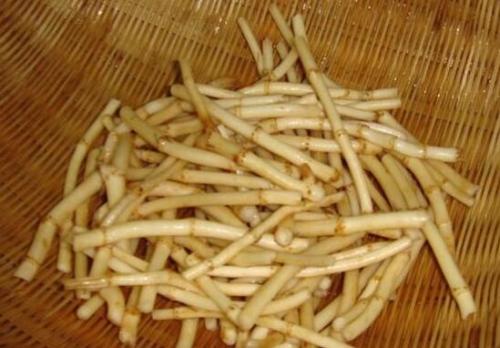
Adverse reactions from eating Houttuynia cordata:
1. Causing bad breath. Houttuynia cordata has a very strong fishy odor. After taking Houttuynia cordata soaked in water, the breath will become foul, and it is difficult to eliminate in a short time.
2. Causing allergies. Some people may experience allergic reactions when drinking Houttuynia cordata soaked in water or injecting Houttuynia cordata injection. The main manifestations are drug-induced dermatitis, peripheral neuritis, allergic purpura and other symptoms. Therefore, people with an allergic constitution must pay special attention when taking Houttuynia cordata soaked in water. After an allergy to Houttuynia cordata occurs, medical treatment should be sought immediately, and consumption of Houttuynia cordata should be stopped, otherwise it may lead to serious consequences. In severe cases, it can cause anaphylactic shock and even death, which should be taken seriously enough.
3. Causing deficiency cold of the spleen and stomach. Houttuynia cordata is slightly cold in nature. Taking too much can easily lead to deficiency cold of the spleen and stomach, thereby triggering stomach disease and causing physical weakness, etc. In daily life, when eating Houttuynia cordata, you must consider your own physical condition and consume it in moderation. Children in particular need to strictly control the amount.
4. Causing local pain. Houttuynia cordata itself contains toxicity, but the toxicity is very small. Under normal circumstances, this toxicity does not cause much harm to the human body. However, it can sometimes cause local pain. Therefore, Houttuynia cordata must be eaten within an appropriate range, and it must not be consumed in excess. 3 to 5 qian each time (1 to 2 liang if fresh) is sufficient.
5. Causing aristolochic acid nephropathy. Houttuynia cordata contains aristolactam. Aristolactam-induced kidney damage is similar to that of aristolochic acid, and excessive consumption of Houttuynia cordata may trigger aristolochic acid nephropathy.
6. Causing diarrhea. Houttuynia cordata is pungent in taste, cold and cool in nature, and enters the lung meridian. Because Houttuynia cordata is cold in nature, it is more suitable for people with a lung-heat constitution. Ordinary people taking too much Houttuynia cordata soaked in water may easily lead to body cold, thereby causing symptoms such as diarrhea. Therefore, drinking Houttuynia cordata soaked in water should be done in moderation and not consumed excessively.