Historical Records of Agarwood Essential Oil and the Origin of the Name Agarwood
Historical records of agarwood essential oil and how has it developed and changed? Why is agarwood called chenxiang? Agarwood sinks when placed in water, hence the name chenxiang (sinking incense); because of interchangeable characters in ancient writing, "chen" was also commonly written as "shen". Let us take a look together.
The origin of the name agarwood is undoubtedly its property of sinking in water. In fact, however, origin, quality, density, aroma, the conditions of resin formation and harvesting, the location of resin formation and the shape of the fragrant wood can all serve as bases for distinguishing agarwood and for naming it, as has been the case since ancient times.
Agarwood produced in the Indochinese Peninsula can be divided into three types according to the felling area: Aquilaria sinensis, honey agarwood trees, and mixed plantings of honey agarwood trees and eaglewood trees. Most of the high-quality honey agarwood raw material is sold on the Hui'an agarwood trading market in Vietnam, so agarwood from the Indochinese Peninsula is also called Hui'an-type agarwood.
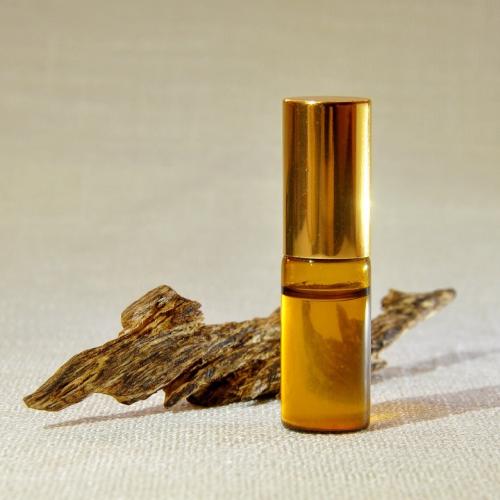
Often the finest raw materials for agarwood essential oil are fragile and tiny shell pieces and shredded hooking scraps. Only agarwood essential oil obtained by the traditional oil-extraction production method possesses excellent adhesion and scent longevity, which is also the foundation for becoming a high-quality agarwood essential oil. Newly extracted agarwood essential oil has a rich scent at first smell with a slight coolness, but its lingering scent changes wonderfully over time and remains lasting.
Agarwood essential oil, like the raw agarwood material and fragrant products market, has no clear and accurate grading standards. The quality of the raw material determines the fragrance character and scent of agarwood essential oil. The essential oil produced in the Indochinese Peninsula has always been the representative of high-grade agarwood essential oil; its honey-scented character, rich aroma and long-lasting scent meet the needs of a broad range of essential oil enthusiasts.
Agarwood can be used as medicine. From the perspective of traditional Chinese medicine, agarwood essential oil extracted by traditional methods can also be made into medicine. Using agarwood essential oil to treat illness and emergencies is quite common, and there are also incense lovers who understand traditional Chinese medicine and use agarwood essential oil to make medicine or for conditioning. However, a reminder to incense lovers who like agarwood: it should still be used cautiously under the guidance of a traditional Chinese medicine practitioner. Agarwood scraps are mostly used for incense or for brewing tea; waves of tea fragrance accompanied by honey scent drift gently by, offering a distinctive flavor as well!