The History of Mustard Essential Oil and the Differences Between Mustard, Mustard Tuber, and Turnip
Historical records of mustard essential oil and its development: It is an annual plant with a much-branched stem and lobed leaves somewhat shaped like a small harp, about 16cm tall. It blooms with bright yellow flowers throughout the summer and produces upright 4-angled small pods with dark brown seeds. In herbal medicine, mustard seeds are used to treat the digestive system, have an appetite-stimulating effect, and can treat colds, chills, chilblains, rheumatism, arthritis, and lower back pain.
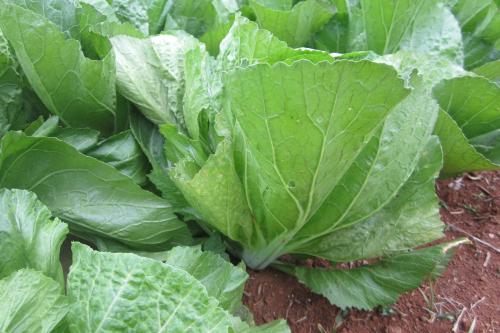
Mustard prefers a cool and moist environment, dislikes heat and drought, is not tolerant of frost, and requires strong light conditions. Bud formation, stem elongation, flowering, and fruiting require vernalization through low temperatures and long-day conditions. Its root system is well developed, with main and lateral roots distributed in about a 30cm soil layer. It likes fertilizer and has a relatively high demand for nitrogen, phosphorus, and potassium fertilizers. Mustard has a relatively short growing period, about 30 days from sowing to harvest, and can be harvested when it has 10-12 leaves.
The difference between mustard and mustard tuber
It should be turnip (manjing), which is different from mustard tuber (jiecai geda). Mustard tuber refers to the root stem of mustard! The two are very similar [Chinese name]: turnip [wú jīng], manjing [mán jīng] (not read as màn, wàn) [1] [English name]: turnip [Alternative names]: manjing, Zhuge cai, datoucai, yuan caitou, yuan gen, pan cai, boliuke [Scientific name]: Brassica rapa Linn.var.rapa [Distribution]: Native to Europe, now cultivated in Europe, Asia, and the Americas. [Classification]: Cruciferae (Brassicaceae), Brassica genus, turnip (species), original variety [Varieties]: Golden Bell turnip, Tokyo Small turnip, Kanamachi turnip [Morphology]: Appearance resembles radish, plant height about 20-50 cm, with a round or oval taproot underground. Small varieties weigh only a few dozen grams, while large varieties can weigh over 10 kg. Leaves are pinnately compound or spoon-shaped lobed, with coarse hairs. Flowers are terminal, with yellow corollas. Root skin can be white, light green, or purple. [Uses]: Used as a vegetable. The enlarged fleshy root is used for food. Every 100 grams of fresh weight contains 87-95 grams of water, 3.8-6.4 grams of carbohydrates, 0.4-2.1 grams of crude protein, 0.8-2.0 grams of cellulose, 19.2-63.3 milligrams of vitamin C, and other mineral salts. The fleshy root is tender and firm, used for stir-frying, boiling, or pickling. Mustard tuber [Brassica napiformis (Paill.&Bois) L.H.Bailey] (Beijing), also called mustard or yugen (Liaoning), is a species in the Cruciferae family, Brassica genus. The tuberous root is salted or pickled for consumption; it is also cut into thin strips with radish to make a spicy dish. Biennial herb, 60-150 cm tall, entire plant hairless, slightly powdery; tuberous root conical, 7-10 cm in diameter, half above ground, outer skin white. The mustard tuber root is fleshy, white or yellow, with a spicy taste, half underground, with one longitudinal groove on each side, and fibrous roots grow inside the longitudinal grooves; stem erect, branching from the base. Basal leaves few, lyrate-pinnatifid, 10-20 cm long, at least when young with a few bristles on the veins and margins below, terminal lobe broadly ovate, up to 9 cm long, apex rounded-obtuse, margin with irregular sharp teeth, base with 2 prominent lateral lobes and several small lobes, loosely arranged; petiole 3-4.5 cm long; cauline leaves similar to basal leaves, 5-12 cm long; upper cauline leaves oblong-lanceolate, nearly entire or entire, sessile or slightly amplexicaul. Flowers light yellow, 7-8 mm in diameter; sepals lanceolate or oblong-ovate, about 6 mm long; petals obovate, 8-10 mm long, apex slightly emarginate, with a slender claw. Siliques linear, 3-5 cm long, slightly laterally compressed, beak conical, 5-7 mm long; pedicels 5-8 mm long. Seeds spherical, about 1.5 mm in diameter, dark brown, with fine reticulate veins. Flowering period April-May, fruiting period May-June.
What is turnip
This is turnip, similar to radish, belonging to the Brassica genus. Immature turnip flesh is relatively hard with less water content. After the turnip matures, the flesh becomes softer and can be used as a staple food. The turnip stem is erect, with branches on the upper half, and basal leaves are green. The basal leaves are multiple leaves growing densely on the short stem at the base of the root. This plant is mainly distributed in Xinjiang, China, in Uyghur regions, because the soil there has deep soil layers, convenient drainage and irrigation, and fertile soil. It is suitable for growing turnips. Turnip can also be used as a medicinal material, taken internally or applied externally, but it must not be eaten in large quantities.