Historical Records of Melaleuca Oil and an Introduction to Melaleuca alternifolia
What are the historical records and development of melaleuca oil? What is Melaleuca alternifolia? Did you know? Let's take a look together.
A plant originating from the Australian center of origin. There are 2 species cultivated in China. Trees or shrubs. Leaves alternate, a few opposite, leathery, lanceolate or linear, with oil gland dots, several basal veins; petiole short or absent. Flowers sessile, arranged in spikes or heads, sometimes solitary in leaf axils, inflorescence axis growing indefinitely, continuing to grow after flowering; bracts deciduous; calyx tube nearly spherical or bell-shaped, sepals 5, deciduous or persistent; petals 5; stamens numerous, greenish-white, filaments slightly united at the base into 5 bundles, and opposite the petals, anthers dorsifixed, anther cells parallel, longitudinally dehiscent; ovary inferior or semi-inferior, adnate to the calyx tube, apex protruding, 3-locular, style linear, stigma more or less enlarged, ovules numerous. Capsule hemispherical or spherical, dehiscing at the apex; seeds nearly triangular, seed coat thin, embryo straight.
Essential oil is a volatile aromatic substance extracted from the flowers, leaves, stems, roots or fruits of plants through steam distillation, expression, cold maceration or solvent extraction.
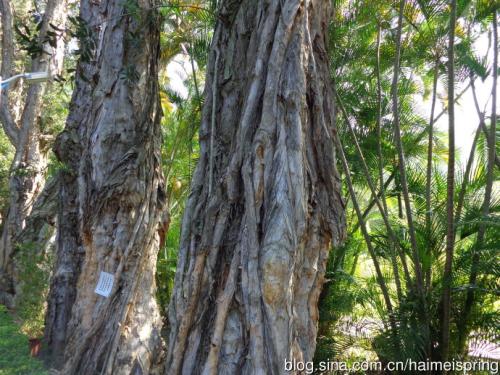
What is Melaleuca alternifolia? This species was first discovered in Australia, about 3 m tall. Although it is called tea tree, it has nothing to do with tea. Its branches are relatively long, and the flowers are white. The tea tree has strong vitality; even if cut down, it can survive for a period of time.
Anyone with even a little exposure to essential oils and aromatherapy will know the wonders of tea tree oil. Historically, Australian Aboriginal peoples used tea tree leaves to treat wounds very early on, and they could also be used as an antidote for snake bites; during the World Wars it was also used as an anti-inflammatory agent. Internationally renowned aromatherapy expert Valerie Ann Worwood lists tea tree among the "ten most versatile and most useful essential oils" in her "The Complete Book of Essential Oils and Aromatherapy," and another aromatherapy master, Daniele Ryman, also considers tea tree to be "the best first-aid tool known." In Australia, tea tree has become one of the important economic crops, and various related products are being fully developed.