How Camphor Essential Oil Is Made, and the Difference Between Camphor and Mothballs
What does the production and processing of camphor essential oil actually involve? What are the things to watch out for? In what ways do camphor and mothballs differ, do you know? Let's take a look together.
Evaporation process: The workers use a machine to shave the roots of the camphor tree (Cinnamomum camphora) into small wood chips, then prepare a large pot, fill it half full with water, and place a piece of wire mesh above the water. A measured amount of camphor wood chips is placed on the wire mesh, and a wooden barrel that fits the pot exactly is placed over it. A round opening is made at the top of the barrel, from which a bamboo tube leads out, and several more bamboo tubes connect it to the ground and through a cooling pool; the end is the outlet for the camphor wood oil. When the bottom of the pot is heated, the camphor wood oil in the chips evaporates and rises with the steam, passing through the bamboo tubes at the top of the barrel all the way to the cooling pool; after passing through the cooling pool, the steam is cooled and becomes liquid, which flows out from the end. The workers then separate the oil from the water in what flows out to obtain camphor wood essential oil.
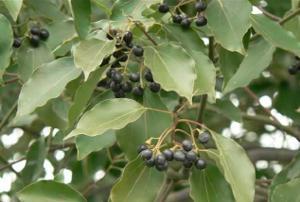
The difference between camphor and mothballs
-
Camphor is generally made from synthetic camphor, and some is made from camphor extracted from the trunk, leaves, roots and branches of the camphor tree. Camphor blocks have stronger insect-killing power than sanitary balls, and after volatilizing they do not leave stains on clothing, so they are more suitable for storing woolen fabrics and protecting them from moths.
-
Mothballs are divided into natural mothballs and synthetic mothballs.
-
Synthetic mothballs are an organic compound; mothballs containing naphthalene are mostly white, have a pungent odor, and sink in water; they are listed as a carcinogen.
-
Natural mothballs, on the other hand, are smooth, colorless or white crystals with a fresh fragrance that float on water. Natural mothballs used for insect prevention, moth prevention and mold prevention are also called stink beads, and were originally an aromatic organic compound extracted from the branches and leaves of the camphor tree. They are also used in medicine and spices, and in medicine they are used as a cardiotonic.