How to Make Vetiver Iris Essential Oil and Its Effects on the Skin
What are the production and processing steps for vetiver essential oil, and what are the effects of vetiver iris on the skin? Let's take a look together.
Method for making vetiver iris essential oil:
The method for making vetiver absolute in the present invention is as follows
1. Cut fresh dried vetiver roots into small pieces (2 to 3 cm) and place them in a continuous extractor for continuous extraction for 4 to 5 hours to obtain an extract liquid.
2. Distill off the petroleum ether from the extract liquid to obtain a viscous extract concrete.
3. Mix the above concrete evenly with four times its amount of 80 to 85% ethanol, leave it at 0 to 10 degrees C for 5 to 12 hours, then filter out the residue (dewaxing) to obtain an alcohol extract liquid.
4. Under 10 mmHg conditions (starting at normal pressure), distill off the alcohol under reduced pressure from this extract liquid; this is grade-two vetiver absolute.
5. Dilute the grade-two product with five times its amount of petroleum ether, then extract once with 2 to 8% sodium carbonate at a volume equal to 2/3 of the petroleum ether volume, and extract once more with an equal volume of 2% sodium carbonate.
6. After dehydrating the above petroleum ether extract liquid with anhydrous sodium carbonate, distill off the petroleum ether; this is grade-one vetiver absolute.
7. Extract the above sodium carbonate aqueous solution repeatedly twice with petroleum ether; its petroleum ether solution is carried over for use in the next batch, and its sodium carbonate aqueous solution is adjusted with HCl to pH = 4 to 5, extracted twice with petroleum ether, and the extract liquid is washed with water to neutrality, dehydrated and concentrated with anhydrous sodium carbonate; these are the acidic fractions khusenic acid and epikhusenic acid.
8. Dissolve the above acidic components in 5 to 12 times their amount of anhydrous tetrahydrofuran (or anhydrous diethyl ether) and seal and let stand; separately, take lithium aluminum hydride powder equal to 20% of the acidic components and dissolve it in 30 to 100 times its amount of anhydrous tetrahydrofuran. Cool both separately in an ice-salt bath for 1 hour, then slowly add the latter to the former while stirring, let stand for one hour, destroy the unreacted lithium aluminum hydride with a small amount of 20% citric acid, let stand for 2 hours and then filter, wash the residue with tetrahydrofuran 1 to 2 times, and combine the tetrahydrofuran liquids. Distill off the tetrahydrofuran to obtain a viscous substance, dissolve it with 5 to 15 times its amount of petroleum ether, wash twice with an equal amount of water, dehydrate with anhydrous sodium sulfate, concentrate under reduced pressure to dryness, then add 1 to 2 times its amount of ethanol and mix evenly, and distill off the ethanol under reduced pressure to obtain khusenol (containing a small amount of epikhusenol). The tetrahydrofuran is reused after dehydration.
9. Adjust the above-obtained khusenol into the grade-one product as needed to obtain premium-grade vetiver absolute. The remaining khusenol can also be made into fragrances such as vetiveryl acetate.
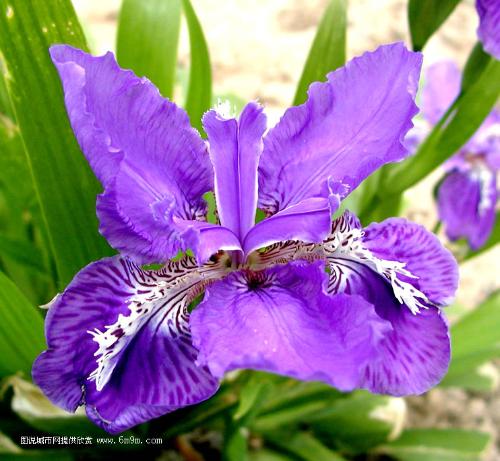
Effects of vetiver iris on the skin
The active components of vetiver iris have good affinity with the skin and can successfully act comprehensively on the deep layers of the skin. When vetiver iris extract is used in skincare products, it can provide abundant plant active substances. Pure plant natural extracts are very safe and are also suitable for sensitive skin.
Iris species have high ornamental value, with bright flower colors, easy cultivation, early sprouting in spring, and very beautiful clusters of green leaves. In gardens they are mostly planted in clumps or in flower borders and beside paths. Their flowers have the characteristics of beautiful leaf color and upright flower stems, and can be used in flower groups, flower clusters, and flower borders. When planting according to the site, iris ornamental grasses with different flower colors, flowering periods, and plant heights can be selected in combination, and other types of flowers can also be selected. There are some varieties with relatively short rhizomes and beards that like to grow in calcareous and drought-tolerant soil, and are especially suitable for use in rock landscapes. When greening, do not plant too many trees; only plant a certain amount of low shrubs in appropriate positions