How Is Garlic Essential Oil Extracted? A Detailed Explanation of the Extraction Process
Let's take a look at the extraction process and key technical points for garlic essential oil.
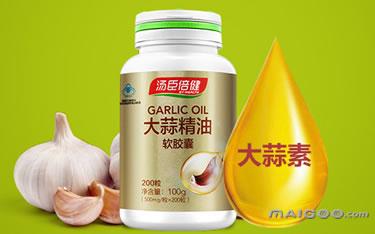
The main extraction methods for garlic oil are: steam distillation, solvent extraction, supercritical extraction, and ultrasound- or microwave-assisted extraction.
The principle is to pass steam into an organic substance that is insoluble or poorly soluble in water but has a certain volatility ( garlic oil has a certain volatility), so that the organic substance is distilled out together with the steam at a temperature below 100 °C, and then further separated to obtain a relatively pure substance. The general process of this method is: peel garlic → wash → add water and mash → enzymatic hydrolysis → steam distillation → oil-water separation → garlic oil.
Steam distillation has the characteristics of simple equipment, low cost, and good stability, and is one of the most commonly used methods. However, because the fermentation and distillation temperatures are relatively high, the activity of alliinase decreases, allicin is lost, and the oil yield is relatively low. Moreover, the resulting garlic oil has a cooked taste and is not fresh enough. Microwaves are electromagnetic waves with a frequency range of 300 MHz to 300,000 MHz. Under the action of a microwave electric field, polar molecules continuously change their positive and negative directions at a rate of 2.45 billion times per second, causing high-speed collisions and friction among molecules that generate high heat. To speed up the leaching rate of allicin and improve leaching efficiency, many researchers have adopted microwave-assisted extraction, and the results show that the effect is significant.