What are the extraction methods for agarwood essential oil?
The production process and technical key points in the production and processing of agarwood essential oil. The essential oil content of agarwood wood is very low; technically, only steam distillation, solvent extraction and supercritical extraction can yield essential oil with economic benefits. In order to extract as much of the essential oil components from agarwood wood as possible, the agarwood wood usually needs to be crushed so that its essential oil components can be separated out more easily.
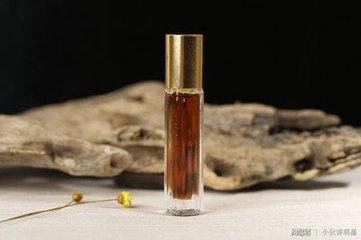
1. Steam distillation
Using steam distillation, the crude oil obtained directly from the oil-water separator is milky white or pale yellow, with relatively poor flowability. At around 5°C it turns waxy, looking somewhat like condensed milk. Its evaporation rate is medium, mellow and sweet, with a cool note and no unpleasant off-odors. The first oil and the refined essential oil look clearer in appearance, but in terms of other physical properties, when different grades of agarwood wood are used, the results obtained by steam distillation differ only in quantity, not in quality. That is to say, using higher-grade agarwood wood yields more essential oil, but its physical properties are basically the same as those of agarwood oil prepared from lower-grade agarwood wood.
2. Solvent extraction
Using solvent extraction, the concrete obtained after removing the solvent by distillation or evaporation is golden yellow, and when the quantity is relatively large it appears black because its transparency is too low. This is because solvent extraction also dissolves out plant waxes, resins and pigments with relatively complex molecular structures. At room temperature (around 15°C) its flowability looks very good, because a considerable amount of solvent remains in it. When the residual solvent is removed again under vacuum, the refined essential oil (volatile components) obtained by rectification is pale yellow, similar in appearance to the product obtained by steam distillation, but slightly darker in color than it (this point is not very certain, because essential oil can also deteriorate and change color due to poor storage and other reasons). The rectification residue is very dark in color and has very poor flowability, sometimes turning waxy at around 15°C (because it contains a large amount of plant wax). This method is relatively common in the industry; when refined agarwood essential oil is prepared by solvent extraction, the yield obtained is higher than that of steam distillation, and the volatile components of agarwood retained are rich, but this method leaves solvent residues.