A Detailed Guide to Making and Using Eucalyptus Essential Oil
How eucalyptus essential oil is made and how it is used. Want to know? Let's take a look.
Making eucalyptus essential oil:
The method for extracting eucalyptus essential oil from eucalyptus leaves is characterized by the following steps:
1. Materials: fresh eucalyptus leaves and eucalyptus branches;
Main tools: high-power grinder, large press, conveyor belt machine, centrifuge, filter screen, extraction tank;
2. Grinding procedure: use a high-power grinder to grind the fresh eucalyptus leaves and eucalyptus branches together into fragments or fibers with a diameter of ≤0.3cm;
3. Add the fragments or fibers to 50~60% water, stir and grind again into a slurry-like mixed pulp, add 2~3% alcohol to the mixed pulp and mix evenly, then let it stand for 2~3 hours, and use a large press to press out a first-grade mixed liquid;
4. Use a centrifuge to precipitate and clarify the mixed liquid to obtain a second-grade mixed liquid;
5. Separate the waxy substance: lower the temperature of the second-grade mixed liquid to 0℃<second-grade mixed liquid temperature<8℃ to precipitate the waxy substance, filter and separate the precipitated waxy substance to obtain a third-grade mixed liquid;
6. Concentrate the third-grade mixed liquid to obtain a concentrated liquid, place the concentrated liquid into an extraction tank, and use carbon dioxide to extract relatively pure eucalyptus essential oil.
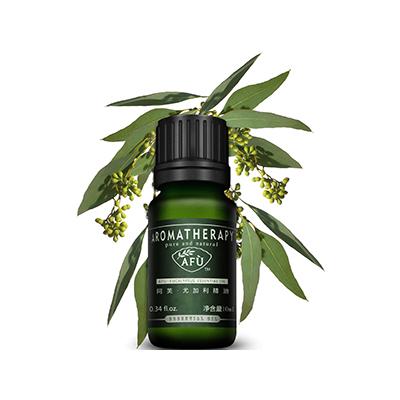
How to use eucalyptus essential oil
Common method 1 for eucalyptus essential oil: incense burner and vaporizer aromatherapy method: in steam therapy, eucalyptus essential oil can be used to treat frequent sneezing, hay fever, flu, respiratory problems and headaches and to promote concentration, and can also be used as an insect repellent.Common method 2 for eucalyptus essential oil: as an added ingredient in compound massage oil or basin baths: eucalyptus essential oil can be used as an ingredient in compound massage oil, or diluted in a basin bath, helping to treat arthritis, asthma, bronchitis, mucus congestion, colds, headaches, rheumatism, sinusitis, catarrh, fatigue and muscle pain.
Common method 3 for eucalyptus essential oil: as an added ingredient in face creams or body lotions: besides relieving muscle spasms and rheumatic pain, eucalyptus essential oil can also accelerate the healing of hard-to-heal wounds and ulcerative wounds. It has a soothing effect on skin rashes and can cleanse skin with excessive secretions.
Common method 4 for eucalyptus essential oil: apply a small amount of pure essential oil: a small amount of pure essential oil can be applied to skin with insect bites or wounds, but be very careful.
Common method 5 for eucalyptus essential oil: add to mouthwash: a very diluted eucalyptus essential oil can be added to mouthwash to treat sore throat.
Essential oils suitable for blending with eucalyptus essential oil: benzoin, thyme, lavender, lemongrass and pine essential oil.