Mustard essential oil and large-leaf mustard: benefits and effects, and how many varieties of mustard there are
Mustard essential oil is extracted from the mustard plant (Brassica nigra, Sinapis nigra and Brassica sinapioides) and belongs to the cruciferous family. There are many kinds of mustard, mainly divided into two major groups: heading mustard and non-heading mustard. The leaves of heading mustard grow from the center outward; the leaves are rounder and thicker, arching into an oval shape, and can be peeled off one by one, usually cooked soft with added water before eating. The leaves of non-heading mustard are thinner and longer with somewhat more fiber, and are more often used for pickling. What effects does mustard essential oil have? And what are the benefits and effects of large-leaf mustard?
4. Treats cough, according to the Tuchao Materia Medica.
How many varieties of mustard there are
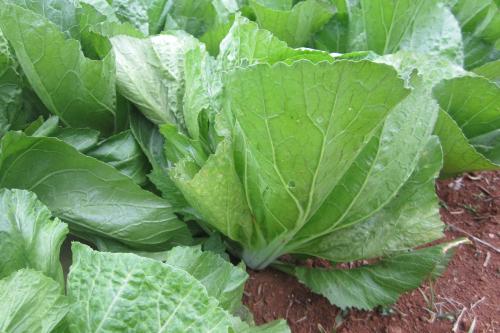
(1) Large-leaf mustard type: both the plant and the leaves are relatively large, the leaf margin is wavy or bluntly serrated with few clefts, and the leaf surface is flat or slightly wrinkled; the petiole is narrow and long or relatively wide.
(2) Flower-leaf mustard type: the leaf margin has obvious clefts, often named according to the degree of fine splitting of the leaf margin, with rich varietal resources, such as lacai.
(3) Tumor mustard type: the petiole is well developed, with protrusions or tumor-like growths of different shapes on the stalk, with rich varietal resources, such as Fuling pickled mustard, ear vegetable, and ercai. (4) Heading mustard type: the petiole and central rib widen, and the central leaves fold and head to form a leaf ball; it is distributed in South China, such as Chaozhou mustard.
(5) Tillering mustard type: commonly known as snow mustard greens, its lateral buds on the shortened stem are well developed, forming tillers, and the number of tillers varies by variety, such as Wuhan yiwo si.
Benefits and effects of large-leaf mustard
Warm in nature, pungent in taste. Enters the lung, stomach, and kidney meridians; has the effects of diffusing the lungs and clearing phlegm, and warming the center and promoting the flow of qi; mainly treats internal abundance of cold fluids, cough with stagnant phlegm, and fullness and oppression in the chest and diaphragm. Conditions such as impaired hearing and vision, swollen and rotting gums, cold abdominal pain, and constipation.Nutritional value (benefits)
1. Refreshes the mind: mustard contains large amounts of reducing substances such as vitamin A, B-complex vitamins, vitamin C, and vitamin D, as well as large amounts of ascorbic acid, which is also a strongly active reducing substance and participates in important oxidation-reduction processes in the body. Mustard can increase the oxygen content in the brain and stimulate the brain's use of oxygen, having the effect of refreshing the mind and relieving fatigue. 2. Enhances immunity: the vitamins in mustard can inhibit the toxicity of bacterial toxins, promote wound healing, resist infection, and prevent the occurrence of disease; it can be used as an adjunct treatment for infectious diseases and has the effect of detoxifying and reducing swelling.