Methods for Identifying Dill Essential Oil and the Differences Between Dill Seed and Murraya paniculata
If you want to buy the right essential oil, you need to keep your eyes open so you don't end up with a fake one. So what are the methods for identifying dill essential oil? And in what ways do dill seed and Murraya paniculata differ? Let's find out together.
Dill Essential Oil:
-
Observe solubility: Because the molecules of plant essential oils are extremely small, they can quickly penetrate the skin. So you can lightly rub the essential oil being tested onto the back of your hand and massage it a few times (when testing a single essential oil, please dilute it first before massaging it into the back of your hand). The purer the quality of the essential oil, the faster it will be absorbed completely, and the less likely it is to leave a heavy, greasy feeling. Pure essential oil dripped into water will float on the surface and form individual droplets, and will not dissolve even if stirred.
-
Smell the fragrance: The scent of pure essential oil is fresh and natural, so we only need to lower our heads and smell the bottle opening; good essential oil will not have the pungent smell of chemical fragrances. Essential oil is highly concentrated, capturing the scent of the original plant at more than 70 times concentration, with a natural, deep, lasting, multi-layered aroma. Essential oil contains hundreds of different molecules, and when they act together on the brain, they let us sense different top notes, middle notes, and base notes, with a long-lasting aftertaste.
- Check transparency: Pure essential oil is stored in a glass bottle, so its state can be observed through the glass. If it appears as a clear, transparent liquid with no cloudiness, then it is pure essential oil. Most essential oils are not greasy or oily, but clear and transparent like water. We can drip 1 drop of essential oil onto a paper towel or white paper and observe its state. After the essential oil evaporates and dries, it generally will not leave an oil stain. Some essential oils containing iron may leave a faint yellow-brown tint, and certain citrus essential oils will leave a pale yellow mark.
The difference between dill seed and Murraya paniculata:
Dill Seed
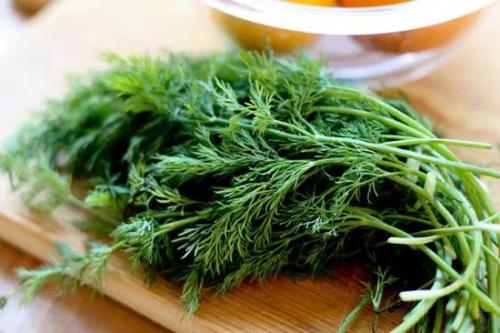
Annual or biennial herb. Stem erect, smooth. Leaves alternate, with long petioles, bipinnate or tripinnate, with the final segments linear. Compound umbels, corolla yellow. Schizocarp elliptical, outer surface brownish-yellow, the lateral ribs wing-shaped, with oil tubes between the ribs. Seeds elliptical. Flowering in summer. Native to southern Europe, now widely cultivated around the world. In China, besides cultivated plants, there are also wild ones. The tender stems and leaves can be picked and used fresh at once. Those collecting seeds harvest the fruiting branches after the fruit ripens, dry them in the sun, thresh out the fruit, remove all impurities, and then sun-dry until completely dry; the seeds can be used whole or crushed. The parts used are the tender stems, leaves, and seeds of dill, a plant in the Apiaceae family. The sun-dried dill seeds are native to southern Europe. Their flavor is somewhat like caraway, and they are mainly cooked with fish.
Murraya paniculata
Also known as: Qilixiang, Wanlixiang, Jiuqiuxiang, Jiushuxiang, Guoshanxiang, Huangjingui, Qingmuxiang, Yueju. It is a small tree or shrub in the Rutaceae family. Its leaves and leafy young twigs are used as medicine, and the medicinal material is called Jiulixiang. It has the effects of promoting the flow of qi and relieving pain, invigorating the blood, and dispersing blood stasis. It is mainly used to treat stomach pain, rheumatic arthralgia, traumatic injuries, and other conditions. It grows in open forests or dry slopes, and is distributed in Guangdong, Fujian, Hainan, and the southern parts of Guangxi, Hunan, Guizhou, and Yunnan.