Detailed Explanation of Bingtang Orange Cultivation Techniques and Management Methods
Bingtang orange, also known as Bingtang mandarin, originated in Mayang, Hunan. According to genetic principles, Bingtang orange is a seedling variation of the "premium orange." Locally, to distinguish it from similar varieties introduced and cultivated elsewhere, it was named "Mayang Bingtang Orange" or "Mayang Bingtang Pao," a National Geographical Indication Product of China. Mayang County in Hunan has superior agricultural production conditions, and Mayang citrus was already renowned far and wide during the Ming and Qing dynasties. Bingtang orange is highly favored by the market for its excellent variety, rich and sweet flavor, thin peel, non-stringy flesh, and crisp, tender texture.
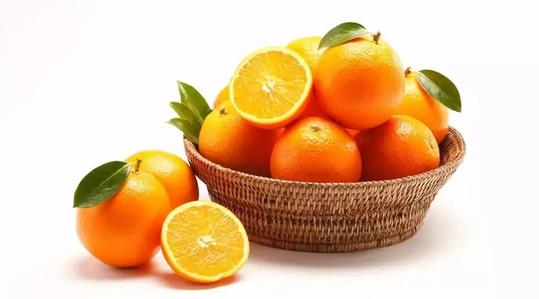
Bingtang Orange Cultivation Techniques
I. Rational Planning and Scientific Orchard Establishment
1. Site selection: Choose a sunny site with no nearby pollution sources, a slope below 25 degrees, and an altitude of 1100-1400 m in mountainous terrain, with well-drained, deep, moist, slightly acidic soil with high organic matter content.
2. Land preparation, hole digging, and base fertilizer application: Plan uniformly, dig terraces along contour lines, dig holes 100 cm wide and 80-100 cm deep, with a terrace width of 2.5-3 m, a plant-to-row spacing of 3 m x 4 m, and 55 plants per mu. Apply sufficient base fertilizer: layer rice straw and weeds 10-30 kg per hole, apply decomposed cake fertilizer 1-3 kg, pig and cattle manure and human waste 50 kg, superphosphate 1-2 kg, and lime 1-1.5 kg. Take care to prevent heating from burning the roots, and build a planting mound 20-25 cm above the terrace surface.
II. Intercropping Green Manure and Improving Soil
Red soil mountainous areas have sticky, acidic, and lean soil with poor permeability and low organic matter content. Intercrop green manure in the orchard, deep plow and expand holes, and combine with organic fertilizer application to improve orchard soil. Generally, after 3 years of planting, expand holes and improve soil every year. The main materials are decomposed pig manure, sheep manure, compound fertilizer, calcium magnesium phosphate fertilizer, quicklime, weeds, green manure, etc. They should be mixed evenly and applied deeply in layers, rotating hole positions each year and improving the soil year by year.
III. Rational Pruning and Proper Fruit Thinning
Pruning is mainly done in winter, with three supplementary rounds in spring, summer, and autumn. Winter pruning should thoroughly remove dead branches, diseased and pest-infested branches, crossing branches, overlapping branches, drooping branches, and weak branches; overly dense branches should be appropriately thinned; overly long ones should be cut back and kept as reserve branches. Summer pruning mainly involves removing summer shoots and repeatedly thinning out small, deformed, densely clustered, and pest- or disease-damaged young fruits to increase the proportion of first-grade fruit and boost economic returns.
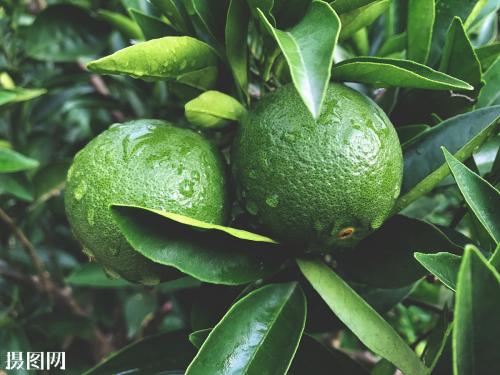
IV. Fertilizer and Water Management
Each year, apply bud-promoting fertilizer, flower-preserving fertilizer, and fruit-preserving fertilizer in spring; fruit-swelling fertilizer in summer; pre-harvest fertilizer in autumn; and sufficient base fertilizer in winter, for a total of 6 applications. Combine chemical fertilizers with farmyard manure, apply both deep placement and whole-orchard broadcasting, and emphasize heavy application of organic fertilizer. This fertilization method is safe, effective, and the soil has strong water retention capacity, can remain moist regularly, and the fruit has fewer cracks.
V. Integrated Pest and Disease Control
The main pests and diseases harming Bingtang orange include anthracnose, scab, gummosis, sooty mold, canker, red spider mite, leaf miner, fruit-piercing noctuid, and scale insects.
Control measures include: from May to June, use Thiophanate 1000x or Carbendazim 500x applied 2-3 times to control scab; during each season's shoot emergence period, use Thiophanate 1000x or Carbendazim 500x to control anthracnose; when gummosis harms small branches, spray with Carbendazim 500x; when it harms large branches or the main trunk, use a sharp knife to scrape off the necrotic part and then apply Thiophanate 100x or Carbendazim 50-100x for treatment. Pest control: seize the nymph stage of each generation for spraying; 40% Omethoate 800x solution can be used, and in winter, 10x pine-alkali mixture can be used for orchard cleaning.