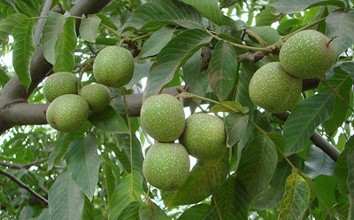
Detailed Explanation of Walnut Planting Methods and Technical Key Points
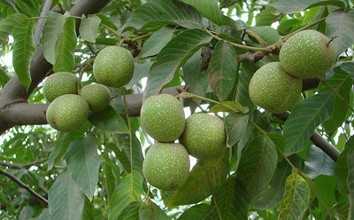
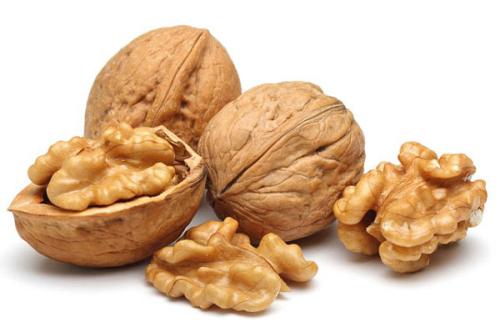
Walnut, also known as Persian walnut or Qiang peach, is a plant of the family Juglandaceae. Along with almond, cashew, and hazelnut, it is known as one of the world-famous "four great dried fruits." Walnut kernels are rich in nutrients, containing 15-20 g of protein per 100 g, a relatively high amount of fat, and 10 g of carbohydrates; they also contain various trace elements and minerals essential to the human body such as calcium, phosphorus, and iron, as well as various vitamins such as carotene and riboflavin. They are beneficial to human health. They are one of the nut foods deeply loved by the general public.
Walnut seedling-raising methods
1. Nursery site selection: The nursery site should be chosen as sandy loam or loam with flat terrain, sheltered from wind and facing the sun, deep soil layers, fertile soil, and good drainage.
2. Bed preparation: Deeply plow or deeply turn the nursery site and apply sufficient base fertilizer; generally, applying 750 kg/ha of superphosphate and about 60 t/ha of farmyard manure is appropriate. Make seedbeds about 1 m wide, with length determined by the terrain and the number of seedlings to be raised.
3. Seed treatment: Select fruits harvested in the current year that have strong adaptability, high and stable yield, thin shells, plump kernels, easy kernel extraction, and no pests or diseases. For spring sowing, soak the seeds for 8-10 days, changing the water once each day, so that the seeds absorb water and swell; when a small number of seeds have split open, remove them, spread them in an open place to sun-dry for 2-3 h, and then sow. For autumn sowing, the seeds do not need treatment and can be sown directly with the green husk.
4. Sowing: In the prepared seedbed, sow at points with a row spacing of 20-30 cm and a plant spacing of 15 cm; the seed suture line should be perpendicular to the ground, with the seed tips placed facing the same side. The sowing depth is 6-7 cm, covered with 10-12 cm of soil, and after sowing cover with plastic film to keep warm and retain moisture.
5. Seedling-stage management: After the seedlings emerge uniformly, irrigate promptly. May to June is the key period for seedling growth; water 2-3 times according to soil moisture conditions, and apply quick-acting nitrogen fertilizer along with watering. In July to August, apply phosphorus and potassium fertilizer. Carry out timely intertillage and weeding in the nursery.
Orchard establishment and planting
1. Orchard establishment: Walnuts can grow well in environments with an annual average temperature exceeding 9-16°C and annual average precipitation exceeding 800 mm. Walnut has a very broad adaptability to soil, but because its roots are distributed relatively deeply in the soil and its resistance is relatively weak, it grows best on fertile, loose-textured, well-drained flat land, terraces, and gentle slopes, and in slightly alkaline calcium-containing soil. Walnut is a light-loving fruit tree and requires sufficient sunlight, so it is suitable for planting on sunny slopes and in sheltered places. When planting in barren hills and hilly areas, terraces should first be built, large fish-scale pits should be dug, and soil and water conservation should be done well.
2. Planting
① Digging planting holes: Before planting, dig the planting holes well to increase the degree of soil ripening and moisture within the planting holes. The length, width, and depth of the planting holes are 100, 100, and 80-100 cm respectively. When backfilling, use 25-50 kg of farmyard manure (stable manure, green manure, compost, etc.) and 1 kg of ordinary calcium superphosphate or 1.5 kg of calcium magnesium phosphate fertilizer per hole, mix thoroughly with topsoil, and fill into the hole. In actual production, leaves, weeds, and turf can be used to replace farmyard manure.
② Planting time: After seedlings enter dormancy in late autumn or before seedlings begin to sprout in late winter and early spring; it is not suitable to plant during the period of vigorous summer growth. In spring-drought areas, autumn planting of walnuts gives a high survival rate. Autumn-planted seedlings are prone to drying out, and this phenomenon should be avoided by mounding soil. The mounding method is to bend the seedling into an arch shape and fix it, then mound soil, preferably so that the trunk is not exposed. In the spring of the following year, break the soil and straighten the trunk.
③ Planting method: Trim the roots of seedlings whose roots have fully absorbed water after soaking, using scissors, and place them vertically in the center of the prepared planting hole, aligning them front, back, left, and right. Hold the seedling upright, spread the roots in all directions, and cover with nutrient soil. After the roots are completely covered, gently lift the seedling once to make the roots spread out, then gradually fill with soil. The planting depth should be such that after the soil settles, it is consistent with the soil mark on the seedling from the original nursery. When filling soil, tamp while filling, tamping once for each layer of soil filled. Build a funnel-shaped soil ridge around the tree disk. Water thoroughly with settling water, and about 4 days after the water infiltrates, water once more. Cover each plant with a 1 m x 1 m black plastic film, cut a small hole about 5 cm in diameter in the center of the film, let the seedling trunk pass through it, and after it is laid on the ground cover the small hole with fine soil, so as to increase ground temperature, reduce water evaporation, and improve the survival rate.
Soil, fertilizer, and water management
1. Soil management
① Plowing the soil: Carry out plowing once each in March to April and August to September every year, gradually deep-plowing outward from the planting hole year by year, with a depth of 70-80 cm being appropriate; be careful not to damage thick roots.
② Reasonable intercropping: In the early stage, mainly intercrop crops such as peanut, soybean, mung bean, and sweet potato, as well as tuber vegetables and leafy vegetables, so as to support fruit with grain (vegetables) and support the long term with the short term.
2. Fertilization
① Base fertilizer: The time for applying base fertilizer is preferably September to October after fruit harvest. Dried livestock and poultry manure can be applied, and during the growing period weeds can be turned under and pressed into the soil after rain.
② Topdressing: Generally carried out 2-3 times each year, in April, June, and July respectively. The first two fertilizations mainly lay the foundation for flowering, fruiting, and new shoot growth, and the type of fertilizer applied is mainly nitrogen fertilizer. The third topdressing mainly provides nutrients for the walnut fruiting period, ensuring that the nuts are full and plump; nitrogen, phosphorus, and potassium fertilizers should be applied in combination.
3. Water management: Walnut likes moisture, tolerates waterlogging, and has strong drought resistance; sufficient water is beneficial to increasing walnut yield. In the year of planting, 1-2 supplemental waterings are needed during the dry season. Walnut has a relatively large water demand during flowering and the period of rapid fruit expansion, and timely supplemental water at this time can achieve relatively good results. Irrigating after fertilization and before freezing can improve fertilizer use efficiency and ensure that walnuts overwinter smoothly. Surface water accumulation and an excessively high groundwater table are not conducive to walnut growth, so in walnut production, if the rainy season is encountered, standing water in the field should be drained promptly.
Trunk training and shaping
1. Open-center stratified form (with trunk): Varieties with strong apical dominance and good site conditions adopt the open-center stratified form. This shaping method has a total of 6-7 scaffold branches, divided into 2-3 tiers. With this shaping method, the canopy appears hemispherical, can achieve relatively good ventilation and light transmission conditions, has a long lifespan, high yield, and large bearing capacity.
2. Natural open-center form (without trunk): Varieties with weak apical dominance and poorer site conditions adopt the natural open-center form. This shaping method has 2-4 scaffold branches, takes shape relatively quickly, bears fruit relatively early, saves labor, and has low technical requirements; it is currently used relatively widely in production.
Fruit tree pruning
1. Young trees: Mainly handle some branches that interfere with tree shape, with the focus on controlling secondary branches, inhibiting water sprouts, thinning out excessively dense branches, and properly handling vigorous vegetative branches and downward branches.
2. Trees in the initial fruiting stage: Continue to cultivate main and lateral branches, make full use of auxiliary branches for early fruiting, cultivate fruiting branch groups in a planned way, continuously increase fruiting positions, and expand the fruiting area. The pruning principle is mainly light pruning, combining autumn pruning and spring pruning. During the spring germination period, cut off the terminal buds of strong vigorous branches to promote the growth of short fruiting branches; for dense branches, remove the strong and keep the weak, first release then contract, combining release and contraction, to prevent the fruiting position from moving outward.
3. Trees in the full fruiting stage: After walnut trees enter the full fruiting stage, most of the canopy is close to closing or has already closed, light transmission conditions are relatively poor, and illumination is poor. Attention should be paid to adjusting the relationship between vegetative growth and reproductive growth, promptly thinning out overly dense peripheral branches and drooping branches, and promptly pruning auxiliary branches that occupy relatively large space, so as to prevent them from shading light and blocking wind. Continuously renew fruiting branches to achieve the goal of high and stable yield.
4. Senescent trees: Pruning of senescent trees mainly includes small renewal and medium renewal. Small renewal refers to cutting back main branches at appropriate positions to promote the formation of new lateral branches. Medium renewal refers to cutting back primary lateral branches at appropriate positions, with the purpose of promoting the formation of secondary lateral branches.
Flowering-period management
1. Artificial pollination: When the stigma of female flowers splits open into an inverted "eight" shape and the stigma secretes a large amount of mucus, begin artificial supplementary pollination at 9:00-10:00.
2. Thinning out male flowers: Excessive male flowers consume the tree's nutrients and water, which is not conducive to female flower bud development and fruit set, so male flowers should be appropriately thinned. The period for thinning male flowers should be early, and the best effect is achieved from the dormant stage to the swelling stage of male flower buds. If artificial pollination has not been carried out in the walnut orchard, male flowers should not be thinned too much.
Pest and disease control
1. Diseases: Mainly include walnut black spot disease, walnut anthracnose, rot disease, and branch blight. The control methods are as follows.
① Promptly remove diseased fruits and diseased leaves found, and take them out of the orchard to avoid large-scale outbreak.
② Before female flowering, after flowering, and during the young fruit stage (May to June), spray once with 1:2:200 Bordeaux mixture or 50% thiophanate-methyl wettable powder 500-800 times liquid, which can achieve relatively good disease prevention effects.
2. Insect pests: Mainly include walnut fruit moth (walnut black), longhorn beetle, wood leopard moth, scarab beetle, slug moth, Actias selene ningpoana, and jewel beetle, etc. The control methods mainly include the following.
① Physical control: Release poultry in the orchard, use black light traps to lure and kill adults, manual capture, etc.
② Chemical control: Spray lime sulfur mixture before walnut germination to kill overwintering pests and diseases. The first spraying time is in the early egg-laying stage of walnut fruit moth adults before larvae bore into fruits; spray with 25% diflubenzuron No. 3 1500 times liquid + beta-cypermethrin 1000 times liquid, once every 10 days. During the active period of wood leopard moth larvae, insert dichlorvos-soaked cotton into the insect holes to kill the larvae or cut off and burn the infested branches. Dig open the soil around the root crown, inject 40% dimethoate emulsifiable concentrate 20 times liquid into the insect holes, then seal tightly with wet soil to kill the larvae.