Cowpea Planting Methods and Key Technical Points
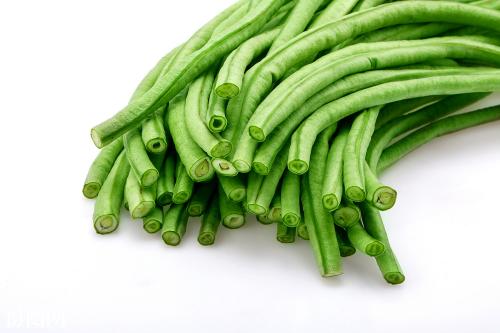
Cowpea (scientific name Vigna unguiculata), commonly known as black-eyed pea, Jiang bean, dai bean, or gua dou jiao. Cowpea is divided into two types, long cowpea and rice cowpea, and belongs to the legume family. Cowpea is an annual plant of the legume family. The stems come in three types: dwarf, semi-climbing and climbing. In the south, climbing types are mainly cultivated, followed by dwarf types. It is an annual twining herbaceous plant of the Fabaceae (papilionaceous) family, with 3 leaflets; the terminal leaflet is rhombic-ovate, 5-13 cm long and 4-7 cm wide, with an acute tip and a nearly round or broadly wedge-shaped base, hairless on both sides; the lateral leaflets are obliquely ovate; the stipules are ovate, about 1 cm long, extending downward at the point of attachment into a short spur. The calyx is bell-shaped and hairless; the corolla is pale purple, about 2 cm long, and the upper part of the style is covered inside with pale yellow hairs. The pod is linear, drooping, and can reach 40 cm in length. The flowering and fruiting period is from June to September.
Planting Methods
Seed selection for cowpea planting: before sowing, carefully select seeds that are large, plump, free of pests and diseases, and undamaged, and choose sunny weather to sun the seeds for 1-2 days; if necessary, dress the seeds with chemicals before sowing. Before sowing, prepare the seedbed; the nutrient soil in the seedbed should be no less than 5 cm thick, and the bed soil should be at a suitable moisture level, not too wet, otherwise the seeds will easily rot. When sowing, scatter the seeds in the seedbed soil, taking care that the seeds do not overlap; after sowing, cover with loose fine soil 1.5-2 cm deep, press lightly, then spread sparse rice straw and cover with plastic film to keep warm and retain moisture. After sowing, keep the seedbed temperature at 25-30°C.
Land preparation and base fertilizer application for cowpea planting: cowpea is not tolerant of waterlogging and has a long growing period, requiring more nutrients during growth, so choose soil with high, dry terrain, deep soil layers, rich organic matter, and convenient drainage and irrigation. Apply base fertilizer 10-15 days before planting; generally apply 1500-2000 kg of fully decomposed human manure or chicken and duck manure, 15-20 kg of superphosphate, and 75-100 kg of plant ash per mu, either in furrows or broadcast. After land preparation, the bed surface is 100-110 cm wide, the ditch is 40 cm wide, and the bed is 20-25 cm high. After leveling the bed surface, cover with plastic film.
Water management for cowpea planting: after cowpea plants recover from transplanting and before flowering and podding, water must be strictly controlled, otherwise it will cause excessive vegetative growth, raise the flowering node position, and stimulate lateral bud sprouting, easily resulting in bare vines in the middle and lower parts of the plant. Generally, water once every 3-5 days after planting to help the seedlings recover, and in principle do not water afterward. Too much water at the early flowering stage will cause excessive vegetative growth, consume too many nutrients, and prevent the flower buds from getting enough nutrients, causing flower and pod drop. After pods set, the plant enters vigorous growth, growing stems and leaves while continuing to flower and set pods, so water demand increases; supply more water to promote pod elongation and expansion, increase the number of pods, and maintain good plant vigor. Generally, start watering when the young pods are 2-3 cm long, then water once every 5-7 days, but prevent waterlogging damage after rain.
Topdressing for cowpea planting: the principle of topdressing cowpea is "less before flowering, more after flowering, heavy application during podding." Generally, after the seedlings survive, apply one seedling-promoting fertilizer, with 1000 kg of 15%-20% decomposed human manure per mu. After flowering, apply 1500 kg of decomposed human manure at 20% concentration. After podding, apply 2000 kg of decomposed human manure at 20% concentration and 10 kg of superphosphate, then apply once every 1 week thereafter; alternatively, apply 15 kg of compound fertilizer per mu each time. In the late growth stage of cowpea, apply heavy topdressing 2-3 times in succession, using 15-20 kg of compound fertilizer each time, to promote vigorous plant growth, continue producing flower clusters, increase the podding rate, extend the harvest period, and increase yield.