Detailed Explanation of Eggplant Planting Methods and Technical Points
Eggplant (scientific name: Solanum melongena L.) is a plant of the Solanaceae family, genus Solanum. Eggplant is an erect branching herbaceous to subshrub plant, reaching up to 1 m in height; the branchlets, petioles and pedicels are all covered with 6-8-(10)-branched, appressed or short-stalked stellate hairs; the branchlets are mostly purple (wild ones often have prickles), and the hair covering gradually sheds as they age. The leaves are large, ovate to oblong-ovate, with petioles about 2-4.5 cm long (wild ones have prickles). The fertile flowers are solitary, with pedicels about 1-1.8 cm long and a relatively dense hair covering. The shape and size of the fruit vary greatly. The fruit may be long or round, and the color may be white, red, purple, etc.
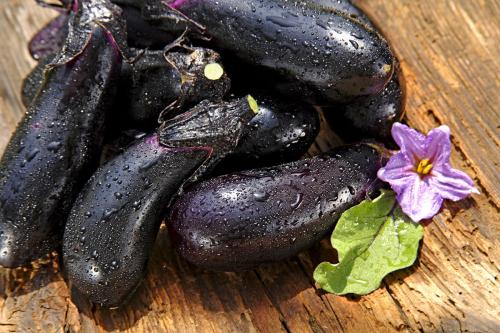
Growing Environment for Eggplant Planting
The suitable temperature is 25-30℃. It is not sensitive to the length of the photoperiod; as long as the temperature is suitable, it can flower and bear fruit from spring to autumn. Open-field cultivation is the main method; from winter to early spring, seeds are sown and seedlings are raised in seedbeds, and in the northern provinces, hotbeds or cold frames are used for sowing and seedling raising in early spring. Because the fruiting period of eggplant is long, in addition to sufficient base fertilizer, repeated topdressing is also required, which is more conducive to the growth and development of the crop.
Sowing as Part of Eggplant Planting Methods
In a greenhouse, use seedling trays or wooden boxes filled with 10 cm of seedbed soil, level it, and water thoroughly. Then sow the seeds evenly on the surface of the bed. The sowing rate is 35-40 grams per square meter. The seedling raising of solanaceous fruits is basically the same; the seedling raising methods all use greenhouses, hotbeds or cold frames. However, germinating eggplant seeds is relatively difficult and has higher temperature requirements. Before sowing, scald the seeds with warm water at 55-60℃, stirring while pouring; when the temperature drops to about 20℃, stop stirring, soak for a full day and night, remove the seeds, rub off the mucilage on the seeds, rinse them clean with clear water, and place them at 25-30℃ to germinate. During germination, maintain 85% environmental humidity; once 30%-500% of the seeds have sprouted, they can be sown. When sowing, first sprinkle the seedbed thoroughly with warm water, then evenly scatter the seeds into the bed and cover with fine soil 0.8-1 cm thick. Immediately after sowing, cover with an arched shed, and add straw mats at night for insulation. Before emergence, keep the bed temperature at 26-28℃ during the day and about 20℃ at night; after about 4-5 days, 50%-60% of seedlings will emerge. After emergence, cool down in time, to about 25℃ during the day and 15-17℃ at night, and slightly lower on cloudy days.
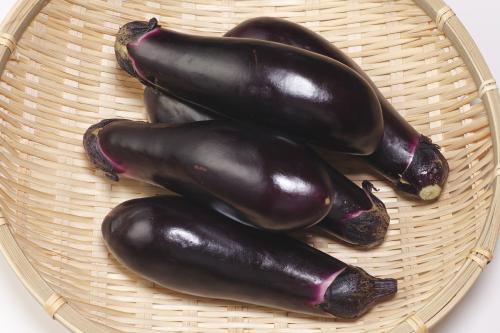
Transplanting as Part of Eggplant Planting Techniques
Set out the seedlings at a plant spacing of 25-30 cm, then pour enough transplanting water into the furrow, and after it seeps in, cultivate soil to form ridges. On the second day, cover with film, using 1.0-1.2 m wide plastic film, covering two ridges at a time, pulling it to the same length as the ridges, then use a blade to cut a longitudinal slit at each plant position, lead the seedlings out through the slit, then pull the film tight, press it down firmly with soil, and seal the transplanting openings well.
Fertilizer and Water Management for Eggplant Planting
3-4 days after transplanting, water once to help the seedlings recover; after recovery, begin root-restricting seedling practice, and when the first fruit (the "door eggplant") reaches the "eye-opening" stage, begin irrigation through the hidden furrow; after the soil temperature reaches 18℃, both open and hidden furrows can be irrigated, but attention should be paid to ventilation and dehumidification. At the "eye-opening" stage of the first fruit, apply 10-15 kg of urea or 10 kg of diammonium phosphate per mu, once every 20 days. Foliar topdressing with Damin Luxing or Yunda 120 can also be used; adopt two-stem pruning. After the first fruit forms, cut off the two outward-growing side branches and keep only the two upward-growing double stems. Generally, pinch off the growing tip at the 7th fruit to promote early ripening of the fruit. At the "eye-opening" stage of the first fruit, remove the 3 leaves at the base, and later, as the plant grows, gradually remove the lower leaves to facilitate ventilation and light penetration for the population.
Harvesting as Part of Eggplant Planting
Harvest when there is no white band at the junction between the calyx and the fruit; early-maturing varieties can be harvested 20-25 days after flowering.