Introduction to Oat Cultivation Methods and Key Technical Points
Oats (Latin scientific name: Avena sativa L.) are a grass family plant, called sparrow wheat and wild wheat in the Compendium of Materia Medica. Oats do not shed their hulls easily, so they are called hulled oats; they are a low-sugar, high-nutrition, high-energy food. Oats are sweet and neutral in nature. They can benefit the spleen, nourish the heart, and reduce sweating. They have relatively high nutritional value. They can be used for people with weakness and spontaneous sweating, night sweats, or tuberculosis patients. Take as a decoction, or "pound off the hulls to make flour for steaming and cakes." (from the Famine Relief Materia Medica). Oats are cold-tolerant, drought-resistant, highly adaptable to soil, and can self-seed and reproduce. Oats are rich in dietary fiber, can promote gastrointestinal peristalsis, help with bowel movements, are low in calories, have a low glycemic index, lower blood lipids and blood sugar, and are also one of the high-grade tonic foods; in poor areas they are an indispensable dry ration.
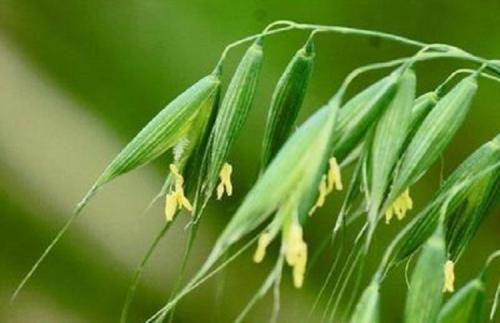
Cultivation Methods
Select good seed varieties and sow at the right time
While strengthening the selection and breeding of local varieties, excellent medium-to-late-maturing varieties from certain northern drylands should be actively introduced according to local conditions, such as "Tiegan Dali", "Jiza No. 2", "Mengyan 7413", "Wuyan No. 2", and other high-yielding varieties. After the good varieties are determined, according to the long growth period and many tillers in our township's oat-growing area, sow 8-10 kg per mu; to prevent smut, treat seeds with seed-dressing bis and carbendazim at a concentration of 0.2-0.3% of seed weight. The suitable sowing period should be concentrated in mid-to-late October.
Promote standardized planting
In order to ensure complete, uniform, even, and strong emergence of oat seedlings, and in combination with the characteristics of land preparation and sowing in mountainous areas, wide-row, sparse-plant, dense planting is advocated. When plowing and sowing, the sowing furrow should be level to ensure that seeds fall sparsely and evenly and emerge uniformly; the row spacing is generally 22-24 cm and the sowing width is 10-12 cm. For oat fields with heavy clay soil, the dense-hole, sparse-plant dibbling method can be used, with row and hole spacing of 15-20 cm, sowing 5-6 seeds per hole, and covering with soil after sowing to a depth of about 3-4 cm, which helps early germination and emergence.
Strengthen field management
According to the requirements of oats for environmental conditions at different growth stages, adopt corresponding technical measures.
(1) Seedling stage
1. Carry out early intertillage and weeding to prevent drought and preserve soil moisture. According to the biological characteristics of the seedling stage, proceed from shallow to deep, and carry out 2-3 hoeings from the seedling stage to the jointing stage depending on seedling condition; before winter, cultivate soil to conserve water, promote rooting, and nurture tillers.
2. Apply seedling fertilizer and tillering fertilizer skillfully to promote uniform and strong seedlings. From the four-leaf stage to before winter, apply seedling fertilizer and tillering fertilizer 1-2 times as appropriate and early, to promote early and vigorous tillering. Fertilizer applied at the seedling stage should be mainly nitrogen fertilizer; combined with intertillage and weeding, apply 5-7.5 kg of urea per mu, or 10-12 kg per mu of nitrogen-phosphorus compound fertilizer.
(2) Jointing and booting stage
1. Intertill and earth up to strengthen stems and prevent lodging. Because spring drought is relatively severe in our township's mountainous oat fields, after oats joint and before row closure, intertill once to a depth of 3-6 cm, supplemented by appropriate hilling, so as to reduce surface water evaporation and control excessive growth of basal stem nodes.
2. Apply jointing and booting fertilizer as appropriate. Because the mountainous climate in our township is cold and cool, the young ear differentiation period lasts about 110-130 days; after the first basal internode of oats has reached fixed length, promptly apply additional jointing and booting fertilizer. Topdressing should depend on seedling condition: strong seedlings can be topdressed once when the second basal internode has basically reached fixed length, while weak seedlings can be topdressed once each from the jointing stage to the booting stage, using 5-8 kg of urea and 5 kg of phosphate fertilizer per mu. For oats growing well in the dam area, topdressing at the jointing and booting stage should focus on control, combining promotion and control, and absolutely avoid excessive application of nitrogen chemical fertilizer causing lodging later.
(3) Heading and maturity stage
1. Resist drought, prevent waterlogging, and prevent premature aging or lodging of oat plants. Depending on when and to what degree drought occurs, irrigate 1-2 times with water for heading and flowering, so as to nourish roots with water, protect leaves from premature aging, and achieve the goal of protecting grains through leaves. At the same time, note that if there is excessive rain in the late grain-filling stage, drainage and waterlogging prevention should be done well to prevent delayed maturity due to excessive vegetative growth or lodging.
2. Apply foliar fertilizer at the right time. Apply foliar topdressing as appropriate according to conditions; the concentrations for various foliar sprays are: nitrogen fertilizer 1-2%, superphosphate soaking solution 2-4%, potassium dihydrogen phosphate 0.1-0.3%, and a mixed application of urea and superphosphate solution at 3%; the foliar spray application rate per mu is 50-75 kg.
Strengthen pest and disease control
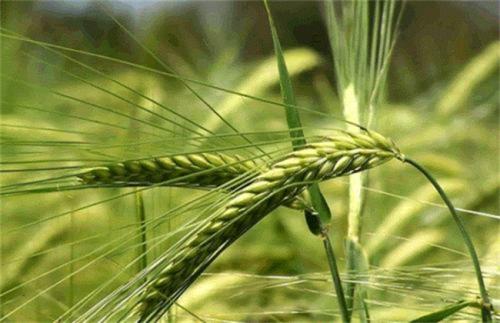
The heading and maturity stage of oats is the peak period for pest and disease occurrence. Common pests and diseases include smut, crown rust, stem rust, and armyworm. In controlling pests and diseases, while selecting excellent disease-resistant varieties, adopt integrated control measures.
1. For smut, use seed-dressing bis and carbendazim seed treatment for early prevention.
2. For crown rust and stem rust, before major outbreaks, spray 2-3 times with a 0.4-0.5% aqueous solution of dirustic acid or diroston sodium; during the epidemic period of the disease, spray once every 7-10 days, using 75-100 kg of spray per mu.
3. For armyworm, use 2.5% deltamethrin emulsifiable concentrate at 2000 times dilution for spray control.