Planting Methods and Key Technical Points for the Duabanga grandiflora
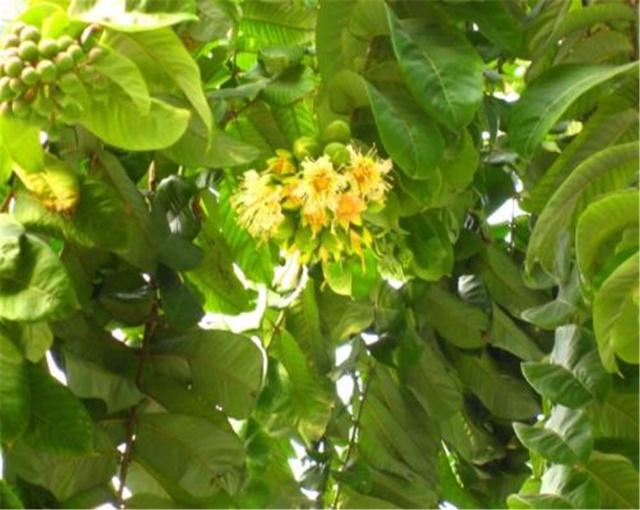
Duabanga grandiflora (scientific name: Duabanga grandiflora (Roxb. ex DC.) Walp), family Sonneratiaceae. Sonneratiaceae. A large tree, up to 40 m tall, with a diameter at breast height of 1.5 m. Slightly buttressed. Bark grayish white, not fissured. Trunk round and straight. Branches four-angled, drooping. Leaves opposite, entire, long elliptic, 10-30 cm long, up to 10 cm wide, apex acute, base shallowly cordate; pinnate veins, lateral veins numerous, nearly parallel; petiole short. Large corymb terminal; sepals 5; petals 5, obovate, white, undulate; stamens numerous; ovary semi-inferior, 4-8 locular, ovules numerous. Capsule spherical, slightly four-angled, dehiscing by 4-8 valves, persistent calyx thickly leathery. Seeds small, with stellate projections at both ends. Flowering period March-April, fruit ripening period May-July. Produced in mountainous areas of southwestern Guangxi, China at an altitude of 200-500 m, and in tropical rain forests in valleys or by streams below 1,500 m in southern Yunnan. Also distributed in Vietnam, Myanmar, Thailand, India and Malaysia. Propagated by seed, natural regeneration is good under open forest or at forest edges. Fast-growing. Because its grain is extremely similar to that of black walnut, it is also called African black walnut.
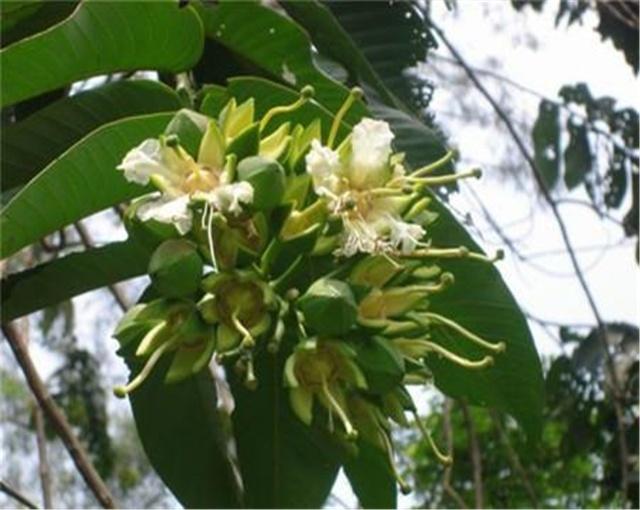
Duabanga grandiflora is commonly propagated by cuttings and sowing
Cuttage propagation of Duabanga grandiflora is generally carried out from April to September. Cut 1-year-old top shoots of Duabanga grandiflora, 8-10 cm long, remove the lower leaves, insert them in a sand bed, and keep the sand bed moist, at a room temperature of about 25°C. The cuttings of Duabanga grandiflora will grow new roots 30-40 days after insertion.
Sowing propagation of Duabanga grandiflora is carried out from April to May, generally sown indoors in pots; the suitable germination temperature for Duabanga grandiflora is between 20-25°C; after sowing, keep the pot soil moist, and the seeds of Duabanga grandiflora will germinate in 15-20 days. When the Duabanga grandiflora seedlings are 5-8 cm tall, they can be transplanted into pots.
Containers: potted Duabanga grandiflora generally uses a 15-20 cm pot, and the bottom of the pot should be lined with more broken tiles or broken bricks to facilitate drainage.
Light: in summer, Duabanga grandiflora needs to be shaded with a 70% shade net to avoid scorching the leaves by the hot sun.
Watering: Duabanga grandiflora likes an environment with high air humidity and sufficient soil moisture. When growing Duabanga grandiflora, keep the soil moist; do not wait until the soil is completely dry before watering. Water in time, and when the weather is dry, also spray water around Duabanga grandiflora to increase air humidity.
Fertilizing: during the growing period of Duabanga grandiflora, fertilize once every half month or use "Huiyou" 20-8-20 all-season high potassium nitrate fertilizer.
Pruning: when Duabanga grandiflora sprouts leggy branches, pay attention to shaping and pruning. Young plants of Duabanga grandiflora need thinning and light pruning, mainly for shaping. When old plants of Duabanga grandiflora become too large, heavy pruning is needed for adjustment.
Repotting: young plants of Duabanga grandiflora are repotted every spring, and adult Duabanga grandiflora is repotted once every 2 years.
Main value: