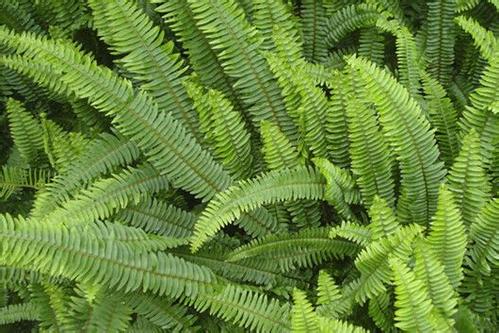
Centipede fern (scientific name: Pteris vittata L.) is a fern in the family Pteridaceae, genus Pteris. The culms are densely tufted, slender and erect; the leaf sheaths are flattened, overlapping each other, with cilia at the sheath mouth; the ligule is membranous, extremely short, and truncate; the leaf blades are often erect, with acuminate apexes. The raceme is solitary, often arched, and the raceme peduncle and the internodes of its axis are covered with fine pubescence. The sessile spikelets are ovate, arranged in imbricate fashion on one side of the raceme axis; the first glume is thickly papery, with a sharply pointed apex, wingless, and the prickles are slightly rough; the back is densely covered with soft hairs or fine pubescence; the second glume is thickly membranous, with a narrow wing on the lower part of the keel; the first floret is male, the lemma is obtuse at the apex, the palea is narrower, the second floret is bisexual or female; the anthers are relatively large, and the stigma is yellowish brown. The caryopsis is oblong; the pedicellate spikelet is completely degenerated, leaving only a long-pointed spikelet stalk, with soft hairs at the base where it attaches. Flowering and fruiting period is summer and autumn.
Propagation Methods
Division, spores, and tissue culture are commonly used for propagation.
1. Division propagation: Can be carried out throughout the year, with May to June being the best. At this time the temperature is stable; gently separate the mother plant, divide the creeping stems, and plant 2 to 3 clusters of creeping stems per 10 cm pot. For a 15 cm hanging pot, use 3 to 5 clusters of creeping stems. After planting, place in partial shade and water to keep moist. When new leaves sprout from the rhizome, place under a shade net for maintenance.
2. Spore propagation: Choose leaf mold or peat soil plus brick crumbs as the sowing substrate, put it into a sowing container, evenly sprinkle the collected mature spores of the Boston fern into the sowing pot, mist to keep the soil surface moist, and after 50 to 60 days of sowing, sporophytes will grow.
3. Tissue culture propagation: Terminal creeping stems, rhizome tips, aerial roots, and spores are commonly used as explants. Cut a 0.7 cm creeping stem tip from the newly grown creeping stem (3 to 5 cm) of the mother plant, soak in 75% alcohol for 30 seconds, then transfer to 0.1% mercuric chloride for surface sterilization for 6 minutes, rinse 3 times with sterile water, then inoculate. The culture medium is MS medium supplemented with 6-benzylaminopurine at 2 mg/L and naphthaleneacetic acid at 0.5 mg/L. About 20 days after inoculation of the stem tip, the apex swells and gradually produces a mass of GGB (green globular bodies). Cut the GGB into pieces of about 1 mg, inoculate onto MS medium without hormones, and after 60 days of culture, clustered shoots are produced. Divide the clustered shoots to obtain complete test-tube plantlets.
Division Propagation
Division time: It is best to carry out after the soil thaws in early spring (February or March).
Division method: Take the mother plant out of the flower pot, shake off excess potting soil, separate the tangled root system as much as possible, and cut it into two or more plants with a sharp knife. Each divided plant must have a considerable amount of roots, and its leaves should be properly pruned to facilitate survival.
Potting and disinfection: Soak the divided small plants in a 1500-fold chlorothalonil solution for five minutes, take them out to dry, and then pot them. Alternatively, immediately after potting, drench the roots with chlorothalonil.
Cultivation Techniques
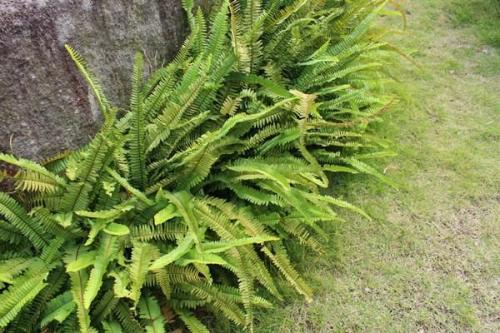
Management after division: After the divided plants are potted, drench the roots or water thoroughly once. Because its root system is greatly damaged and its water absorption capacity is very weak, it takes about 3 to 4 weeks to recover and sprout new roots. Therefore, within 3 to 4 weeks after division, watering should be controlled to avoid root rot, but the transpiration of its leaves is not affected. In order to maintain the water balance of the leaves, it is necessary to mist the leaf surface 1 to 3 times a day (mist more when the temperature is high, and mist less or not at all when the temperature is low). Do not apply fertilizer during this period either. After division, also pay attention to excessively strong sunlight, and place it in a shade shed for maintenance.
Potting: When potting small seedlings, first place a 2 to 2 cm thick layer of coarse-grained substrate or ceramsite at the bottom of the pot as a drainage layer, sprinkle a layer of fully decomposed organic fertilizer on top as base fertilizer, about 1 to 2 cm thick, then cover with a layer of substrate about 1 to 2 cm thick, and then place the plant in, so as to separate the fertilizer from the roots and avoid burning the roots.
For the substrate used for potting, one of the following can be chosen. Garden soil: furnace slag = 3:1; or garden soil: medium-coarse river sand: sawdust (mushroom residue) = 4:1:2; or one of paddy soil, pond mud, or leaf mold. Or peat + perlite + ceramsite = 2 parts + 2 parts + 1 part; garden soil + furnace slag = 3 parts + 1 part; peat + furnace slag + ceramsite = 2 parts + 2 parts + 1 part; sawdust + vermiculite + medium-coarse river sand = 2 parts + 2 parts + 1 part. After potting, water thoroughly once and place in a shaded environment for maintenance.
Humidity management: It likes a humid climate environment and requires the relative air humidity of the growing environment to be 60 to 75%.
Temperature management: The optimum growth temperature is 18°C to 30°C. It is averse to cold and frost, and the overwintering temperature needs to be kept above 10°C. In winter, when the temperature drops below 4°C, it enters a dormant state. If the environmental temperature approaches 0°C, it will die from frost injury.