Christmas Tree Planting Methods and Key Technical Points
The Christmas tree, also known as fishbone wattle, Australian white wattle, or silver wattle, belongs to the genus Acacia in the family Mimosaceae. It is an evergreen tree about 15 m tall, with a relatively straight trunk and grayish-green or gray bark; bipinnately compound leaves, even-pinnate, with linear leaflets that are silvery-gray or light grayish-blue. It is native to Victoria, New South Wales and Tasmania in southeastern Australia. It can be used as a street tree or planted as a specimen or in groups in gardens. It grows rapidly and has strong stress resistance, making it suitable as a pioneer tree for greening barren hills and as a species for soil and water conservation.
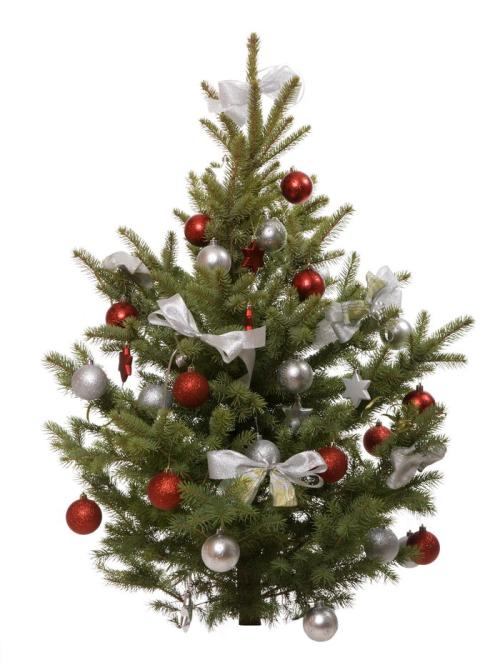
As long as a tree meets conditions such as being evergreen and having a triangular, conical shape, it can be used as a Christmas tree. Therefore, many plants in the family Pinaceae, which are widely distributed in temperate regions of the Northern Hemisphere such as Europe and North America, are good materials for Christmas trees. The most traditional Christmas trees are made from European silver fir (Abies alba, also called white fir or silver fir), because European silver fir has a beautiful tree shape, vivid green foliage, a fragrant scent, and needles that do not fall off after drying; other plants in the same genus Abies are also used as Christmas trees. Besides firs, plants in the genus Picea, especially Norway spruce (Picea abies), are also a relatively inexpensive source of Christmas trees because they grow quickly and cost little. In addition, a small number of plants in the genus Pinus and even in the genus Araucaria are also used to make Christmas trees, but those are rather niche.
Growth habits:
Under normal conditions, the average annual growth in tree height within 10 years is more than 1 m, and the average annual growth in diameter is more than 1 cm. It is a strongly heliophilous species, and the crown is phototropic, requiring sufficient light even at a young age. It is suitable for a cool and humid subtropical climate and can tolerate an extreme minimum temperature generally not below -7 degrees Celsius, with cold resistance superior to species such as black wattle. It is not demanding about soil and is suitable for acidic to slightly acidic loam or sandy loam with relatively deep, loose and moist soil, while it grows poorly on overly heavy, dry and poorly drained soils. It has strong drought tolerance, but grows better on the middle and lower slopes or in valleys.