Planting Methods and Cultivation Techniques for Rangoon Creeper
Rangoon Creeper (Quisqualis indica), also known by the aliases Shijunzi, Mulangniu, and Zaiyanghua. It is a plant of the genus Quisqualis in the family Combretaceae, and its seeds are used as medicine: sweet and warm in nature and flavor, slightly toxic, and used to kill parasites. It is mainly used to treat ascariasis. It is distributed in Jiangxi, Fujian, Taiwan, China, Hunan, Guangdong, Sichuan, Guizhou, and Yunnan provinces and regions.
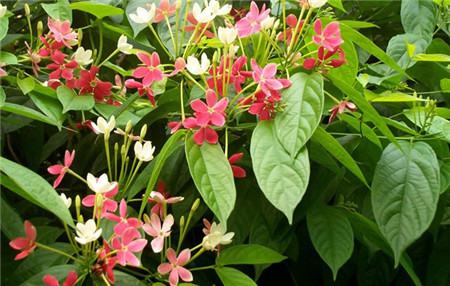
Propagation methods for Rangoon Creeper:
Use seeds, division, cuttings, and layering to propagate.
1. Seedling raising and transplanting from seeds
Collect mature, plump fruits in autumn, sow them immediately after collection, or store them mixed with moist sand for spring sowing. Seedlings can be planted out when they reach about 30cm in height.
2. Division propagation:
In March, take suckers from vigorous mother plants and transplant them.
3. Cutting propagation:
There are stem cutting and root cutting methods. For stem cuttings, in February-March or September-October, cut 1-2 year old vigorous branches as cuttings, each 20-25cm long, insert them obliquely into the seedbed, and transplant the following year. For root cuttings, from December to January-February of the following year, cut off and dig out lateral roots more than 30cm away from the main root, select those with a diameter of more than 1cm and cut them into cuttings about 20cm long, insert them into the seedbed, and transplant after 1 year.
4. Layering propagation:
In February-March, first bend vigorous long branches and bury them in the soil, or use serpentine layering, and after they take root, cut them off and transplant. For seedlings propagated by the above methods, plant them out in mid-to-late February or during the rainy season. Use a row spacing of 3.3m x 2.3m, apply barnyard manure in the holes and mix it evenly with the soil, plant 1 seedling per hole, and water after planting to settle the roots.
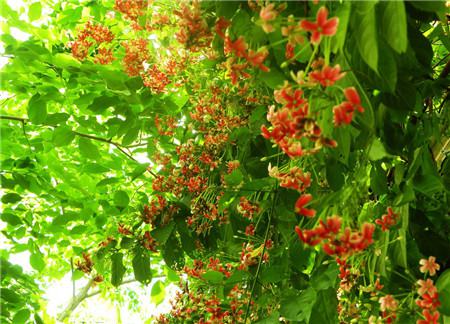
In the 1-2 years after planting out, cultivate and weed frequently, and apply topdressing 2-3 times each year. After entering the fruiting stage, apply topdressing once each at bud break and after fruit harvest in the latter years. In winter, pay attention to earthing up or covering the base with weeds to protect against cold. Prune once each year in early spring or after fruit harvest so that the branches are evenly distributed. For large-scale planting, set up trellises for them to climb on.
Rangoon Creeper is not strict about soil requirements, and cultivation and management are also relatively easy. As long as some humus-rich garbage or chicken feathers and other materials are placed in the holes as base fertilizer at planting time, attention is paid to watering, and some liquid fertilizer is applied appropriately, it can grow vigorously and bloom profusely and brilliantly.