Detailed Explanation of Datura Planting Methods and Key Technical Points
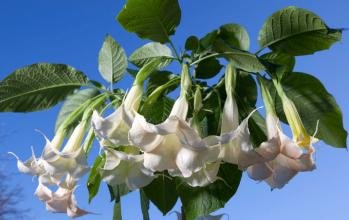
Datura (scientific name: Datura stramonium Linn.), also known as mandala, manda, manzha, manda, drunken-heart flower, dog walnut, Yangjinhua, maple eggplant flower, ten-thousand peach flower, naoyanghua, large trumpet flower, and mountain eggplant. It is herbaceous or semi-shrub-like, 0.5-1.5 m tall, nearly smooth throughout or with short pubescence on young parts. The stem is stout, cylindrical, light green or tinged with purple, and woody at the lower part. Leaves are broadly ovate. Flowers are solitary in the branch forks or leaf axils, upright, with short pedicels; the calyx is tubular.
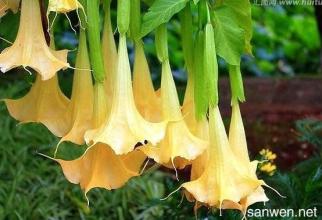
Cultivation Techniques
1. Site Selection and Land Preparation
Datura is suitable for planting in soil with ample sunlight, rich fertility, loose and deep soil, and good drainage and irrigation. Before sowing, we should pay attention to whether there are residual herbicides or bacteria. Land preparation should be carried out in a timely manner, and plowing should be done before winter, with a depth of no less than 30 cm. Disinfection should be carried out to prevent residual harmful substances in the soil from affecting the growth of Datura. Land preparation and fertilization should be carried out at the same time, applying sufficient base fertilizer, with decomposed farmyard manure as the main base fertilizer. After fertilizing, rake the soil level, prepare the soil again the following spring, and get ready for management and harvest after sowing.
2. Sowing and Seedling Raising
After clearing the land, sow in a timely manner around spring, selecting plump seeds with no obvious wounds, and first soak the seeds, promote germination, and disinfect them. Then control the planting density and dig planting holes. The planting spacing is about 60 cm * 45 cm. The planting holes should not be too deep, about 3-4 cm. Datura seeds are relatively small, and their ability to push through the topsoil is not strong, so seeds that are too deep are difficult to emerge, and after emergence their growth capacity will also decline significantly. Sow 5 seeds in each planting hole, cover with fine soil, suppress it, and maintain soil moisture. If raising seedlings, the best time for transplanting is around the end of May.
3. Field Management
After successful seedling establishment, when the seedlings grow to about 9 cm, they should be planted out in a timely manner, and seedlings that are too weak, affected by pests and diseases, or dead should be removed. The number of seedlings in each planting hole should not exceed 2 plants, and then when the seedlings are about 16 cm tall, they should be thinned and spaced so as to increase the number of seedlings in the planting holes to about 4 plants. Topdressing should be carried out immediately after seedling raising, and water and fertilizer management should be based on plant growth conditions in the middle and late growth stages. During the growth of Datura, intertillage and weeding should be done well, no fewer than 2 times, and the plants should be earthed up appropriately to prevent lodging.
4. Pest and Disease Control
Datura's disease resistance is not very strong, and some pests and diseases often harm the growth of Datura. Common pests and diseases of Datura include black spot, aphids, ladybugs, and so on. We will avoid the occurrence of pests and diseases, because once pests and diseases occur, the growth of Datura will definitely be affected, and some unnecessary losses will be caused. Strengthen field management, reduce the presence of pathogens, and reduce the occurrence of diseases. Also prepare various common pest and disease control agents to avoid sudden disease outbreaks.