Detailed Explanation of Hyacinth Bean Planting Methods and Technical Points
The hyacinth bean, also known as the bonavist bean, Egyptian kidney bean, lotus bean, magpie bean, or hedge bean, is a cultivated species in the genus Lablab of the tribe Phaseoleae in the family Fabaceae. It is an annual or biennial herbaceous climbing plant, and can be perennial in frost-free areas of the south. Its tender pods or mature beans are eaten. It originated in Asia. It is mainly distributed in India and tropical countries. In China, it is grown more extensively in the south, followed by North China. Under natural conditions in high-cold regions, it can flower but does not set pods. The hyacinth bean is a vegetable relatively high in protein and carotene. It is easy to cultivate and plays a certain role in regulating the supply of vegetables during the summer and autumn off-season, but large-scale production has not yet been formed.
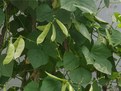
Spring Hyacinth Bean Planting Techniques
1. Land preparation and fertilization This variety adapts to various soils, but fertile loam is best. Deep plowing should be carried out as early as possible, with heavy application of base fertilizer, generally applying 3000-5000 kg of farmyard manure per 667 sq m. Before sowing, 50-75 kg per 667 sq m of potassium sulfate compound fertilizer can be applied in furrows or holes.
2. Timely sowing "Xiaoshennong" spring hyacinth bean can be cultivated both under protection and in the open field. For open-field planting, sowing can be done when the soil temperature at a depth of 5 cm reaches 14°C (the same sowing period as cotton). If small arched shelters are used in the early stage, sowing can be 10-15 days earlier than open-field planting. For seedling raising and transplanting, sowing can be 25-30 days earlier, and transplanting is done at the 2-leaf-1-heart stage. Row spacing is 90 cm, plant spacing is 40 cm, sow 2 seeds or transplant 2 plants per hole, and use 1000-1200 g of seed per 667 sq m.
3. Trellising and vine guiding For block planting, a 2.0-2.5 m high A-frame trellis should be set up before the seedlings reach 30 cm in height. For scattered planting, branches, bamboo poles, ropes, wire, etc. can be used to guide the vines to climb onto fences and walls.
4. Pay attention to pest control Spring hyacinth beans will be affected by pests such as aphids, red spider mites, American leafminers, and pod borers, which should be controlled in a timely manner. Abamectin can control all the above pests at the same time. To specifically control pod borers, you can also use 5 mL of chlorfluazuron + 10 mL of pyrethroid pesticide, mixed with 15 kg of water, and spray the flowers before 10 a.m., spraying once for each batch of flowers that opens.
5. Topdressing to prevent decline After harvesting 3 to 4 batches of tender pods, one topdressing can be carried out, applying 25-30 kg of potassium sulfate compound fertilizer in furrows between the trellises 20 cm away from the plants. It is best to water once together with the topdressing. Since the hyacinth bean is a leguminous crop with root nodules that can fix nitrogen, nitrogen fertilizer should not be applied too much, otherwise it easily causes excessive vegetative growth. If there are signs of premature decline, foliar fertilizers such as potassium dihydrogen phosphate, photosynthetic micro-fertilizer, and chemical fertilizer essence can also be sprayed on the leaves as a remedy.