Lily of the Valley Planting Methods and Care Tips Explained in Detail
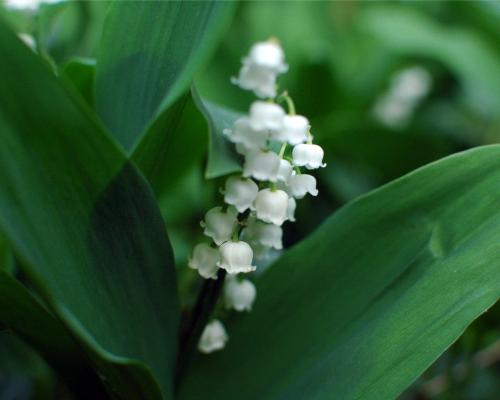
Lily of the valley (scientific name: Convallaria majalis Linn.), also known as Junying grass, valley lily, and bellflower. It has a sweet scent, and the whole plant is toxic. It is a perennial herb. The plant is short, the whole plant is hairless, and underground it has multi-branched, creeping, flat-spreading rhizomes. It is glossy. The sheaths clasp each other, and at the base there are several sheath-like membranous scales. The leaves are elliptical or ovate-lanceolate, the flowers are bell-shaped and drooping, in racemes, the bracts are lanceolate and membranous, and the style is shorter than the perianth. In autumn it produces round, dark red berries, which are toxic, containing flat, elliptical seeds. The flowering and fruiting period is from May to July.
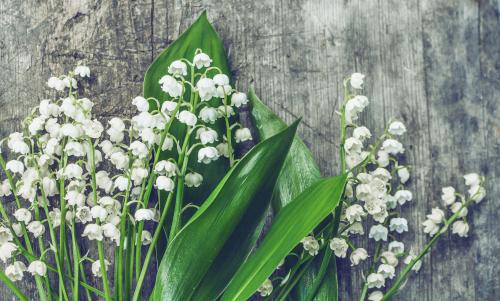
Lily of the valley planting methods:
Lily of the valley prefers semi-shade, humid, and cool environments, is cold-tolerant, and dislikes heat. As long as there is suitable shady conditions, it will multiply rapidly by spreading rhizomes. Shade and moist, fertile soil are important conditions for successful planting; soil containing humus and sand is ideal, as this kind of soil is both fertile and well-drained. In modern factory greenhouse commercial production, pollution-free cultivation is used to improve flower quality and yield, avoiding excessive application of nitrogen fertilizer, and using less ammonium nitrogen fertilizer, which is worth noting and emphasizing.
Lily of the valley is often propagated by division in spring and autumn by cutting the rhizomes or sprouting shoots into sections for separate cultivation, that is, division propagation. The planting site should be deeply plowed and fertile. After 3 to 4 years, change the site and plant again, or rotate with other flowers. The planting spacing between plants and rows is 25 to 30 cm, with 2 to 3 buds per clump, and the soil covering depth is 5 to 6 cm. During the growing period, the soil should always be kept loose and moist, and a fully fermented topdressing should be applied once in early spring and once in late autumn. After 10 to 15 days, gradually move it toward the light, raise the room temperature to 20°C, keep the bottom temperature at 22°C, and increase watering and topdressing; after 3 weeks it can bloom. If forcing cultivation does not provide low temperature and darkness, it often fails to sprout, or although it sprouts, the scapes and leaves grow unevenly, which hinders ornamental value.
When planting lily of the valley, cover with more than 5 cm of soil, and water thoroughly after planting. After sprouting in spring, apply topdressing once every 15 days, pay attention to watering during drought, and stop fertilizing after the flower stems are drawn out; after the flowers fade, promptly cut off the pedicels and apply topdressing 1 to 2 more times. In late autumn, after the aboveground parts wither, cover with fallen leaves and cow manure to protect the rhizomes and their dormant buds for overwintering in the open field. For field planting, divide and replant once every 3 to 4 years; for pot cultivation, choose fat and large rhizome buds, plant 4 to 5 buds per pot, and repot once a year. For forcing cultivation: plant low-temperature-treated rhizomes, maintain the temperature at about 18 to 20°C throughout the cultivation period, pay attention to fertilizer and water management, keep the soil moist, and it can bloom in about one month. It is harmed by brown spot disease; spray with 75% chlorothalonil wettable powder at 700 times dilution.
Lily of the valley is propagated by division once every 2 to 3 years; in late autumn, after the aboveground parts of the plant wither, dig up the young buds at the ends of the rhizomes for division planting. After division, large young buds bloom the following spring, while small ones bloom the year after. The top of the underground rhizome of lily of the valley has flower buds and leaf buds. ***For division***, it is best to keep 4 to 6 buds, among which there are both flower buds and leaves, with each section carrying 4 to 6 buds. Apply some plant ash or sulfur powder to the wounds, and cover the hole with about 5 cm of soil. If breeding or introducing from distant places, seed propagation can be used, sowing in autumn and germinating the following spring.
For managing lily of the valley, apply sufficient base fertilizer. After sprouting in spring, water with diluted decomposed cake fertilizer once every 7 to 10 days, and apply liquid fertilizer once when flower stems appear, after flowers fade, and after autumn. After flowering, it is best to cut off the stems and branches early so that nutrients are concentrated in supplying the rhizomes. When overwintering in the open field, cover the ground with grass or fine soil to prevent cold and freezing.
If potted, in November dig out the rhizomes with buds and store them at 3°C to 5°C for 14 to 21 days, then take them out and plant them in pots, but do not let them see light, and keep the temperature at 12 to 14°C. Only after the young buds emerge from the soil should they be exposed to light, and at this time the temperature should be controlled between 20 and 22°C. Then water and topdress appropriately. If cultivated properly, they can bloom afterward. If low temperature and dark treatment are not given in advance, the leaves often grow unevenly and the flower stems fail to sprout.
Lily of the valley is strong by nature and tolerates rough management. If decomposed cake fertilizer is often applied after sprouting in spring, it will bloom abundantly. Stop fertilizing after the scapes are drawn out, and resume fertilizing 1 to 2 times after the flowers fade to promote the rhizomes to sprout new tillers. Generally, division of rhizomes is used for propagation. In autumn, cut the bud-bearing rhizomes of the mother plant into sections and plant them, and with careful care they will survive. The tillers growing from the base can also be cut off for separate planting, but the propagation rate is relatively low.
Water and fertilizer management for lily of the valley
After the divided seedlings are planted, water thoroughly, and in winter cover the surface with compost or straw curtains to prevent cold. After the buds sprout in early spring, remove the covering, and hoe weeds and loosen the soil. During the growing period, keep the soil moist, apply a thin cake fertilizer solution once every 2 weeks, and pause fertilizing after the pedicels are drawn out. If the fruit is not to be enjoyed after the flowers fade, promptly cut off the flower branches and apply liquid fertilizer once to promote the growth of dormant buds. For open-field planting, apply a heavy fertilizer once before winter, so that growth will be vigorous the following spring. After 3 years of planting, lily of the valley needs to be rotated to a different site.
Collection management of lily of the valley:
1. It grows on the shady side of hillsides, under forests, and in grassland at forest edges.
2. Choose shady hillsides, forest areas with relatively thick humus, and grassland. Make contour-line or cross-hill strips, with a strip width of 1.5 m, a strip spacing of 2 m, and a row-hole spacing of 50x20 cm. Dig holes, break up the soil, compact it, and shape it into a steamed-bun form.
3. Propagate with seeds or rhizomes. In autumn, sow the seeds in rows in the holes, cover with soil, compact, and cover with leaves. Or in spring, cut the rhizomes into sections, plant them in the holes, compact, and cover with leaves.
4. After the seedlings emerge the following spring, thin them so that there are 2 to 3 plants per hole. Remove the leaves, ventilate, let in light, and remove diseased and weak plants.
5. When collecting, after the fruits mature, harvest the whole plant, remove the soil, and dry it in the sun.