Detailed Guide to Cyclamen Planting Methods and Care Techniques
Cyclamen, in the family Primulaceae, genus Cyclamen. It originates from the mountainous areas along the Mediterranean coast of Greece and Syria. It is cultivated throughout both northern and southern parts of our country. It does well in a mild climate all year round, being neither cold-tolerant nor fond of summer heat. It suits sunny, cool and humid environmental conditions, and dislikes intense heat and rain.
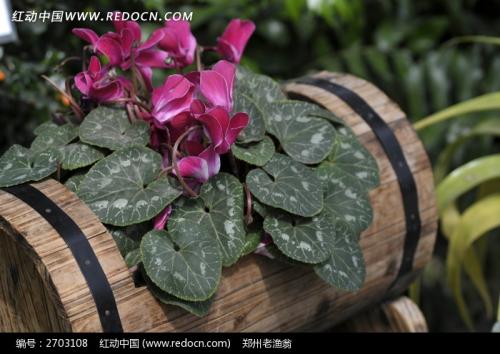
Cyclamen propagation methods: Cyclamen seeds have a very high germination rate, so sowing is mostly used for propagation. The most suitable temperature for seed germination is 18~20°C, which can serve as one of the important conditions for choosing the sowing time. Generally, in cold regions sowing is done from late August to early September, and in warm regions from late September to early October. When greenhouse heating is used, the sowing time can be postponed accordingly. The number of days required for germination is 30~35 days. The specific method is: seed selection and treatment. Before sowing in September~October, harvest and select large, plump seeds and soak them in cold water for 1~2 days, or in 30°C warm water for 3~4h, or soak them in a 1000-fold solution of methoxyethylmercury chloride for 30min; after sterilization and disinfection, wash them clean with water and set aside for sowing. Cyclamen seeds can be stored for 2~3 years, but to increase the germination rate and germination vigor, fresh seeds should be used whenever possible. The sowing soil is generally a mix of 50% leaf mold and 50% clay soil, or 60% clay loam and 40% leaf mold. Maintain air permeability, water retention and slight acidity (pH between 5.8~6.5).
The sowing box can be a wooden box 40~50cm long, 30cm wide and 7~8cm high, or a shallow ceramic pot or a sterilized shallow plastic pot; the bottom of the box must have drainage holes. First spread a 2cm-thick layer of tiles and clumpy soil on the bottom of the sowing box, then add a 2cm-thick layer of coarse soil on top, and finally add a 2~3cm-thick layer of fine soil, and level the surface evenly. When sowing, the plant and row spacing is 2cm x 2cm; sow the seeds neatly one by one, and cover with soil about 0.5~1.0cm thick. If the covering soil is too thin, the seeds are easily exposed when watering, or germination is delayed due to drying out, or the seed coat does not fall off; if the covering soil is too thick, it easily causes delayed germination and weak growth, affecting growth. Therefore, after sowing, the sowing box can be gently shaken, and a thin layer of soil is covered. After covering with soil, use a fine-holed watering can to water repeatedly in a mist until the soil moisture is close to saturation, or use the pot-soaking method to soak thoroughly, cover with glass, and place in a place at 18~20°C; germination occurs after about 35 days. After germination, promptly remove the glass and place it in a sunny and ventilated place.
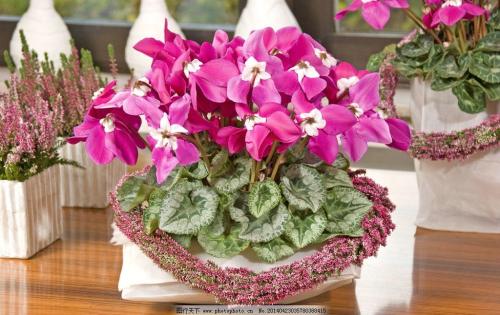
Cultivation management: When the sown seedlings grow 2~3 true leaves, the first pricking out can be carried out, that is, transplanting the sown seedlings temporarily into a shallow pot. The potting soil uses a mix of 5 parts leaf mold, 3 parts loam and 2 parts river sand. Use a small pot, planting 1 plant per pot. Due to the moisture relationship of the potting soil, differences in growth are likely to occur between individuals, and there is also a tendency for slow growth; however, pot planting has fewer soil-borne infectious diseases, and later transplanting damages the roots less. The planting depth should make the top of the small corm level with the soil surface. After planting, water thoroughly, place in an environment at about 13°C room temperature, and pay attention to proper shading. When the seedlings recover their growth, gradually provide light, strengthen ventilation, do not let the potting soil dry out, water appropriately, and at the same time apply topdressing in appropriate amounts, mainly nitrogen fertilizer. When fertilizing, do not let the fertilizer water stain the leaf surface, otherwise it easily causes leaf rot. After fertilizing, sprinkle water promptly to clean the leaf surface. When the seedling grows to about 5 true leaves, the final potting can be carried out, that is, final planting.
The potting soil is mixed in a ratio of 3 parts leaf mold, 2 parts loam and 1 part river sand, with barnyard manure or bone meal added as base fertilizer. 1 plant per pot; when potting, the corm should be exposed about 1/3 above the soil surface, so as not to hinder the emergence of flower stems and young buds, and care should be taken not to damage the root system. After covering with soil and firming it, water thoroughly. The suitable temperature for plant growth is 12~20°C; if the light is too strong, proper shading is needed, and topdressing is applied once every half a month. In the early stage of seedlings, mainly nitrogen fertilizer is applied, and in the later stage, more phosphorus and potassium fertilizer should be applied to promote flower bud formation. After flower buds appear in November, stop fertilizing, give sufficient light, and keep the potting soil moist. In late autumn, move them into a medium-temperature greenhouse for maintenance; after 8~12 months of cultivation, they can reach full bloom by February of the following year. During the flowering period, if the temperature is lowered, the opening time can be extended. During the flowering period, artificial methods can be used to promote pollination, such as gently tapping the flower stalk with the hand to increase the pollination rate and seed-setting rate. After flowering, raise the bottom of the pot to prevent the fruit stalk from drooping and touching the ground, ensuring the fruit develops fully. Generally, the flowering period ends in April, and old corm plants begin to shed leaves in May~June (some varieties can extend their flowering period to June), and begin to enter dormancy when temperatures are high in July. During the dormancy period, the plants should be placed in a cool, ventilated place without rain, shaded with reed curtains, and the room temperature kept no higher than 30°C; after autumn begins, dig up the corms and repot them. Plants 2~3 years old have many flowers, up to more than 50 blooms, but the flowering period is later; plants over 4 years old weaken in growth and bloom less, and are usually no longer cultivated for ornamental purposes.