A Detailed Guide to Planting Methods and Care Tips for the Sedeveria 'Harry Butterfield'
The Sedeveria 'Harry Butterfield' (xSedeveria 'Harry Butterfield'), also known as Wang Yuzhu Lian or Jiuwan, is a succulent plant in the Crassulaceae family, an intergeneric hybrid between the Sedum genus and the Echeveria genus. It has no obvious dormancy period; young plants are relatively short, while older perennial plants form a trailing habit, making them very suitable for home pot culture. This variety was first bred in the state of California in the United States, and is also known as Yuzhui and Jingye.
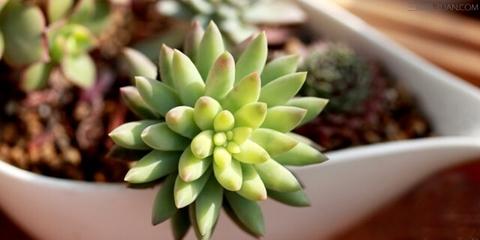
Cultivation methods for the Sedeveria 'Harry Butterfield':
1. Soil selection: The fingered citron flower prefers loose, fertile, well-drained acidic soil conditions. The potting soil should be made by mixing loose sandy soil with red-yellow loam and adding an appropriate amount of decomposed organic fertilizer; heavy, alkaline soil is detrimental to its growth and development. The potting soil can be prepared with 60% coarse sand, 20% decomposed organic fertilizer, and 20% field soil.
2. Planting: First select good seedlings, which should have well-developed, sturdy roots and uniform branching. The planting period is from September to October in autumn and from late February to early April in spring. Before potting, first prune the branches and trim the roots, keeping the fibrous roots intact.
3. Watering: After the fingered citron flower is potted, immediately water thoroughly to settle the roots, and thereafter water when the soil appears dry, keeping the soil moist, but preventing waterlogging in the pot, which would affect root growth. Watering is the key to success or failure in growing the fingered citron flower. After April to May, as temperatures rise, the fingered citron flower grows rapidly and its water demand increases; in the hot summer, in addition to keeping the soil in the pot moist, water should also be sprayed around it to maintain a certain environmental humidity; in autumn, as temperatures gradually drop, the amount of watering can be slowly reduced; in winter, when the tree enters dormancy, it should be moved into a warm shelter, and the pot only needs to be kept at a certain level of moisture, avoiding excessive wetness or dryness, so as to prevent root rot or the plant withering. Watering the fingered citron flower should also be handled flexibly according to the specific condition of the seedling: water less for small and weak trees, and more for large and strong trees; do not water during the fruit-swelling period, to avoid fruit drop.
4. Fertilizing: Apply topdressing in combination with watering. For potted fingered citron flowers, fertilizing throughout the year can be divided into four different stages: First, from the Spring Equinox to the Grain in Ear, apply light fertilizer about every 7 days, and potassium dihydrogen phosphate can also be used as a foliar topdressing, with the aim of strengthening the tree's vigor. Second, from the Grain in Ear to the Major Heat is the full-bloom and fruiting period, and fertilizer should be applied once every 3 to 5 days, at a somewhat higher concentration than before. At this time, apply more phosphorus and potassium fertilizer, with the aim of producing more flowers and fewer dropped fruits, and hand pollination can also be carried out. Third, from the Major Heat to the Autumn Equinox, when the fingered citron flower fruit is in its swelling period, use more compound fertilizers such as potassium and phosphorus, and less nitrogen fertilizer, otherwise the fruit will be delayed in ripening. Fourth, from the White Dew to the Frost's Descent, after harvesting the fruit, apply a thin phosphorus-potassium fertilizer and control watering and nitrogen fertilizer, with the aim of restoring the tree's vigor and promoting flower bud differentiation. In short, control fertilizer and water in the early fruiting stage, and increase fertilizer and water during the fruit-swelling period.
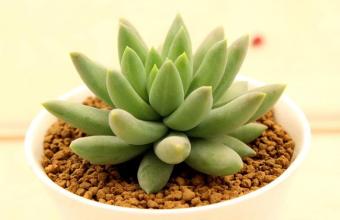
Points to note for the Sedeveria 'Harry Butterfield':
After the fingered citron flower is potted, pay attention to pinching off the main shoot tips to promote branching and dwarf the canopy. Thin out dense and weak branches, and, in combination with propping, pulling and hanging methods, adjust the tree's posture and improve its form. After fruiting, according to the growth and fruiting vigor, carry out spring and summer bud removal, pinch off the tips of fruiting branches, and thin flowers and fruits, to promote balance between shoots and fruits in each period and prevent the phenomenon of alternate bearing (on and off years).