Purple Heart (Tradescantia pallida) Planting Method and Precautions
Purple Heart (Tradescantia pallida), of the family Commelinaceae, phylum Angiosperms, genus Tradescantia, subclass Commelinidae, is native to Mexico and also known as purple spiderwort or purple inch plant. It prefers warmth and moisture, is not cold-tolerant, dislikes blazing direct sun, and favors partial shade. It has a strong tolerance for drought and does well in fertile, moist soil.
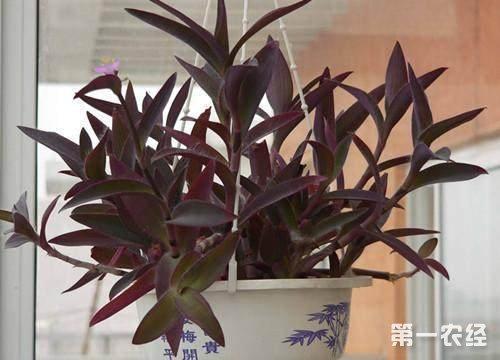
Growth Habits of Purple Heart
It prefers warmth and moisture, is not cold-tolerant, dislikes blazing direct sun, and favors partial shade. It has a strong tolerance for drought and does well in fertile, moist loam.
When grown in a pot, this plant is best placed in a white, blue or other colored flowerpot. During the growing season, shade is needed only around midday from June to September in the height of summer. In winter, keeping the potting soil slightly moist is enough. In March of the following year, give weak and straggly plants a thorough pruning to encourage new shoots.
For propagation of this plant, take cuttings during the growing season and root them in water or soil; both root easily.
Purple spiderwort can forecast the weather. In North America there grows a type of purple spiderwort whose flowers are very small and, under normal conditions, blue. When air pollution is severe, its flowers turn pink, so local people judge the degree of air pollution by the color of its blooms.
Key Points for Summer Care of Purple Heart
1. Increase air circulation so that heat can be released from within the plant;
2. Place it in partial shade, or give it 50% shade;
3. Mist it appropriately, 2 to 3 times a day.
Key Points for Winter Care of Purple Heart
1. Move it indoors to a spot with bright light for care;
2. Outdoors, it can be wrapped in plastic film to overwinter, but every two days at the warmer midday hours the film must be opened to let it breathe;
Light Management for Purple Heart
Purple Heart fears intense direct light and needs to be kept in partial shade, or given 70% shade. For plants kept indoors, place them in as bright a spot as possible and every one or two months move them outdoors to a partially shaded spot or a spot with shade for a month of care, so they can accumulate nutrients and recover their vigor.
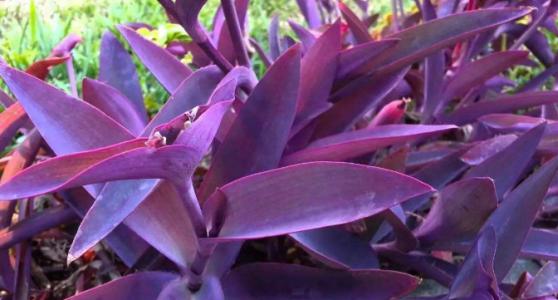
Fertilizer and Water Management for Purple Heart
Purple Heart has high fertilizer and water needs, but it most dislikes careless fertilizing, concentrated fertilizer, and one-sided application of nitrogen, phosphorus or potassium fertilizer. It should follow the fertilizing (and watering) principle of "light fertilizer applied frequently, small amounts but many times, complete nutrition":
Spring, summer and autumn: These three seasons are its peak growing period, and fertilizer and water management follows the cycle of "Hua Bao" - "Hua Bao" - clear water - "Hua Bao" - "Hua Bao" - clear water (at minimum, "Hua Bao" must be given twice a week), with intervals of roughly: 1 to 4 days for outdoor plants; shorter intervals on sunny or hot days, longer intervals or no watering on rainy or cold days; 2 to 6 days for indoor plants; shorter intervals on sunny or hot days, longer intervals or no watering on rainy or cold days. Water as much as possible in the morning when temperatures are lower. In summer, water in the morning or evening when temperatures are low, and also mist the plants frequently.
Winter: During the winter dormant period, the main task is to control fertilizer and water. Fertilizer and water management follows the cycle of "Hua Bao" - clear water - clear water - "Hua Bao" - clear water - clear water, with intervals of roughly 7 to 10 days; shorter intervals on sunny or hot days, longer intervals or no watering on rainy or cold days. Water as much as possible at midday on sunny days when temperatures are higher.
Summary: That is all for the cultivation method and precautions for Purple Heart; we hope it is helpful to you. A reminder: the optimum growing temperature for Purple Heart is 18°C to 30°C; it dislikes cold and frost, and the overwintering temperature must be kept above 10°C. When the winter temperature drops below 4°C it enters dormancy, and if the ambient temperature approaches 0°C, it will die from frost damage.