Mustard (scientific name: Brassica juncea (L.) Czern. et Coss.) is an annual
herbaceous plant in the family Brassicaceae, genus Brassica, reaching up to 150 cm in height, with bristles on young stems and leaves and a pungent taste; stems erect,
leaf petioles with small lobes; lower stem leaves smaller, with notched or toothed margins; upper stem leaves narrowly lanceolate, with inconspicuous sparse teeth or entire margins. Racemes terminal, elongating after flowering; flowers yellow,
sepals pale yellow, oblong-elliptic, erect and spreading; petals obovate, siliques linear, seeds spherical, purple-brown. Flowers March-May, fruits May-June.
Cultivated throughout China. Leaves salted for food; seeds and whole plant used medicinally, capable of resolving phlegm and relieving asthma, reducing swelling and relieving pain; ground seeds called mustard powder, used as a seasoning; the oil pressed from them is called mustard oil; this species is an excellent honey plant.
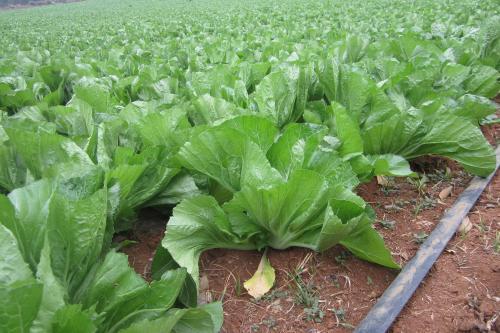
Cultivation Techniques
Land Preparation and Transplanting
Mustard is not strict about soil requirements; generally a loam that is sunny and well-ventilated, convenient for drainage and irrigation, and retains water and fertilizer will suffice. Apply sufficient base fertilizer before planting: per mu, use 30 kg of imported compound fertilizer, 3-5 kg of urea, 25 kg of superphosphate, and 10 kg of potassium chloride mixed with 50 kg of peanut bran as base fertilizer. Raised beds can be made at a specification of 1.2 m including the trench, with a plant spacing of 30-50 cm, double-row planting, and about 2500-3000 plants per mu is suitable.
Field Management
Water management: 2-3 days after transplanting, water once in the morning and once in the evening; depending on weather conditions, irrigate once every 3-5 days thereafter. In the early stage, roots are weak and growth is slow, and plants are susceptible to waterlogging, so light irrigation should be the main approach; in the middle and late stages, roots are well developed and growth is faster, with higher water demand, so irrigation can gradually be increased, but water should not be allowed to cover the bed surface; stop irrigation 5 days before harvest to facilitate storage, transport and processing.
Reasonable fertilization: Mustard topdressing is mainly nitrogen fertilizer, but at the seedling stage and in the main field period, phosphorus and potassium fertilizers should be appropriately increased to improve disease resistance and increase yield. After transplanting and establishment (one week after planting), new roots begin to grow, so apply a light dressing of diluted human manure and urine once, then topdress about every 7 days, gradually increasing the amount; the second topdressing can begin after 10 days, applying 7.5 kg of compound fertilizer plus 2.5 kg of urea; the third topdressing is carried out 17 days after planting, applying 10 kg of compound fertilizer plus 2.5 kg of urea; 24 days after planting, apply 12.5 kg of urea per mu, plus 5 kg of potassium chloride; then when mustard forms heads, apply a heading fertilizer once, using 12.5 kg of compound fertilizer plus 2.5 kg of urea per mu, to promote thickening and weight gain of the stem. To make up for the insufficient nutrient uptake by mustard roots, in the late growth stage, spray 1-2 foliar fertilizers, using 1%-3% superphosphate plus 1 small packet of nutritional-type nucleotide for spraying.
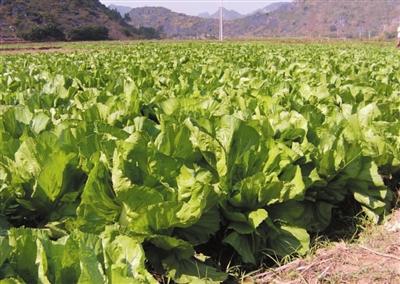
Pest and Disease Prevention
At the seedling stage, on the premise of sufficient base fertilizer, apply a light dressing of 10% decomposed human manure and urine once, and spray with 40% dimethoate 1000-fold solution and 70% chlorothalonil 600-fold solution to control pests and diseases. [5]
Black spot: mainly damages leaves; lesions round or nearly round, light brown to brown, with concentric rings obvious (Chinese cabbage) or not obvious (mustard), surrounded by a yellow halo; when severe, lesions coalesce, causing partial or complete death of leaves, and lesions easily perforate. The above two diseases are fungal diseases.
Control method: Spray with 75% chlorothalonil 500-fold solution or 58% metalaxyl-mancozeb 500-fold solution plus Zhuwulong, once every 7-10 days, for 2-3 consecutive sprays.
Soft rot: a bacterial disease; pathogens often invade through wounds, initially as water-soaked lesions, which gradually expand, causing rot with sticky fluid oozing out, and the diseased parts give off a foul odor.
Control method: Spray with 72% agricultural streptomycin 3000-4000-fold solution or Xinzhimeisu 4000-fold solution plus Zhuwulong for control, once every 10 days, for 2-3 consecutive treatments.
Viral disease: commonly known as mosaic disease; main symptoms are vein clearing and mosaic, leaves wrinkled, plants stunted and deformed, root development poor, and cut surfaces of diseased roots yellow-brown.
Control method: Focus on prevention; first eliminate the virus-transmitting agent aphids, and apply medication in the early stage of disease. Spray with 20% virus A 500-fold solution or 1.5% Zhibingling No. 2 1000-fold solution plus Zhuwulong, once every 7-10 days, for 2-3 consecutive treatments. Pests
For
aphids,
cabbage caterpillars and
diamondback moths, spray with Caixing 500-600-fold solution or 21% Bisha 2000 at 1000-1500-fold solution; note that spraying should be uniform, covering both upper and lower surfaces, and control can be carried out 2 or 3 times as appropriate according to pest conditions.