Cactus Planting Methods and Key Technical Points
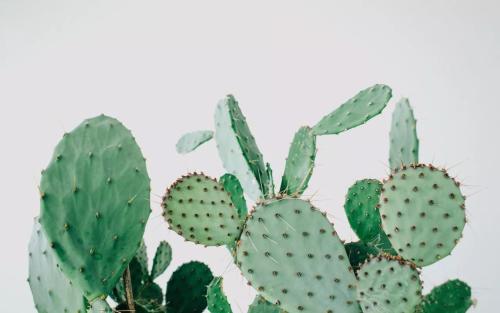
The cactus (scientific name: Opuntia stricta (Haw.) Haw. var. dillenii (Ker-Gawl.) Benson) is a variety of the prickly pear cactus in the family Cactaceae. It is a clumping fleshy shrub, 1.5-3 m tall. The upper branches are broadly obovate, obovate-elliptic or nearly circular, green to blue-green, hairless; the spines are yellow, with light brown transverse bands, hard; the glochids are erect. The leaves are subulate, green, and fall early. The flowers are wheel-shaped; the receptacle is obovate, gradually narrowed at the base, green; the sepal-like perianth segments are yellow, with a green midrib; the filaments are pale yellow; the anthers are yellow; the style is pale yellow; the stigma is yellowish-white. The berry is obovoid, with a depressed apex, smooth and hairless on the surface, purplish-red, with glochids and subulate spines. The seeds are numerous, flatly round, with slightly irregular margins, hairless, pale yellowish-brown.
Cultivation Techniques
- Choice of growing medium. Cacti prefer well-drained, slightly alkaline, fertile sandy soil. For a home-grown cactus growing medium, you can mix 2 parts compost, 4 parts garden soil and 4 parts river sand.
- Choice of pot. Choose a small pot, not a large one; generally it only needs to be slightly larger than the plant itself. You can place some small tile pieces at the bottom of the pot to aid drainage. When planting, do not bury it too deep; it is enough for it to stand steady.
- Ventilation and shading. Sunlight promotes the growth of cacti, so they should receive plenty of sunlight, but in midsummer they need shading to prevent sunscald damage from direct strong light. Cacti kept in unventilated places for a long time are easily harmed by red spider mites in dry, hot seasons, showing an aging-like yellow-brown color that affects their growth and ornamental value. To avoid this, place them in a well-ventilated spot. In addition, cacti are prone to cold injury when the temperature is below 5°C, so frost damage must be prevented in winter.
- Watering and fertilizing. Cacti are drought-tolerant, so watering should be sparse rather than frequent; never let water accumulate in the pot. Keeping the soil half moist is enough. June to August is the season of vigorous cactus growth; to encourage fast growth, generally water once a day. Keep the soil moist, pay attention to drainage in the rainy season, and do not water during the dormant period. For stems with fuzz or white powder, and for grafted parts, never water the stem. Fertilize during the vigorous growth season, but use fully decomposed organic fertilizer or fertilizer containing residue.
-
Repotting. The root systems of cacti and other succulent plants are well developed, constantly enlarging and aging, and they also excrete an organic acid that acidifies the soil, so they must be repotted 1-2 times a year and given fresh growing medium. Repotting should be done during the dormant period, either in early spring in March or in autumn in October. When repotting, cut off the plant's old roots and shorten overly long roots to encourage new root growth.
Precautions for Cactus Planting
1. Repotting young plants
Young cactus plants should be repotted once a year. Mature plants do not need repotting every year.
2. Repotting mature plants
After a certain period of growth, the nutrients in the pot tend to be exhausted and the roots fill the potting soil, or because of frequent watering the potting soil becomes hard and compacted, which is unfavorable for drainage and aeration and easily causes root rot. Therefore, repot generally once every 2-3 years.
3. Light and temperature
In cactus cultivation and management, plants that are kept constantly at a certain degree of dryness and in sufficient light will show a lighter stem color and slower growth, but their areoles and spines will be well developed, thick and handsome.
4. Do not apply any fertilizer to prickly pear cactus during the dormant period. When the midsummer temperature reaches above 35°C, it begins to enter dormancy, and growth resumes after autumn begins.
5. Prickly pear cactus should not be watered right after planting; water only after it has taken root and sprouted, and each watering should be thorough.
6. Weed frequently to prevent weeds from competing with the plants for water and nutrients; this also helps loosen the soil and improve aeration.
7. When planting cuttings, the soil should not be too wet. If the soil is too wet, anaerobic microorganisms in the soil will multiply in large numbers, causing the planting stems to rot and reducing the survival rate, so planting cuttings is prohibited on rainy days.