How to Grow and Care for the Elephant Bush (Portulacaria afra)
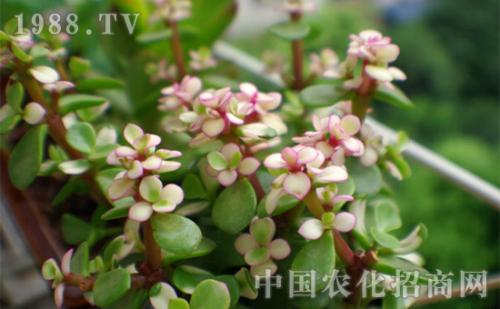
The elephant bush (Portulacaria afra) is a perennial evergreen succulent shrub of the genus Portulacaria in the family Portulacaceae (purslane family). Its stems are fleshy, ranging from purplish-brown to light brown, with branches growing almost horizontally. New growth turns purplish-red in full sun, but stays green when light is insufficient.
Cultivation Techniques
Planting Methods
The elephant bush can be propagated during the growing season by taking cuttings from robust, well-developed branches. Remove the lower leaves before inserting the cuttings, let them dry for a few days until the cut ends have dried, then insert them into a growing medium made of 2 parts leaf mold, 2 parts coarse sand or vermiculite, and 1 part garden soil. After inserting, keep the soil slightly moist. Once rooted, place the plant in a sunny or semi-shaded spot and keep the potting soil moist but not waterlogged. Do not fertilize for the first 2 months, to encourage root growth; after that, apply a diluted, well-rotted liquid fertilizer about once every 10 days. Promptly remove young shoots sprouting from the base to concentrate nutrients and speed up the growth of the main stem. Propagation is by seed or cuttings. The elephant bush is robust and easy to manage; a mix of 2 parts peat and 1 part coarse sand works well as a potting soil.
Temperature and Watering
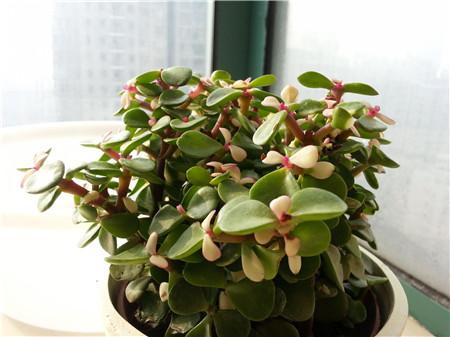
It prefers a warm, sunny environment; it is drought-tolerant but not cold-tolerant. New growth turns purplish-red in full sun, but stays green when light is insufficient. Place it in a sunny spot indoors, water once every 4 days in spring and summer and once every 5 days in autumn and winter. You can mist the plant daily to increase air humidity. Overly wet potting soil easily causes root rot, and it should not be exposed to blazing sun in summer.
Fertilizing
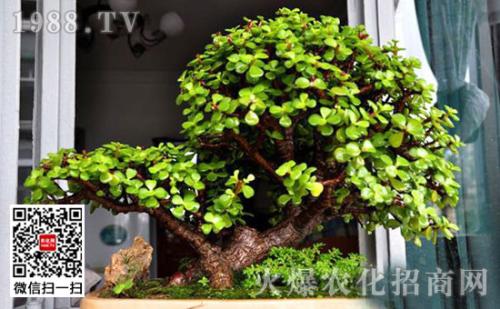
During the growing season, apply a diluted fertilizer solution rich in nitrogen once every 2 weeks, and keep the potting soil moist. In summer, mist the leaves frequently to keep the plant fresh and green. In winter, make sure the greenhouse gets plenty of light, keep the temperature at 10-16°C, and reduce watering so the potting soil stays slightly dry.
Pest and Disease Control
Anthracnose sometimes occurs; spray the leaves with a 1500-fold dilution of 50% thiophanate wettable powder. Pests include whiteflies and scale insects; spray with a 1000-fold dilution of 50% fenitrothion emulsifiable concentrate.
Main Value:
Family and Genus: the young stems and leaves of the amaranth family plant purslane (Portulaca oleracea), family Portulacaceae.
Nature and Flavor: cold in nature, sweet and sour in flavor.
Meridian Entry: enters the Heart, Liver, Spleen and Large Intestine meridians.
Functions: clears heat and detoxifies, cools the blood and stops bleeding.
Indications: heat-toxin diarrhea and dysentery, heat strangury, urinary retention, red and white vaginal discharge, abnormal uterine bleeding, hemorrhoidal bleeding, sores and abscesses, erysipelas, scrofula, weeping eczema, white ringworm of the scalp, dysentery (semi-formed stools), heat-toxin bloody dysentery, swollen abscesses and boils, eczema, snake and insect bites, blood in the stool, and uterine bleeding. In modern times it is mostly used to treat enteritis, acute arthritis, cystitis, urethritis, proctitis, hemorrhoidal bleeding, and so on.
Usage and Dosage: For internal use: decoct in water, 3-5 qian (2-4 liang if fresh); or pound to extract the juice and drink. For external use: pound and apply, burn to ash and grind into powder mixed with liquid for application, or decoct in water for washing.