Detailed Explanation of Rapeseed Planting Methods and Key Technical Points
Rapeseed flowers, also known as yuntai (YUN TAI), with the Latin name Brassica campestris, originated in Europe and Central Asia, and are an annual herbaceous plant of the cruciferous family. In China, they are concentrated in Wuyuan, Jiangxi, China, Huangling, the Hanzhong Basin and the ten-thousand-mu terraces of Jiangling, the Luoping Plain in Yunnan, and the Menyuan Plateau in Qinghai.
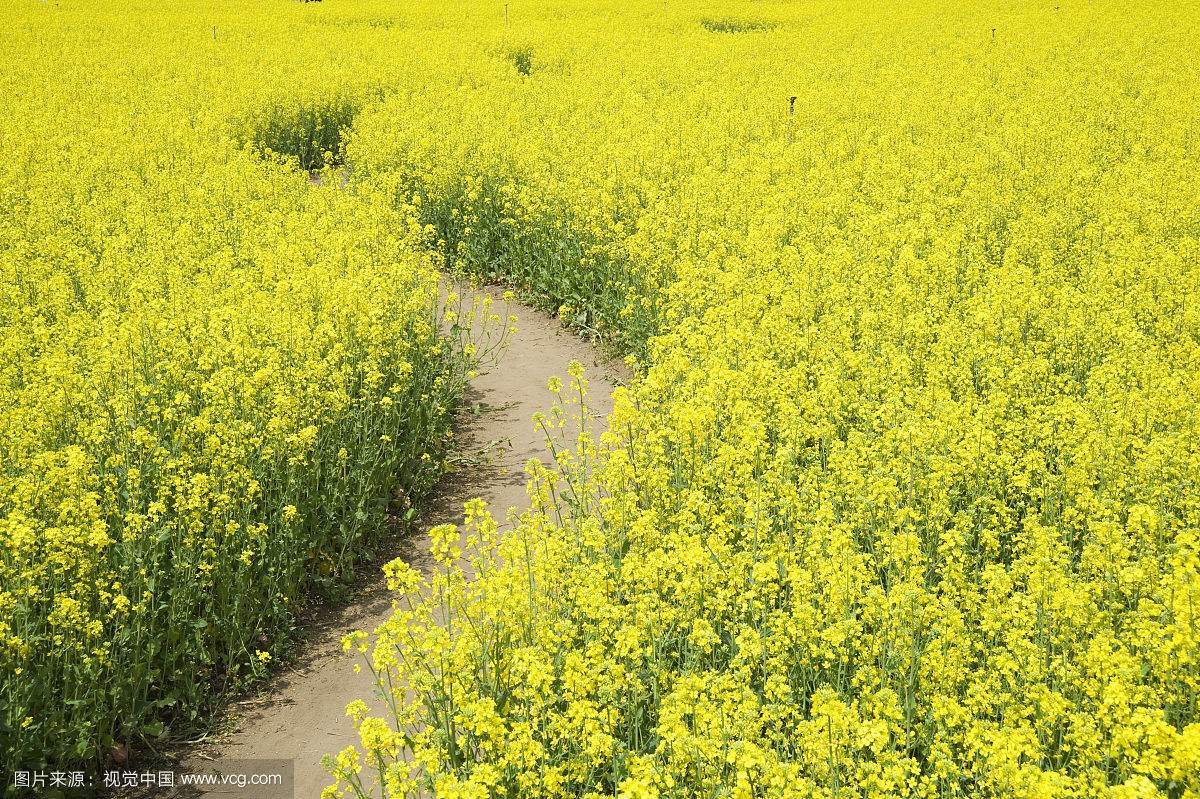
I. Direct Seeding Methods for Rapeseed
1. Drilling
Drilling is divided into no-till furrow drilling and plowed furrow drilling. Fields that have not been plowed but have relatively loose soil can use the no-till furrow drilling method, while plowed furrow drilling is suitable for any field suitable for planting rapeseed. The specific operation method is to open furrows perpendicular or parallel to the bed surface, with a furrow depth of about 3 cm and a furrow row spacing of about 30 to 40 cm. After opening the furrows, sow rapeseed seeds evenly into each furrow. After sowing, irrigate with manure water and cover with about 1 cm of soil. After emergence, thin or fill in seedlings according to density. The seeding rate for this method is about 250 g-300 g per mu. Sowing with a rapeseed seeder belongs to this sowing method.
2. Spot Seeding and Hole Seeding
This method is suitable for fields where the previous crop was rice (the field is relatively moist), barren slopes, high ridge land, and other plots not suitable for plowing. There are three ways of spot seeding: no-till spot seeding, no-till hole digging spot seeding, and plowed hole digging spot seeding. Plowed hole digging spot seeding is suitable for any field where rapeseed can be planted, and no-till hole digging spot seeding is suitable for hard ground. The hole row spacing is 35 cm * 25 cm, and the hole depth is about 3 cm. After digging the holes, spot seed, then pour manure water and cover with soil. Hole seeding generally results in relatively uniform emergence, but it is more time-consuming and labor-intensive.
3. Broadcasting
For broadcasting, after the previous crop is harvested, perform mechanical shallow plowing or no-till. Before sowing, run horse water to keep the field moist, which is conducive to rapeseed seed germination. Broadcasting can be divided into manual broadcasting and motorized sprayer sowing; the latter saves labor and time.
II. Field Management for Direct Seeding
Taking no-till direct seeding in rice fields as an example for explanation.
1. Crop rotation arrangement. Generally, direct seeding in the Yangtze River region is carried out in early to mid-October, so the previous rice crop should be reasonably arranged.
2. Select varieties with strong germination vigor, compact plant type, suitable plant height, and resistance to disease and lodging.
3. Field preparation: choose rice fields with a lower groundwater level and higher terrain; cold waterlogged fields are not recommended.
4. If the field is relatively moist before sowing, sow directly; if the field is relatively dry, run horse water once. Before sowing, the land needs to be prepared well, with a bed width of 1.5-2 m. For mechanical furrow opening, the most suitable bed width is 1.6-1.8 m. Open waist furrows (30-35 cm deep) and surrounding furrows (each 20 cm wide and deep) for convenient irrigation and drainage. For base fertilizer, it is recommended to apply 10-12 kg of nitrogen fertilizer, 7-10 kg of potassium oxide, 5-8 kg of phosphorus pentoxide, 1-1.5 kg of borax, and 2000 kg of organic fertilizer per mu. Before fertilizing, irrigate the field with a thin layer of water, then fertilize. After 2 days, wait for the fertilizer to be absorbed before sowing.

5. Sowing: during sowing, the field should remain moist but not sink underfoot, with no standing water. The general sowing time is between late September and mid-October. Before sowing, add water in batches (total water amount is 60% of the total seed amount), stir evenly, then cover the seeds with a wet cloth until the seeds begin to sprout (individual seeds show white), spread them out in the shade to dry. Before sowing, moisten the seeds again. The day before sowing, add an appropriate amount of water to the ash manure prepared for covering the seeds to keep it moist. It is best to combine manure water application, sowing, and seed covering. After the manure water has completely seeped into the soil, sow, and then cover the seeds.
6. Chemical Weed Control
For fields with many weeds, 3-5 days before sowing, spray with 12.5% gallant 40 ml + 50% prometryn 100 g + 50 kg water (apply when there is no dew or standing water).
After sowing, use pendimethalin or acetochlor, etc., for pre-emergence weed control.
For grassy weeds, at the 3-4 leaf stage of rapeseed, spray with gallant or quizalofop-p-ethyl mixed with water; for broadleaf weeds, at about the 6-leaf stage of rapeseed, spray with benazolin mixed with water.
7. Fertilization
Fertilize according to the principle of placing equal importance on base fertilizer and topdressing, apply seedling fertilizer early, and apply winter fertilizer heavily.
8. Reasonable Close Planting
Because direct seeding has a later sowing time and a shorter vegetative growth period, appropriate close planting can be used, with 20,000-25,000 plants per mu. The seeding rate is between 250 g-300 g, and the density of late-sown rapeseed can be appropriately increased.

Development of China's rapeseed industry. Rapeseed is China's most important oil crop, with a seed oil content of 33%-50%. Since 1995, the annual planting area has been 100 million mu, with an annual output of nearly 10 million tons of rapeseed, accounting for 40%-45% of total oil crop output (excluding soybeans); it also produces about 6 million tons of rapeseed cake meal. The protein content of the cake meal is as high as 40%. The amino acid composition of rapeseed protein is reasonable. Its lysine content is comparable to that of soybeans, while the content of sulfur-containing amino acids such as lysine and methionine is higher than that of soybean protein. It is China's largest high-quality feed protein source awaiting development and utilization. In addition to being used to extract edible oil and feed, rapeseed can also be used in the food industry to make margarine and artificial protein. It also has wide applications in metallurgy, machinery, rubber, chemicals, paint, textiles, soap making, papermaking, leather, and medicine, and has important economic value.
Ornamental Value