Detailed Guide to Peacock Plant (Calathea) Cultivation Methods and Techniques
Peacock plant (scientific name: Calathea makoyana E. Morr.): of the family Marantaceae, genus Calathea, a perennial evergreen herbaceous plant. The plant is upright and can reach 60 cm in height. The petioles are purplish-red, and the leaves are thinly leathery, ovate-elliptical, with pinnate markings of dark green alternating with white or pale yellow on the leaf surface, just like the pattern on peacock tail feathers, hence the name. The leaves also have a special trait: they spread out during the day and fold up at night.
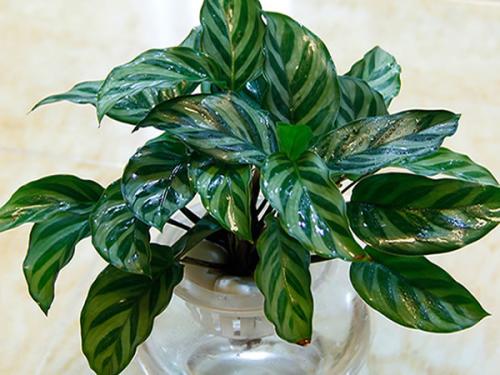
How to grow peacock plant
The peacock plant prefers semi-shade, cannot tolerate direct sunlight, and adapts to growing in a warm, humid environment. When cultivating it, a certain degree of shading should be provided, and the temperature should be kept at around 12-29°C. In winter, the temperature should be maintained at 16-18°C. It grows vigorously in spring and summer, requires relatively high air humidity, and can be misted; its soil requirements are not very strict, but it needs to be kept moderately moist. During the growing season, fertilize about once every 2 weeks, while in winter the soil can be slightly drier and cooler, and the frequency of fertilization should be reduced; propagation is mostly done by division of the roots; this is carried out in early summer, and cuttings can also be used; the main pests include mealybugs, red spider mites, aphids, scale insects, and so on.
Soil: For potted peacock plant, it is best to use a loose, fertile, well-drained, humus-rich, slightly acidic loam. Generally, it can be mixed with 3 parts leaf mold, 1 part peat or sawdust, and 1 part sand, with a small amount of bean cake added as base fertilizer. Avoid heavy garden soil. When potting, first place a 3 cm thick layer of coarse sand at the bottom of the pot as a drainage layer to facilitate drainage.
Water: During the growing period, the peacock plant should be given sufficient water. Especially in summer and autumn, in addition to keeping the potting soil moist at all times, the leaves must also be sprayed with water frequently to lower the temperature and maintain humidity; it requires relatively high air humidity, preferably reaching 70% to 80%; it is averse to dry air and dry potting soil, but waterlogging is not allowed. After late autumn, water should be controlled to help it resist the cold and survive the winter. In winter, keep the environment dry; if it is too wet, the basal leaves will turn yellow and scorched, affecting its ornamental value.
Sunlight: During the growing season from May to September, the peacock plant should be placed in a shaded or semi-shaded place, maintaining 40%-60% light transmission, and avoiding direct exposure to strong sunlight. Excessive light or dry air can easily cause scorched leaf margins and tips and dull, lusterless markings on the leaf surface; however, the light should not be too weak either. If it is kept in a dark room for a long time, with low temperature and insufficient light, its growth will also weaken, which is unfavorable for leaf color formation, and it will lose the unique metallic luster of the leaf surface. In winter, it can receive direct sunlight through glass.
Fertilizer: When the peacock plant lacks fertilizer, the plant is noticeably smaller, the leaf color is dull, and the golden luster is not vivid. During the growing season, apply a dilute liquid fertilizer once every 20 days, with a nitrogen-phosphorus-potassium ratio of 2:1:1, which can make the leaf color glossy and vivid. Be sure to avoid an excessive proportion of nitrogen fertilizer. If a 0.2% liquid fertilizer is sprayed directly on the leaf surface every 10 days, it is extremely beneficial for budding and growth. Stop fertilizing in winter and summer.
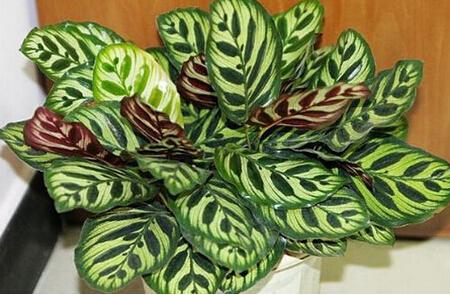
Precautions for peacock plant pests and diseases
The peacock plant has relatively few pests and diseases, but if ventilation is poor and the air is dry, scale insects can still occur. Spray with imidacloprid-series pesticides for control.
The leaf spot disease of the peacock plant has yellow-brown lesions. In the early stage of the disease, small yellow spots form near the leaf margins or in the center of the leaf, and gradually expand, deepen in color, and turn yellow-brown. There is a relatively obvious halo around the lesion. As the lesion spreads, the leaf gradually dries up, shrinks, and eventually falls off and dies. The pathogen is the spore of the deuteromycete Drechslera.
The causes of the disease are high temperature and high humidity, poor air circulation, plants placed too densely, many weeds and rotten leaves in the cultivation environment, excessive nitrogen fertilizer application, and spindly plant growth. Tender tissues are more susceptible to the disease.
The control method is to strengthen fertilizer and water management, appropriately increase phosphorus and potassium fertilizer, apply less nitrogen fertilizer, promote full plant growth, and enhance its own resistance. Remove diseased and disabled leaves and weeds in a timely manner to reduce sources of infection. Do not place plants too densely, provide appropriate ventilation and light transmission, and reduce environmental humidity to reduce disease occurrence. When the disease occurs, spray for protection.
The pesticides include: 50% carbendazim 600x to 800x solution; or 75% chlorothalonil 600x to 800x solution; 50% mancozeb 500x to 600x solution, once every 7 to 10 days. Various pesticides should be used alternately to prevent the pathogen from developing resistance.