A Detailed Guide to Snake Plant Planting Methods and Care Techniques
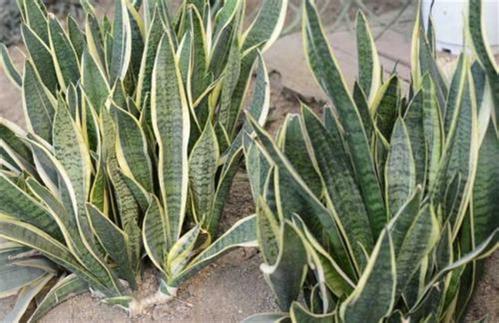
Snake plant (Latin name: Sansevieria trifasciata Prain), also known as tiger tail sansevieria or thousand-year orchid, is a perennial evergreen herbaceous plant of the Asparagaceae family and the genus Sansevieria. It is native to western [Africa], and is cultivated throughout China.The snake plant has creeping rhizomes and no stem. The plant can reach a height of about 1 m, with leaves growing in clusters and standing upright, thick and leathery, with irregular dark green cloud-like horizontal bands on both sides, which is how it got the name tiger tail. It has horizontal rhizomes. The leaves are basal, usually 1 to 2, sometimes 3 to 6 in a cluster, upright, hard and leathery, flat, but plants grown in the home often do not bloom, and are mainly grown for their foliage.
Cultivation Techniques
Snake plant can be propagated by division and by cuttings.
Division: suitable for all varieties of snake plant, generally done in combination with repotting in spring. The method is to cut an overly dense leaf clump into several clumps; each clump should retain leaves, and the cut surface should be coated with a wound-healing anti-rot film, then the plant should immediately be sprayed with a new high-lipid film for insulation and frost protection. After drying slightly, it can be potted. When potting, some fine sand can be sprinkled at the base of the plant to aid survival. The potting soil should be a loose, fertile, well-aerated sandy culture soil. Each division should also have a section of rhizome and an offset, and they can be potted and grown separately.
Cuttings: suitable only for varieties whose leaves do not have golden yellow margins or silver veins, otherwise the yellow and white markings on the leaves will disappear and the plant will become an ordinary snake plant variety. The method is to select healthy and plump leaves, cut them into 5 to 6 cm long sections, insert them into sand or vermiculite with half exposed above the soil surface, keep them slightly moist, and roots will form in about one month. After inserting, be careful to maintain a certain humidity; when the cutting medium dries slightly, spray water with a fine-nozzle watering can, but it should not be too wet, to avoid rot. Spraying with a new high-lipid film can prevent infection by pathogens, enhance the intensity of photosynthesis, and increase the survival rate. Then place it in a spot with scattered light and good air circulation.
Planting Management
Generally place it in a shady or semi-shady spot, but it also relatively likes sunlight; only when the light is too strong will the leaf color become darker and whitish. It likes warm temperatures. Its suitable temperature is 18 to 27°C; below 13°C it stops growing. In winter the temperature also should not remain below 10°C for long periods, otherwise the base of the plant will rot, causing the whole plant to die.
Watering should be moderate; it must not be too wet. The snake plant is a desert plant and can tolerate harsh environments and long drought conditions. If watered too frequently, the leaves turn white and the markings also become paler. From spring to autumn it grows vigorously and should be watered sufficiently. During the winter dormant period, watering should be controlled, the soil kept dry, and water should be kept from entering the leaf clusters when watering. When using plastic pots or other decorative flowerpots with poor drainage, absolutely avoid water accumulation, so as to prevent rot that causes the leaves to bend and collapse below.
Fertilization should not be excessive. During the peak growth period, fertilizer can be applied 1 to 2 times per month, and the amount should be small. If only nitrogen fertilizer is applied for a long time, the markings on the leaves will become dull, so a compound fertilizer is generally used. You can also evenly bury 3 holes of cooked soybeans in the soil at the edge of the pot, 7 to 10 beans per hole, being careful not to let them touch the roots. Stop fertilizing from November to March of the following year.
It has low requirements for soil and can grow normally even in a very small volume of soil. It likes loose sandy soil and humus soil, and tolerates drought and poor soil. It grows very robustly, and even when the pot is full it does not inhibit its growth. Generally repot once every two years, in spring, and standard compost can be used when repotting.
Planting Methods
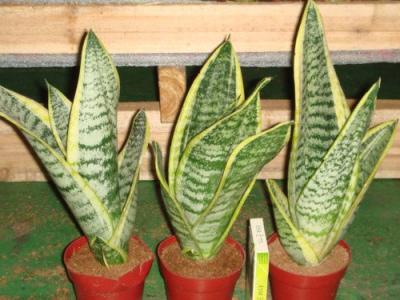
Snake plant is a perennial evergreen herbaceous plant of the Liliaceae family. It is easy to grow, relatively drought-tolerant, and highly adaptable to the environment. It is a common excellent indoor potted foliage plant, suitable for decorating places such as studies and living rooms. It is commonly propagated by division and cuttings:
Division method: first remove the whole plant from the pot, remove the old culture soil, expose the rhizome, and then cut it into several plants along its direction of growth (each plant should contain at least 2 to 3 leaves). Each pot can hold 2 to 3 plants. This method can produce seedlings all year round, but spring and summer are best, and it can be done in spring together with repotting.
Cutting method: cut mature leaves (more than one year old) horizontally into small sections about 8 cm long (longer is also acceptable), air-dry them in the shade for 1 to 2 days, then insert them upright into clean river sand (or perlite, vermiculite), inserting 3 to 4 cm. When taking cuttings, be careful not to insert them upside down. In summer, the cuttings can grow adventitious roots in about one month, after which new shoots sprout from their base. After the new shoots grow leaves, they can be moved and potted together with the cuttings. Cuttings taken in other seasons take relatively longer to root. As long as the temperature is 15 to 25°C, cuttings can be taken at any time. For a snake plant whose roots have already rotted, if the upper leaves have not rotted, they can still be cut off for cuttings and can likewise survive.