Detailed Explanation of Jasmine Planting Methods and Key Technical Points
Jasmine, also known as jasmine flower, is the collective name for evergreen shrubs or vines of the genus Jasminum (Jasminum) in the family Oleaceae. It originated in India and Pakistan and was introduced to China long ago, where it has been widely cultivated. Jasmine prefers a warm, humid environment with plenty of sunlight. Its leaves are emerald green, its flowers are pure white, and its fragrance is rich, making it the most common fragrant potted flowering plant. Among the genus Jasminum, the most famous species is the double-petaled jasmine (Jasminum sambac), which is what people commonly call jasmine. Jasmine has good health-promoting and beauty benefits and can be used in food and drink. It symbolizes love and friendship. At the same time, "Jasmine Flower" is also a traditional Chinese folk song, and in animated works it has also been used as a cartoon character's name.
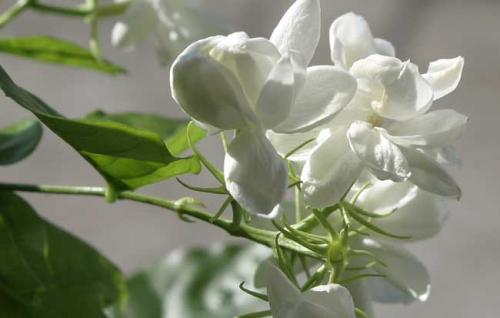
First: Propagation and Cultivation
Whether you choose seed propagation or cutting propagation, both are possible, but friends who grow jasmine on a large scale mostly choose seed propagation, because this method offers greater operational flexibility. The specific steps are to first crush the soil and mix it with sandy soil to enhance the soil's permeability. Before planting the seeds, soak them in water for a while, and after the seed surface cracks, plant them in the soil, then cover with fine soil about two to three cm thick. After covering, do not water. At first, keep the spacing between seeds at a distance of ten cm. Once the seeds sprout, transplant them into flower pots, which will make things much more convenient when it is time to sell them.
Second: Fertilization Management
After the seeds sprout, water them once; the amount of water only needs to moisten the upper part of the soil. In the later stage, watering is linked to time. When the temperature does not exceed thirty degrees, water only once a day, just enough to make the soil look moist. For the watering method, try to choose irrigation. If the temperature exceeds thirty degrees, still water by irrigation first. If the jasmine leaves curl up and begin to turn yellow, switch to spraying water. In autumn, watering once every two or three days is sufficient. In winter, water with warm water at an interval of once every half a month. When it is almost time to sell, first check whether there is standing water at the bottom of the flower pot. If there is standing water, it may very likely cause the jasmine to wither, causing certain economic losses.
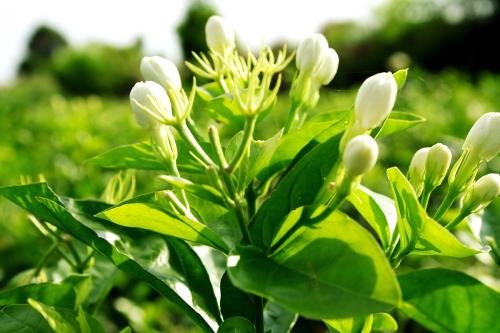
Third: Topdressing
Growing jasmine does not require too much fertilizer; applying fertilizer once every half a month is enough. Also, when transplanting, first apply some organic fertilizer at a position about ten to twenty cm at the bottom of the flower pot as base fertilizer for the jasmine. At first, apply more nitrogen fertilizer, which can make the jasmine's root system grow longer. In the later stage, add some phosphorus fertilizer or potassium fertilizer as needed to promote better flowering of the jasmine. In addition, when fertilizing, if too little is applied, there is no need to water; if too much is applied, you can water a little to let the fertilizer dissolve quickly so the jasmine can absorb it faster. If what you are planting is a very rare variety, or if it is a personal planting, nutrient solution can also be used instead of fertilizer.
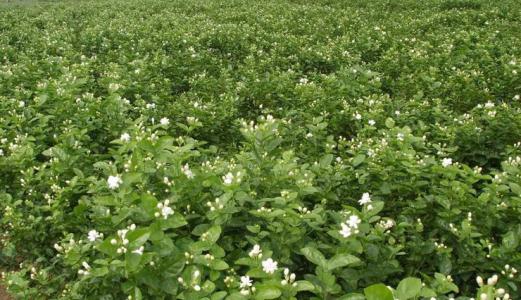
Fourth: Points to Note
Jasmine likes a ventilated and sunny environment, so you should create several ventilation openings in the planting area. At noon, when the sunlight is relatively strong, shade the jasmine from strong light to prevent it from being scorched. Also, in order to earn the greatest profit, many people prune the jasmine before selling it. For example, some old leaves or branches and leaves that have grown too densely and affect the appearance must be cut off, so that new leaves can have a chance to grow and the jasmine can bloom longer. Also, frequently watch out for whether the jasmine has been attacked by pests. The most common ones, such as the rice stem borer moth or red spider mite, are among the most common pests of jasmine. When you see them, remove them promptly.