Cultivation Methods and Key Technical Points for the Peace Lily
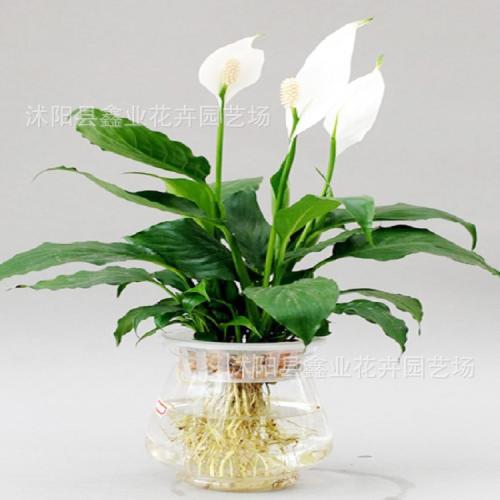
The peace lily (Spathiphyllum) is a perennial herbaceous plant of the Araceae family. The plant grows 30 cm-40 cm tall, with no stem or a very short stem, and leaves that are oblong or nearly lanceolate, with a distinct midrib and petiole, dark green in color. It blooms in spring and summer, with a large and conspicuous spathe that rises above the leaves, white or slightly green, and a spadix that is creamy yellow.
Habits of the peace lily:
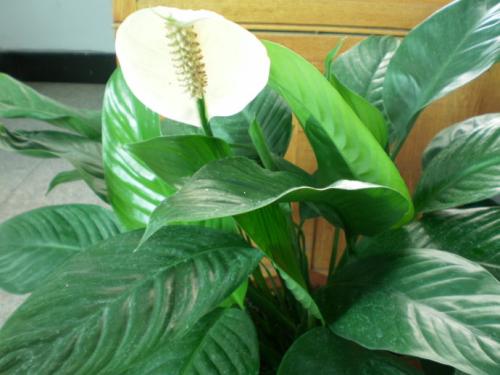
The peace lily has no stem or an extremely short stem, and mostly grows in clumps. The leaves are oblong or nearly lanceolate, with a long pointed tip and a rounded base. The flower is a spathe, leaf-shaped, meaning its flower has no petals but consists only of a white bract and a yellow-white spadix, closely resembling a palm, hence the name "white palm"; its flowers are large and conspicuous, with long flower stalks that rise above the leaves, white or green.
How to grow the peace lily:
The peace lily is fairly shade-tolerant; around 60% scattered light is enough to meet its growth needs, so it can be kept year-round indoors in a spot with bright, indirect light. In summer, 60%-70% of the sunlight can be shaded out; direct strong light should be avoided, otherwise the leaves will turn yellow, and in severe cases sunscald will occur. In northern regions, greenhouse cultivation in winter can go without shading or with minimal shading. If the light is too dim for a long time, it will be difficult for the plant to bloom. The peace lily is a heat-loving species and should be grown in a warm greenhouse. In winter, the minimum nighttime temperature should be 14-16°C, and the daytime temperature should be around 25°C. Prolonged low temperatures easily cause leaf drop or scorched-yellow leaves.
During the growing period, the potting soil should be kept consistently moist, but overwatering should be avoided; if the potting soil stays wet for a long time, it easily causes root rot and the plant to wither and yellow. In summer and dry seasons, water should be sprayed frequently onto the leaf surface with a fine-nozzle sprayer, and water should also be sprinkled on the ground around the plant to keep the air humid, which is very beneficial to its growth and development. In dry climates with low air humidity, new leaves will become smaller and yellow, and in severe cases wither, yellow and drop off. In winter, watering should be controlled, and the potting soil should be kept slightly moist.
Potted peace lilies require loose soil with good drainage and aeration; heavy clay soil must not be used. Generally, a substrate can be made by mixing leaf mold and peat soil with a small amount of perlite; when planting, add a small amount of organic fertilizer as a base fertilizer. Because it grows quickly and has a relatively high nutrient requirement, a liquid fertilizer must be applied once every 1-2 weeks during the growing season; at the same time, provide sufficient water and keep the potting soil consistently moist. During high-temperature periods, water should also be sprayed on the leaves and the ground to raise air humidity. If the surrounding environment is too dry, new leaves will become smaller and yellow, and in severe cases wither, yellow and drop off. In late autumn and winter, the amount of watering should be reduced, and it is enough to keep the potting soil slightly moist. It requires semi-shade or scattered light conditions, and during the growing season 60%-70% shade must be provided. If the light is too strong, the leaves are easily scorched and withered, and the leaf color becomes dull and loses its luster; if the light is too dim for a long time, the plant grows weakly and is not easy to bloom. The peace lily is a heat-loving species; prolonged low temperatures and dampness easily cause root rot and yellowing and withering of the above-ground parts, so in winter attention must be paid to cold protection and warmth retention, while keeping the potting soil moist.
Precautions for growing the peace lily:
Substrate selection: The peace lily needs loose potting soil with good drainage and aeration. Before obtaining high-quality seedlings, the cultivation substrate must be prepared. For the substrate, ordinary Northeast peat or imported German peat can be chosen, but both must have 15%-20% perlite added and be stirred evenly; choose perlite with large particles, and at the same time take care not to crush the perlite as much as possible. The prepared substrate should have an EC value of around 0.7 mS/cm and a pH value maintained at around 5.5.
Temperature control: The peace lily is a heat-loving species and should be grown in a warm greenhouse. The most suitable daytime and nighttime temperatures for the peace lily are 20°C-21°C, and the maximum should not exceed 24°C. If the daytime temperature is relatively high, as compensation, the nighttime temperature can be appropriately lowered. For example, if the daytime temperature is 27°C for 6 hours, then at night the temperature should be kept at 9°C for 6 hours. Other situations can be handled by analogy. Pay special attention: if the peace lily is kept in a low-temperature state for a long time, it easily causes leaf drop or a scorched-yellow appearance.
Water management: The peace lily likes a moist environment. The substrate must always be kept moist; do not wait until the substrate is completely dry before watering. The "water when dry, stop when wet" method of water management is not suitable for the peace lily, and it also increases the chance of root infection, which is not conducive to growth. The best watering method is overhead sprinkling, but the seedbed must have good drainage. The EC value of the spray water should not exceed 0.8 mS/cm at most, otherwise it is unfavorable to crop growth.
The most suitable relative humidity for peace lily growth is 75%-85%. Water should be sprayed frequently onto the leaf surface with a fine-nozzle sprayer, and water should also be sprinkled on the ground around the plant to keep the air humid, which is very beneficial to its growth and development. In dry climates with low air humidity, new leaves will become smaller and yellow, and in severe cases wither, yellow and drop off. If the nighttime humidity is greater than 80%, be sure to raise the greenhouse temperature by 1°C-2°C 1 hour before sunrise in the early morning, and maintain it until 2 hours after sunrise, to avoid infection by pathogens.