Detailed Guide to Violet Planting Methods and Techniques
The violet (scientific name: Matthiola incana (L.) R. Br.) is a biennial or perennial herb of the Brassicaceae family and the genus Matthiola. The entire plant is densely covered with grayish-white stalked branched soft hairs. The stem is erect, much branched, and slightly woody at the base. The leaves are oblong to oblanceolate or spatulate. It is native to the Mediterranean coast. It is widely cultivated in southern China and is one of Europe's famous flowers. It is often found in major cities in China and can be planted in gardens or greenhouses for ornamental purposes. This flower resembles the pansy and is easily confused with it.
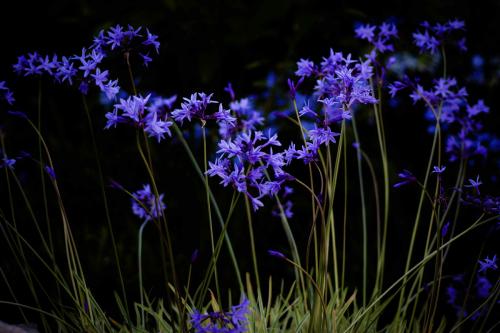
How to grow violets
Violets should not be planted too densely, otherwise poor ventilation will cause pests and diseases. It is suitable to plant in fertile soil with good drainage. The potting soil can be a mix of 2 parts humus soil, 2 parts garden soil, and 1 part river sand. During the growing season, fertilize once every 10 days. Nitrogen fertilizer should not be used in excess; phosphorus and potassium fertilizers should be applied. Stop fertilizing during the flowering period and in winter. Generally, when the soil surface appears dry and whitish, water immediately, following the principle of watering when dry and letting it dry between waterings.
In winter, violets prefer a warm climate and should be moved indoors; they can tolerate a brief low temperature of -5°C. Propagation is mainly by sowing. In central China, sowing is generally done in the open field in mid-September. When collecting seeds, single-petaled flowers should be selected as the mother plant. Although double-petaled flowers have high ornamental value, they cannot set seed because they lack pistils.
If seeds are collected from potted mother plants, the second generation will have a higher rate of double petals, accounting for about 50% or more. Before sowing, the potting soil should be fairly moist; after sowing, cover with a thin layer of fine soil and do not water again. If the potting soil dries out within half a month, place the pot half-submerged in water so that water enters from the bottom of the pot to moisten the soil. After sowing, provide shade; seedlings will emerge in about 15 days.
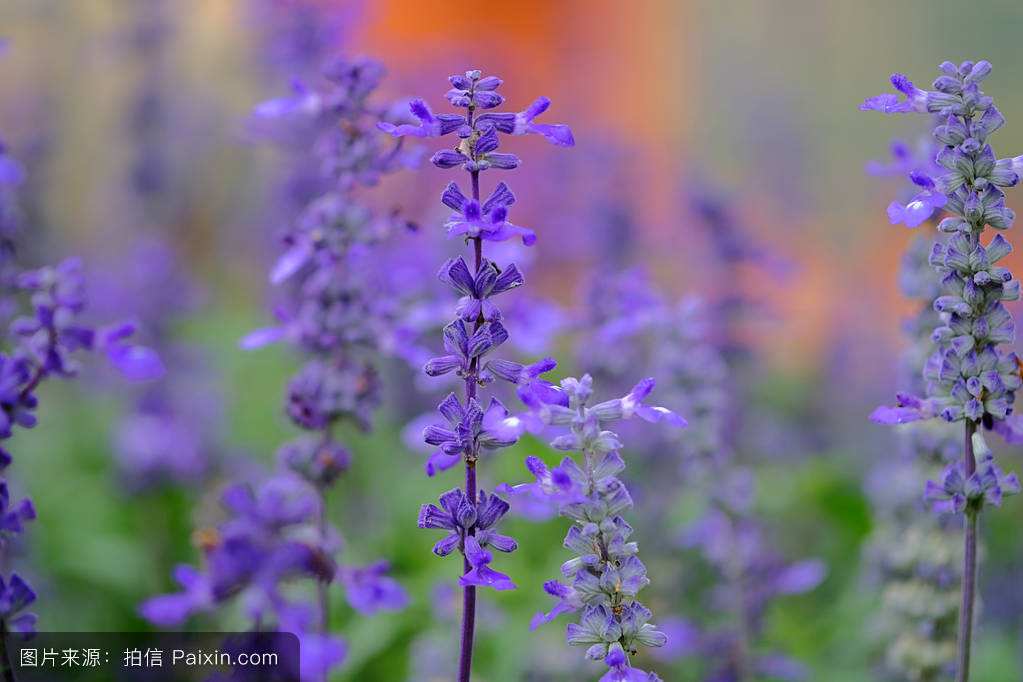
Cultivation and management of violets
1. Soil: The growing medium can be prepared by mixing compost soil with 1/3 decomposed sawdust and 1 kg per cubic meter of 45% high-concentration compound fertilizer.
2. Fertilizer: Fertilize 2-3 times during the seedling stage, mainly with nitrogen fertilizer. During the peak growth period after potting, top-dress 2-3 times as well. To avoid excessive vegetative growth, top-dressing should focus on phosphorus and potassium fertilizers, with less nitrogen fertilizer. Applying decomposed cake fertilizer water once before flowering will make violet flowers larger and more vividly colored. For field planting for seed production, apply 5-7 kg of decomposed compost and 20-30 g of 45% high-concentration compound fertilizer per square meter.
3. Watering: Follow the watering principle of watering when dry and letting it dry between waterings, keeping potted flowers slightly on the moist side and field-planted seed plants slightly on the dry side. For violets in the growing period, potted plants should be watered once every 1-2 days. Field-planted seed plants can be given a thorough watering every 5-7 days.
4. Plant adjustment: To grow large plants or for tall varieties, pinching must be done, leaving 4-5 leaves and pinching off the growing tip before potting. For dwarf varieties sold as small potted flowers or in combination plantings, pinching should not be done.
5. Flowering period control: The violet is a day-neutral plant; as long as the temperature is suitable, it can flower normally regardless of day length. Therefore, its flowering period can be controlled by changing the sowing date. For example, if sown in a greenhouse in February, it blooms in May; if sown in April, it blooms in July; if sown in late May, it blooms in August.
Under conditions of a daytime temperature of about 20°C and a nighttime temperature not lower than 4-5°C, violets generally need 120-140 days from sowing to flowering. Dwarf double-petaled varieties that are not pinched bloom in 90-95 days. Violets sown in August and September and grown in a greenhouse or plastic tunnel in winter bloom from November to February; to have them bloom on New Year's Day, sow on August 20 with pinching, or sow on September 10 without pinching.
6. Pest and disease control: Violets are prone to viral diseases, with symptoms of wrinkled leaf surfaces, uneven leaf color, distorted flowers, and lighter or whitened colors in dark-colored flowers. If such plants are found, they should be removed immediately. For gray mold and sclerotinia, use procymidone, chlorothalonil, and dimethachlon respectively for control.