Key Points and Management Methods for Kudzu Root Cultivation
Kudzu root, a name used in traditional Chinese medicine. It is the dried root of the leguminous plant wild kudzu (Pueraria lobata), commonly called wild kudzu. It is dug up in the autumn and winter seasons, cut into thick slices or small pieces while fresh, and then dried. Sweet and pungent, cool in nature. It has the effects of releasing the flesh and reducing fever, promoting eruption, promoting fluid production and quenching thirst, and raising yang and stopping diarrhea. It is often used for exterior syndrome with fever, stiffness and pain of the neck and back, incomplete eruption of measles, thirst in febrile disease, yin deficiency wasting-thirst, heat diarrhea and heat dysentery, and diarrhea due to spleen deficiency.
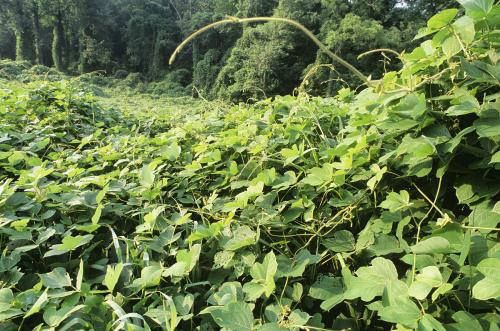
Sowing time: Around Qingming Festival, first soak the seeds in warm water for 24-4/8 hours, take them out and dry them, then sow, which can increase the seed germination rate.
Cultivation techniques for kudzu root:
1. Site selection and land preparation: Choose a plot with good drainage, deep-plow 30 cm before winter, and apply 2000-3000 kg of farmyard manure per mu along with plowing, turning it evenly into the soil. The following spring, shallow-plow again, break up the clods, rake fine and evenly, level, and make beds 1-1.2 m wide for later use, with trenches of about 30 cm between beds.
2. Propagation methods: In production, seed propagation and cuttings are mainly used, and root-head propagation and layering propagation are also used.
(1) Seed propagation: Around Qingming in spring, soak the seeds in 40°C warm water for 1-2 days, stirring often, take them out and dry off the water, then open holes in the middle of the prepared bed and sow, with holes 3 cm deep and plant spacing of 35-40 cm, sowing 4-6 seeds per hole. After sowing, level the holes and water; seedlings emerge in about 10 days.
(2) Cutting propagation: When digging kudzu root in autumn, select and keep strong vines, cut off the head and tail, and cut the middle part into 25-30 cm cuttings, each with 3-4 nodes, and place them in a cool place mixed with wet sand for temporary planting, taking care to keep them ventilated to prevent rotting. Around Qingming the next year, open holes on the bed and insert the cuttings. Before insertion, they may be dipped in rooting agent to make survival easier. The holes are 30-40 cm deep, and 3-4 cuttings are inserted per hole, keeping 1 node exposed above the bed surface. After insertion, firm the soil and water. In production, if root-head propagation is used, it is better to plant immediately after harvesting. In some areas, layering propagation is also used.
3. Field management
(1) Intertillage and weeding: Wild kudzu grows relatively fast. Weeding once before germination in early spring and once after leaf fall in late autumn is enough; during the growing period, frequent weeding is generally not needed.
(2) Topdressing: This can be done together with intertillage and weeding. After greening up, apply greening-up fertilizer mainly of decomposed human manure water, 1000 kg per mu, and appropriately combine it with urea. After leaf fall, apply wintering fertilizer, mainly farmyard manure. During the peak growth period each year, a small amount of potassium fertilizer can be applied together with watering to promote root growth.
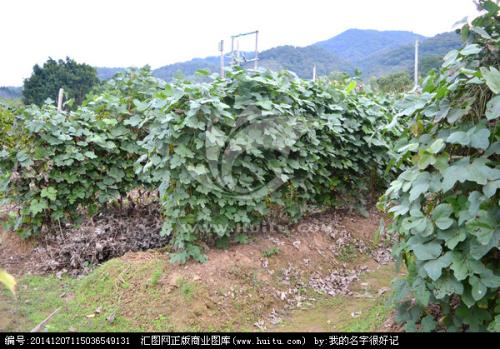
(3) Trellising: Wild kudzu cultivation requires trellises. A wooden post can be set every 2-3 m between two rows, with the posts connected by wire, and bamboo poles or wire tied between beds to facilitate climbing. When the seedlings are 30 cm tall, the vines can be guided onto the trellis.
(4) Pruning: During the growing period, the growth of stems and vines should be controlled, and the terminal buds should be removed to reduce nutrient consumption. The plant shape should also be reasonably adjusted to make full use of sunlight, and dead vines and diseased or damaged branches should be cut off in time.