African Jasmine Planting Methods and Care Tips Explained in Detail
African jasmine, originally named Fagraea ceilanica, also known as liyu dan, hui ci mu, qing huang guo, and xiao huang guo, Latin name: Fagraea ceilanica. It is native to southern China and countries in Southeast Asia, and is an evergreen (climbing) shrub or small tree of the genus Fagraea in the family Loganiaceae, originally named Fagraea ceilanica. Its only similarities to jasmine of the Oleaceae family are its opposite leaves and fragrant flowers. Because the name Fagraea sounds similar to jasmine, and to make the name sound nicer and easier to sell, florists gave it the new name "African jasmine." It is distributed in southern China and countries in Southeast Asia.
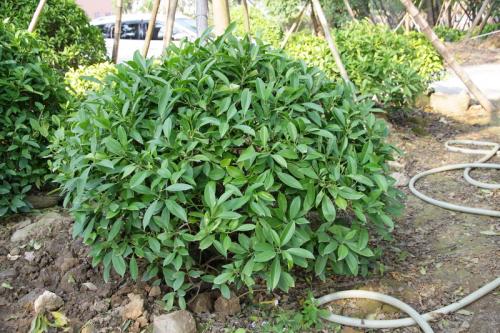
How to Grow African Jasmine
1. Temperature. African jasmine grows well in a warm climate, with an optimal growing temperature of 18°C to 32°C. When summer temperatures exceed 38°C, plant growth will be inhibited. In some areas of South China, it can overwinter outdoors when planted in the ground, while north of the Yangtze River, potted plants require a greenhouse or indoor temperature no lower than 3°C to 5°C in winter.
2. Light. African jasmine likes sunlight, but its native environment is mostly semi-shaded. In South China, when planted in the ground as a garden landscaping tree, it is best to choose a location with lateral shade. North of the Yangtze River, for potted plants, full sunlight can be given in spring and autumn, but in summer a shade frame is needed, or the plant should be moved under the dense shade of a large tree, at least avoiding direct sunlight for several hours around noon. It is particularly important to note that from June to July, after long periods of rain followed by a bright sunny day, when the temperature suddenly rises and the light is very intense, shade work must be done well to prevent young new shoots and tender leaves from being scorched. For potted plants in public places, relatively sufficient scattered light is required, or they should be placed near a window; they should not be kept too dark, otherwise the leaves will lose their green color, turn yellow, or fall off.
3. Water. Whether planted in the ground or in pots, sufficient water is required, but the roots must not be waterlogged, otherwise root rot easily occurs. In spring and autumn, watering should keep the potting soil moist. During the plum rain season, be careful to prevent waterlogging. In the scorching summer, spray water once in the morning and once in the afternoon to increase humidity and lower temperature. In winter, for indoor potted plants, it is suitable to keep the potting soil slightly moist, and around noon when the temperature is relatively higher, spray an appropriate amount of water on the leaf surface. In spring, summer, and autumn, when fertilizing is normal, if the lower leaves of a potted plant turn yellow and fall off, it is very likely due to waterlogged roots and root rot, and the pot should be repotted and the soil changed in time. In summer, if watering has been neglected and the newly sprouted tender shoots wilt and droop, do not immediately pour a large amount of water onto the potting soil; instead, first spray some water on the leaves, and after the leaves recover slightly, then water the potting soil with an appropriate amount.
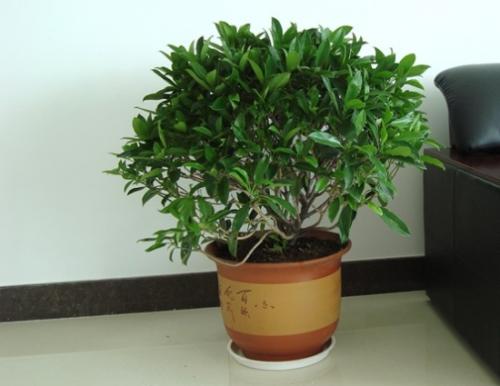
4. Soil. In southern regions, the planting site should have loose, fertile, well-drained sandy loam. For potted plants in the north, a mix of 7 parts leaf mold, 1 part river sand, 1 part composted organic fertilizer, and 1 part fermented sawdust can be used. During the growing season, loosen the soil of potted plants once a month, always keeping the root area in a well-aerated state. In addition, potted plants can have their soil changed once every 1 to 2 years.
5. Fertilizer. During the growing season, apply a dilute decomposed cake fertilizer solution once a month to potted plants, and apply a phosphorus-potassium fertilizer once before flowering in May to promote flowering. After autumn, apply 1 to 2 additional applications of phosphorus-potassium fertilizer to help the plant overwinter safely. For potted plants in northern regions, to prevent leaf yellowing, add 0.2% ferrous sulfate when watering and fertilizing during the growing season. When planting in the ground, apply sufficient base fertilizer at planting time. In late autumn, dig trenches around the outer root zone and bury cake fertilizer, 0.5 to 1 kg per plant.
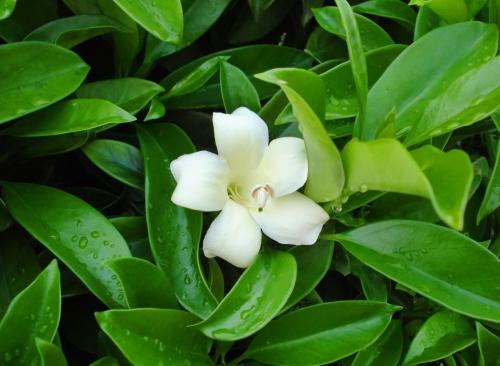
Precautions for Growing African Jasmine
If the African jasmine kept at home is a bag-grown seedling or field-grown seedling just purchased from the south in autumn or winter of that year, even more attention should be paid to winter cold protection. When strong cold air from the north moves south and causes a significant temperature drop, heating should be provided in the greenhouse or shed with an electric heater, space heater, coal stove, etc., ensuring the shed temperature is not lower than 5°C; otherwise, plants damaged by freezing will find it very difficult to recover growth in the following year within a short time. For the small number of potted plants placed in offices or living rooms, in addition to covering them with double-layer plastic film bags, the air conditioner or heater can be turned on at night; this must not be taken lightly.