Ponytail Palm Planting Methods and Precautions
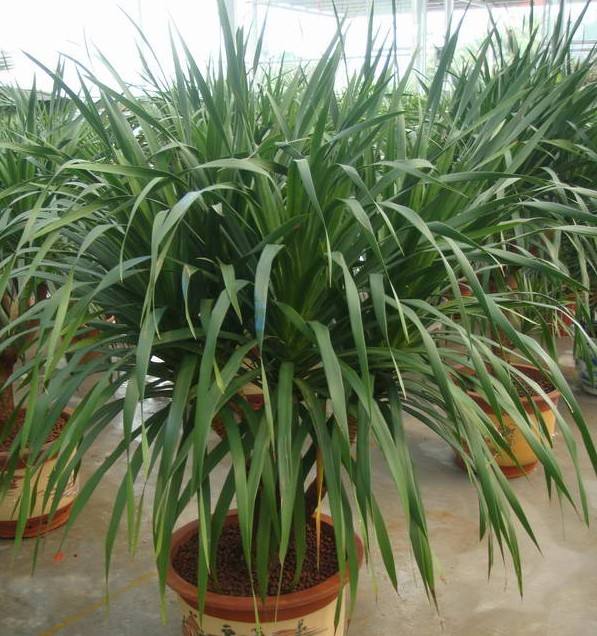
The ponytail palm (scientific name: Beaucarnea recurvata Lem.) is an evergreen foliage small tree of the genus Beaucarnea in the family Asparagaceae. Potted plants generally reach 0.5-1.0 m. Its underground roots are fleshy, and the stem is upright and shaped like a wine bottle; the swollen stem has bark with a thick cork layer, grayish white or brown. The leaves grow at the top of the stem, are slender and linear, leathery and drooping, with fine serrations along the leaf margins. The epidermis of old plants cracks, resembling a tortoise shell, which is quite distinctive. The leaves are linear, with entire or finely toothed margins, softly drooping, and the flowers are white.
Propagation methods:
Cuttings: Ponytail palm cuttings are often taken in late spring and early autumn using current-year branches for softwood cuttings, or in early spring using last year's branches for old-wood cuttings. When taking softwood cuttings, during the vigorous growth period of the ponytail palm from late spring to early autumn, select thick, strong current-year ponytail palm branches as cuttings. After cutting the branches off, select the robust parts and cut them into sections 5-15 cm long, each section bearing more than 3 leaf nodes.
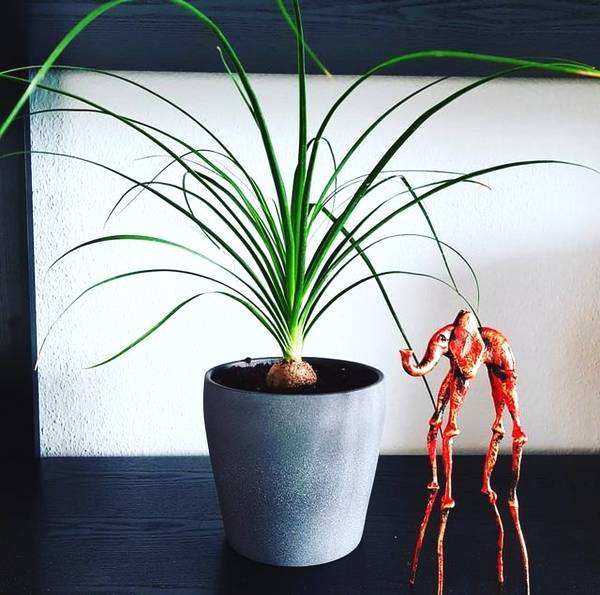
Soil: The ponytail palm prefers loose sandy soil and humus soil, and is tolerant of drought and poor soil. The soil for potting should be well drained; 3 parts fertile garden soil mixed with 1 part coal cinders can be used, plus a small amount of soybean cake or chicken manure as base fertilizer.
Fertilizer: Spring, summer, and autumn are the peak growing seasons for the ponytail palm. Apply liquid fertilizer or compound fertilizer once every 2-3 weeks to promote swelling at the base. When fertilizing, pay attention to increasing phosphorus and potassium fertilizer, with a nitrogen, phosphorus, and potassium ratio of 5:10:5. Stop fertilizing in winter.

Main value:
The ponytail palm is gracefully dancing and elegant; its flowers are white. The stem is vigorous, and the base swells like a wine bottle, forming its unique ornamental character; it is an excellent variety of tropical foliage plant. In northern China, it is often potted in various sizes as an indoor decoration; small plants grown in exquisite pots and placed on a desk or tabletop appear elegant and refined; medium and large potted plants used to decorate halls, meeting rooms, reception rooms, and other places are full of tropical charm and very enjoyable to appreciate.