Home › Growing Techniques › Article

Detailed Explanation of Lettuce Planting Methods and Key Technical Points

Growing Techniques By Emily Carter 0 views

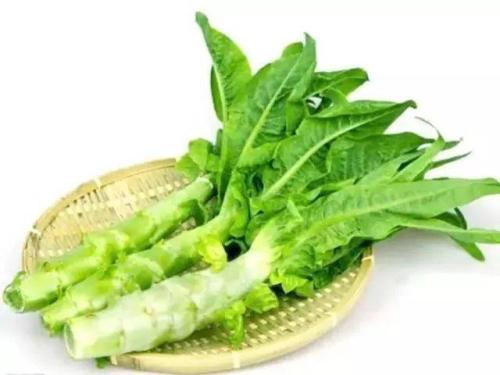
Lettuce (scientific name: Lactuca sativa Linn.) is an annual or biennial herb in the Asteraceae family, genus Lactuca. It grows 25-100 cm tall, with an upright, solitary stem. The basal leaves and lower stem leaves are large, undivided, oblanceolate, elliptic, or elliptic-oblanceolate, with acute, short-acuminate, or rounded tips, and no petioles. The leaves at the lower part of the panicle branches and on the panicle branches are very small, ovate-cordate, and sessile. The capitula are numerous or extremely numerous, arranged in a panicle at the tips of stems and branches. The achenes are oblanceolate, compressed, light brown, with an acute tip forming a slender beak; the beak is thread-like and nearly as long as the achene. The flowering and fruiting period is from February to September.
Cultivation Techniques

Land Preparation

Lettuce has a weak root system and poor drought tolerance, so soil that is loose and retains water and nutrients should be selected. Before transplanting, plow 15-21 cm deep, and apply 75,000 kg of decomposed organic fertilizer per hectare, then harrow fine and level. Make high beds with a bed spacing of 120 cm and a width of 80-100 cm. Seven to eight days before transplanting, irrigate once thoroughly by furrow irrigation. After 3-4 days, cover with plastic film, which must be pulled tight and laid flat so that the film fits closely against the ground, with the edges sealed firmly with soil.

Water Management

During the seedling stage, the soil should not be too dry or too wet, to prevent the seedlings from aging or growing leggy. During the rosette stage, water should be controlled appropriately to promote full development of the rosette leaves. During the head-forming stage, the water supply must be adequate; too little water will make the head small and produce a bitter taste. In the late head-forming stage, water should not be excessive, so as to avoid cracking of the head and the occurrence of soft rot.
Fertilization Management

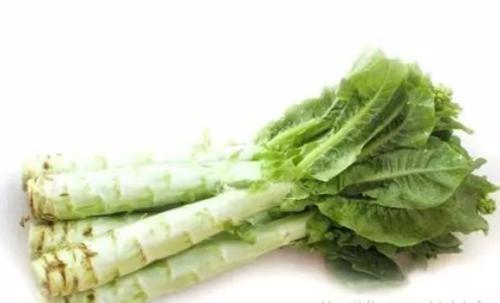
The main root of lettuce seedlings breaks easily after emergence, but it can produce a large number of lateral roots and is easy to establish after transplanting. At transplanting, water with root-setting water for 2-3 days to improve the survival rate. Before transplanting stem lettuce, sufficient base fertilizer should be applied in combination with turning the soil and preparing the beds: 30,000 kg of decomposed poultry and livestock manure per hectare and 450 kg of superphosphate; or 1,500 kg of vegetable-specific fertilizer per hectare; or 750 kg of urea per hectare, 450 kg of superphosphate, and 300 kg of compound fertilizer. Base fertilizer should account for 60%-65% of the total amount. For strongly acidic soil, apply 1,050 kg of quicklime per hectare. From the seedling stage to the lettuce swelling stage, the soil should be kept moist. During drought, irrigate once every 3-5 days with "horse-running water" (a quick flush of irrigation). In the late growth stage of the seedlings, excessive fertilizer and water should be avoided to prevent leggy growth. When the plant height is 30-40 cm, water should be controlled appropriately to prevent excessively high humidity between plants and the resulting disease. From the beginning of the swelling stage of lettuce, fertilization should go from concentrated to dilute. Fertilizer that is too concentrated can easily cause cracking at the base and lead to rot. At this time, foliar topdressing can be combined, spraying 1,500 g of potassium dihydrogen phosphate per hectare, or 0.2%-0.3% borax, once every ten days. To prevent early bolting or excessive plant height, paclobutrazol may be sprayed appropriately; one month after transplanting, use 90 g of paclobutrazol per hectare, diluted in 50 kg of water per hectare for spraying. Note that it must not be sprayed repeatedly or missed, so as not to affect yield and quality. Stop fertilizer and water supply 10 days before harvest to promote maturity of the stems. One month after transplanting, the soil needs to be turned 1-2 times.


Related Articles