Chinese cabbage (scientific name: Brassica rapa pekinensis, synonyms Brassica campestris pekinensis or Brassica pekinensis) is a vegetable native to China, also known as "heading cabbage," "hearting cabbage," "yellow-bud white," "jiao cai," and so on; in Cantonese it is called "shao cai."
Chinese cabbage is a close relative of
bok choy, both belonging to the same species of
rapeseed, and is also fairly close to the cabbage native to the
Mediterranean coast, all belonging to the cruciferous genus Brassica of the
family.
Among the Chinese cabbage varieties currently grown in China, yellow-heart cabbage is the most widely consumed, and because of its good texture and excellent flavor, it is deeply loved by ordinary people. Among the existing yellow-heart cabbage varieties, Qiumeixiu performs especially outstandingly and is planted over a relatively large area.
Cabbage originated in northern China and is a leafy vegetable of the genus Brassica in the cruciferous family, usually referring to Chinese cabbage. It was introduced to the south, and is cultivated throughout both north and south. It was introduced to Japan and Europe and America in the nineteenth century. There are many kinds of Chinese cabbage; northern Chinese cabbages include Shandong Jiaozhou Chinese cabbage, Beijing green-white, Tianjin green hemp-leaf Chinese cabbage, Northeast large dwarf cabbage, Shanxi Yangcheng large fringed-edge cabbage, and so on.

Cultivation Techniques
1. Cultivation season
Early-maturing varieties are generally sown in early to mid-August, and some are sown as early as late July. Mid-maturing varieties can be sown from late August to early September. Late-maturing varieties are best sown in late August.
2. Site selection and land preparation
Chinese cabbage is prone to disease under continuous cropping, so crop rotation must be carried out, with grain-vegetable rotation and paddy-dryland rotation especially recommended. When cultivating on land that has grown vegetables year after year, continuous cropping with cruciferous vegetables should be avoided; land whose previous crop was early beans, early peppers, early cucumbers, or early tomatoes can be chosen. The land for growing Chinese cabbage should be deep-ploughed 20-27 cm and left to dry for 10-15 days, then the soil should be broken up and leveled, and beds 1.3-1.7 m wide, or narrow beds 0.8 m wide, or high beds should be made. When making beds, furrow ditches, waist ditches, and surrounding ditches should be dug 27 cm or more deep, so that all ditches connect with one another.
3. Apply heavy base fertilizer, mainly organic fertilizer
In mid to late July, after the previous crop is harvested, deep-plough the soil and leave it to dry; when preparing the land, broadcast 100-150 kg of lime per mu. In plots where clubroot has occurred, an appropriate amount of lime must also be applied in the sowing furrows. Heavy base fertilizer is required, with nitrogen, phosphorus, and potassium well balanced. In early July, mix 40 loads of pig manure, 40-50 loads of garbage, about 75 kg of rapeseed cake, and 40-50 kg of calcium magnesium phosphate per mu, add 30-40 loads of human excrement and urine, moisten with an appropriate amount of water, pile up to ferment, cover the outside with a layer of plastic film, and let it fully decompose. Apply it in furrows when making the beds. At the same time, 10-15 kg of 45% compound fertilizer should also be applied per mu.
4. Sowing
Chinese cabbage is generally direct-sown, but can also be raised as seedlings and transplanted. Direct sowing is mainly in drills, with spot sowing as a supplement. When the previous crop's land cannot be vacated for a while, seedling raising and transplanting can also be used so as not to affect the cultivation season. Whichever method is used, the soil must be finely and evenly prepared. For direct sowing, about 200 g of seed is used per mu. For seedling raising and transplanting, about 5-6 li of seedbed is needed for every 1 mu of field, mostly using the broadcast sowing method, with 75-100 g of seed used. After direct sowing, apply 40-50 loads of decomposed human excrement and urine per mu, and cover the ground at the same time. After that, water once each morning and evening to keep the soil moist, and seedlings will emerge in 3-4 days. The row and plant spacing of Chinese cabbage should be determined according to the variety. Generally, early-maturing varieties are 33-50 x 33 cm, with 2100-2300 plants per mu, and late-maturing varieties are 67 x 50 cm, with fewer than 2000 plants per mu; seedling-raised transplants are best done on cloudy days or at dusk on sunny days. To increase the survival rate, it is best to transplant small seedlings with soil, and water with settling water after planting.
5. Field management
(1) Thinning: when there are 2-3 true leaves, carry out the first thinning; at 5-6 leaves, thin the second time; at 7-8 leaves, the seedlings can be finalized. Select different row and plant spacings according to different varieties, leaving 1 strong seedling per hole. Weeding can be combined with thinning.
(2) Topdressing: after Chinese cabbage has established and survived transplanting, topdressing can begin. Apply 15% decomposed human excrement and urine once every 3-4 days, at 4-5 loads per mu. Depending on the weather and whether the soil is dry or wet, dilute the human excrement and urine with water before applying. When Chinese cabbage enters the rosette stage, the concentration of topdressing should be increased, usually applying 30% decomposed human excrement and urine once every 5-7 days, at 15-20 loads per mu, along with 75-100 kg of rapeseed cake or sesame cake. After hearting begins, heavy topdressing plus additional potassium fertilizer is a necessary measure for increasing yield. Apply 30-40 loads of 50% decomposed human excrement per mu, and open furrows to apply 100 kg of plant ash or 10-15 kg of potassium sulfate. Farmers call this fertilization "heart-pouring fertilizer." After the plants close their rows, topdressing is generally no longer applied. If the base fertilizer was insufficient, urea may be applied as appropriate between the rows.
(3) Cultivation and earthing up: to make topdressing easier, loosen the soil and weed 2-3 times in the early stage. Especially after a long period of rain turns to clear weather, cultivation and drying of the soil should be carried out in good time to promote root growth. In the middle of the rosette stage, combine furrow application of cake fertilizer with earthing up to form ridges, with the ridges 10-13 cm high. The purpose of ridging is mainly to make fertilizing and watering easier and to reduce disease. After ridging, manure is poured into the ridge furrows and must not stick to the leaves; water is poured into the furrows and must not soak the base of the plants. At the same time, keep the air circulating in the furrows so as to reduce the air humidity between the plants. In this way, the occurrence of soft rot can be reduced.
(4) Irrigation: during the seedling stage, Chinese cabbage should be watered lightly and frequently to maintain moisture; during the rosette stage, irrigate intermittently, alternating between dry and wet, and harden the seedlings appropriately; during heading, the water requirement is relatively high, and furrow irrigation can be used when the soil is dry. Watering should be done in the evening or at night after the soil temperature has dropped. It should be poured in slowly, and flooding the whole bed must be avoided. After the water seeps into the soil, the surplus water should be drained promptly. Make sure no water accumulates in the furrows, no water is visible on the bed surface, and the roots are not short of water. Generally speaking, from the end of the rosette stage to the middle of heading, keeping the soil moist is one of the keys to achieving a high yield of Chinese cabbage.
(5) Leaf tying and covering: hearting and heading are an inevitable law of Chinese cabbage's growth and development, and leaf tying is not needed. However, if late-maturing varieties encounter severe cold, in order to promote good heading and delay harvest for supply, after Light Snow lift up the outer leaves, tie them with rice straw, and cover them with a layer of rice straw or agricultural film on top, which can protect the heart leaves from freeze damage and also has a softening effect. Early-maturing varieties do not need leaf tying or covering.
Key Technical Points for Autumn-Winter Chinese Cabbage Cultivation
1. Variety selection: according to different supply periods and marketing periods, early-, mid-, and late-maturing varieties should be selected and rationally matched. For early-maturing varieties, choose Zao Shu No. 5, Xiao Za 56, Lu Bai No. 6, Huai Bai No. 6, etc.; for mid-maturing varieties, choose Feng Kang 70, Feng Kang 80, etc.; for late-maturing varieties, choose Lu Bai No. 20, Shandong No. 5, the Jinza series, and other high-yielding heading varieties.
2. Field plot selection and land preparation: choose paddy fields with fertile soil, convenient drainage and irrigation, relatively close to the village, and not easily damaged by livestock. Before sowing, cut down the rice stubble, deep-plough the soil, then prepare the land in beds 4-5 chi wide; in combination with land preparation, apply 30-40 kg of compound fertilizer and 10-15 loads of human excrement and urine or biogas slurry per mu; finally, make holes at a spacing of 30 x 30 cm for direct sowing or raise seedlings and transplant them.
3. Sow at the right time: in our county, the suitable sowing period is around the Start of Autumn. Direct sowing or seedling raising and transplanting may be used; generally, early- and mid-maturing varieties are best direct-sown, while late-maturing varieties are best raised as seedlings and transplanted.
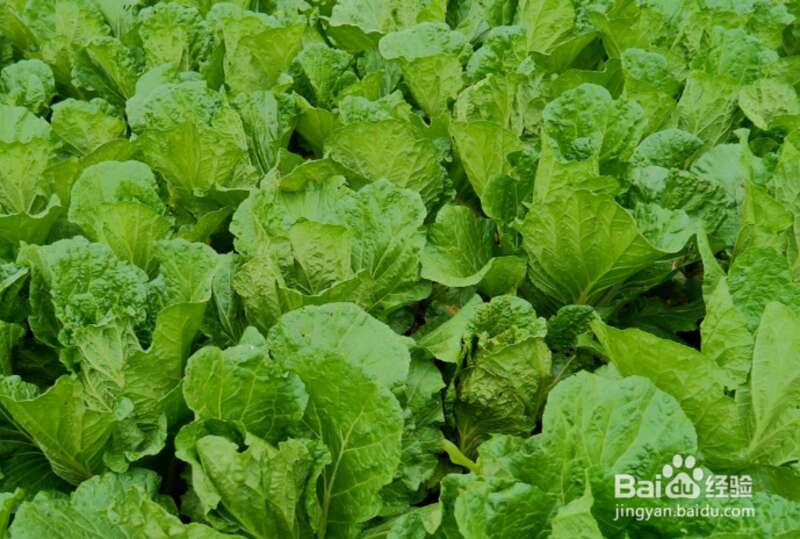
Field Management of Summer Chinese Cabbage
Summer Chinese cabbage is Chinese cabbage marketed between summer and autumn; this time is exactly the off-season for vegetable supply, so the economic benefits are considerable. However, because summer temperatures are high and there is a lot of rain, it is a season with a high incidence of pests and diseases. When growing Chinese cabbage, the key links must be grasped, the variety must be chosen correctly, and appropriate management measures must be taken in order to achieve stable and high yields.
Summer Chinese cabbage varieties are mainly required to have characteristics such as heat tolerance, wind resistance, resistance to viral disease, resistance to soft rot, tolerance of strong light, moisture tolerance, a short growth period, a high proportion of usable produce, and high yield with good quality. Examples include Re Kang Bai-45, Zao Shu No. 5, Xia Feng, Xia Lu, Xia Qiu Bao, Japanese Xia Hui, Xia You, Xia Yang, and other Chinese cabbage varieties suited to summer sowing.
I. Avoid continuous cropping, prepare the land finely, and apply enough base fertilizer
In order to reduce disease and soil deficiency of a certain element, avoid continuous cropping with cruciferous crops; in view of the short growth period of summer Chinese cabbage, heavy organic fertilizer should be applied. Summer Chinese cabbage grows vigorously and has a high demand for water and fertilizer but is not tolerant of waterlogging, so in production the cultivation method of heavy base fertilizer plus half-high ridge planting should be adopted, so that watering can moisten the ridge surface and rainwater can be drained after rain; per mu, apply 3000-5000 kg of decomposed high-quality organic fertilizer, 30-50 kg of superphosphate, and 10-20 kg of potassium chloride or potassium sulfate.
II. Sow at the right time to ensure full, even, and vigorous seedlings
Sow in staggered batches from mid-May to early July. Sowing methods are divided into drill sowing and hole sowing. Drill sowing uses about 0.25 kg of seed per mu, and hole sowing uses about 0.15 kg per mu. To ensure full and vigorous seedlings, the following points should be noted whether drill sowing or hole sowing is used: (1) After sowing, water along the ridge furrows, but do not let the water flow over the ridge surface, so as to avoid crusting of the soil surface and affecting emergence. (2) The sowing furrows or the bottoms of the holes should be relatively flat, and the covering soil should mainly be loose fine soil, neither too thin nor too thick. (3) Chinese cabbage sprouts are most afraid of being scorched by the sun, so sowing is generally done in the evening or afternoon, so that the sprouts emerge after 2 days and then endure sunlight only after a night. (4) Pay attention to the control of insect pests.
III. Field management
Thin early (thinning in several rounds), finalize seedlings late, and keep strong seedlings. Whether drill sowing or hole sowing is used, thinning is generally carried out 3 times. The first is when the heart leaves appear (if not too crowded, it may be skipped), the second at 2-3 leaves, and the third at 5-6 leaves to finalize the seedlings. Because summer Chinese cabbage has a short growth period, seedling hardening is generally not practiced, and fertilizer and water are pushed all the way through. Water and loosen the soil in good time; when the weather is dry with no rain, water lightly once every 2-3 days; when there is standing water in the field on rainy days, drain it promptly to prevent the seedlings from being waterlogged and becoming diseased. After the seedlings are finalized, apply 15 kg of urea per mu with the water, and carry out the second topdressing at the heading stage, using 25 kg of urea per mu.
IV. Prevent and treat pests and diseases early
Pests and diseases occur relatively severely on summer Chinese cabbage, so they must be detected and controlled early. The main diseases are downy mildew and soft rot. To prevent downy mildew, at the rosette stage spray 75% chlorothalonil 500x solution, 65% zineb 500x solution, 40% fosetyl-aluminum wettable powder 150-200x solution, etc. To prevent soft rot, spray agricultural streptomycin 2-3 times at the rosette stage. Before onset or in the early stage of the disease, spray 72% agricultural streptomycin sulfate soluble powder 4000x solution, focusing on mildly diseased plants and the plants around them, and be careful to spray the leaf stalks and stem bases near the ground surface. Pull out diseased plants promptly to reduce sources of inoculum and prevent spread. Pests include aphids, cabbage caterpillars, and so on, which can be controlled by spraying 4.5% beta-cypermethrin 1000-1500x solution. Strictly eliminate aphids to prevent the occurrence of viral disease.
V. Harvest in good time
Because of the high temperature and high humidity in summer, Chinese cabbage can be harvested when it reaches 70-80% maturity; the specific harvest time can also be determined according to market conditions, aiming to harvest and market when the price of Chinese cabbage is relatively high, so as to obtain greater economic benefits.