Barley Cultivation Techniques and Key Field Management Points
Barley, also known as moumai, fanmai, and chibomai, has nutritional components similar to those of wheat, but its cellulose content is slightly higher. Latin name: Hordeum vulgare L. It belongs to the grass family and the Hordeum genus, and is an annual grass. The culms are stout, smooth and hairless, and upright; the leaf sheaths are loose and clasp the stem, mostly hairless or with soft hairs at the base; on both sides there are two lanceolate auricles; the ligule is membranous, with a nut-like fragrance. It has a relatively high carbohydrate content, moderate protein, calcium, and phosphorus content, and contains small amounts of B vitamins. Because barley contains little glutenin (an elastic protein), it cannot be used to make porous bread, but it can be used to make unleavened foods. In North Africa and parts of Asia, barley flour is especially favored for making porridge. Barley is also one of the main crops grown in our country. Pearl barley (round barley grains) is barley grain that has been ground to remove the husk and bran layer; it is added to soups and cooked, and is found all over the world. Barley straw is soft and is mostly used as livestock bedding, and is also used in large quantities as roughage. Barley in China is now mostly produced in the Huai River basin and areas to its north.
Planting Methods
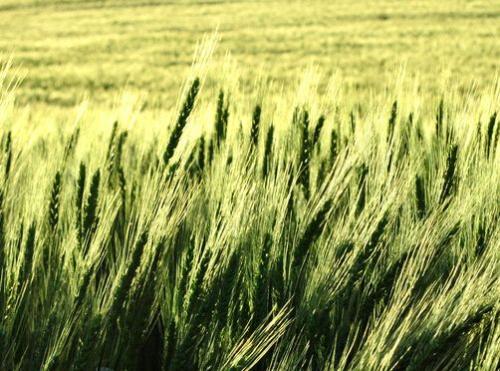
1. Seed preparation and sowing rate
For barley seed, the high-quality, high-yield variety s-4 should be selected, and variety s500 can be used as a companion variety. For fields following grain stubble, the sowing rate is 10-11 kg per mu; for tobacco and corn fields, the sowing rate is 8-9 kg per mu.
2. Timely sowing
Barley is not as strict about sowing time as wheat, and can be sown somewhat earlier or later. However, to obtain high yields, it should be sown at the proper time. In our county, sowing is generally best from early to mid-November, using manual line-marking and drilling.
3. Rational fertilization
To achieve high barley yields, basal fertilizer and topdressing must be applied well. Apply 3000 kg of farmyard manure per mu as basal fertilizer, and apply 15 kg of urea, 40 kg of phosphate fertilizer, and 5 kg of potassium fertilizer as seed fertilizer; all of the phosphate fertilizer should be applied at once as seed fertilizer. Barley topdressing includes seedling fertilizer (tillering fertilizer) and jointing-booting fertilizer, which should be applied appropriately according to barley growth and soil fertility.
4. Water management
Barley is a crop that likes moisture, dislikes waterlogging, and fears drought. During the barley growing period, irrigation should be done well for emergence water, tillering water, jointing-booting water, and grain-filling yellow-ripening water. After the wheat field is thoroughly irrigated, standing water should be drained promptly.
5. Preventing lodging and harvesting at the proper time
Barley lodging generally occurs after heading. To prevent lodging, rational close planting should be used, the sowing rate should not be too high, fertilizer and water management should be strengthened, phosphorus and potassium fertilizer should be increased, the amount of nitrogen fertilizer applied should not be excessive, and the timing of topdressing should be well controlled. The late dough stage of barley is the suitable harvest time, and harvesting should be done at the proper time on a sunny day to ensure plump grains and little shattering in the field.
Physiological effects