Borage Planting Methods and Cultivation Techniques Key Points
Borage is an annual herbaceous plant of the Boraginaceae family, genus Borago (scientific name: Borago officinalis), with a slight cucumber fragrance. It is native to the eastern Mediterranean coast and Asia Minor, and is now widely cultivated in Europe and North America. It can serve as a honey-source plant; the fresh leaves are used as a vegetable in Europe, and both fresh and dried leaves can be used to season stews, soups, and beverages.
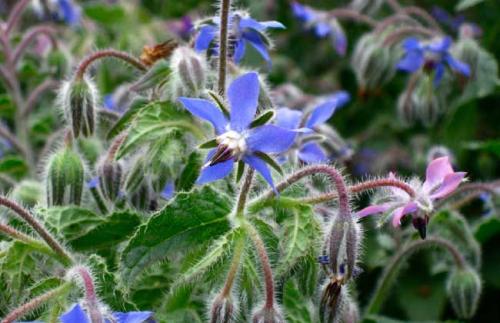
Borage Growth Habits
Borage is native to the eastern Mediterranean and is now widely planted in Europe and North America. It is a high-temperature plant, tolerant of high temperatures and rain, mainly tolerant of drought as well, but not cold-tolerant, and requires less soil.
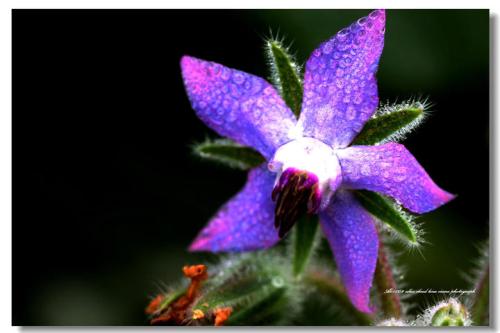
Borage Propagation Techniques
Borage can be propagated by direct sowing or by raising seedlings and transplanting. For open-field cultivation, spring sowing is generally suitable; for protected cultivation, it can be done year-round as needed. The seeds are small nutlets with a relatively hard seed coat. Before sowing, it is best to soak them in warm water for 1-2 days, changing the water daily; after soaking, the seeds sprout quickly and evenly. Then sow the treated seeds by dibbling into a prepared seedbed. Sow 3-4 seeds per hole, requiring 0.5-0.7 grams of seed per square [meter]; after sowing, cover with fine soil to a thickness of 2-3 cm. Sowing is mostly done in March-April; by May, 2-3 applications of thin fertilizer can be given to promote flower bud differentiation. To harvest seeds, on a sunny day spread newspaper under the plants and shake the branches, and the seeds will fall.
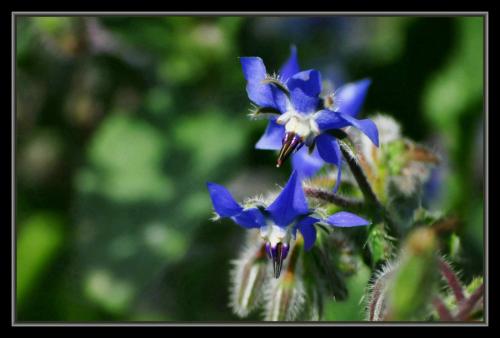
Borage Planting Techniques
1. Planting out: For seedling transplants, plant out when there are 3-5 true leaves, with a plant spacing of 20-30 cm and a row spacing of 30-40 cm; water thoroughly after planting.
2. Management: During the seedling stage, carry out weeding and loosening of the soil. For directly sown seedlings, when there are 3 true leaves, thin out weak and excess seedlings, leaving 1-2 plants per hole. Keep the field moist during the leaf-growing period, and reduce watering after flowering. Generally there are no pest or disease problems, and no pesticides are used.