A Detailed Guide to the Planting Methods and Technical Key Points for Daylily
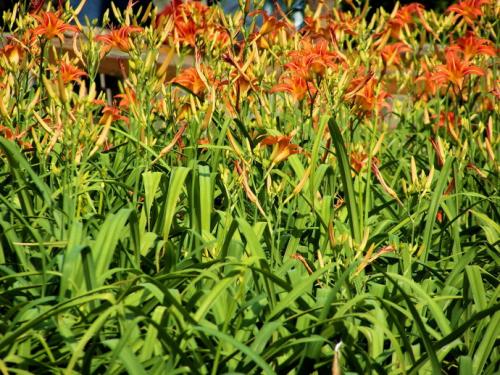
Daylily is a perennial herbaceous plant of the genus Hemerocallis in the lily family that produces plump, tender flower buds, and it has a long history of cultivation in China. Among the general public it is also known as liao chou hua, yellow grass, xuancao, deer scallion, deer sword, yi nan, yellow flower vegetable, golden needle vegetable and so on. Daylily is a flower food with very high beauty value, medicinal value and nutritional value.
Division propagation
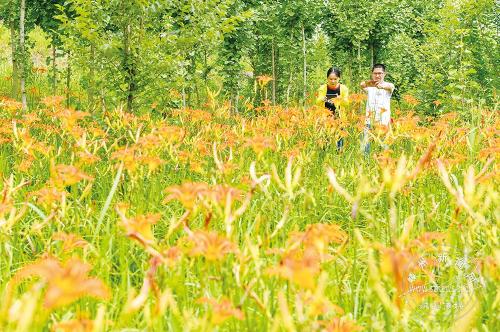
Division propagation is the most commonly used propagation method. One way is to dig out the entire mother clump and replant it in divisions; the other is to dig out part of the plants from one side of the mother clump to serve as seedlings, leaving the rest to continue growing.
When digging up and dividing the seedlings, the roots should be damaged as little as possible, and the seedlings should be planted immediately after being dug up and divided. After the seedlings are dug out, the soil should be shaken off, and they should be separated one plant at a time, or every 2-3 bud sections should form one clump, broken off from the mother plant. The old roots, decayed roots and diseased roots that grew 2-3 years earlier at the lower part of the rhizome should be cut off, keeping only 1-2 layers of new roots, and the overly long roots should be cut off, leaving about 10 cm in length.
Slice seedling propagation
After the daylily has been harvested, dig out the root clumps, then separate them one plant at a time according to the bud sections, remove the hairy leaves around the shortened stem and the already withered leaves, then leave the leaves 3-5 cm long and cut off the upper part; next use a knife to first split the rhizome longitudinally from top to bottom into two slices, then decide according to the thickness of the rhizome whether each slice needs to be divided further. If the rhizome is thick and strong, it can continue to be split longitudinally into several strips. In this way, each plant can generally be divided into 2-6 plants, and at most up to 10 plants. Note that when dividing and cutting, each seedling slice must have a "seedling stem" on top and fibrous roots below. After dividing and cutting, soak the seeds in a 1200-fold dilution of 50% carbendazim for disinfection for 1-2 h, take them out, spread them in the sun, then mix them with fine soil or plant ash mixed with loess for seedling raising.
Cutting propagation
After the daylily has been harvested, select from the middle and upper parts of the flower stalk those with fresh green bracts and obvious growth points below the bracts, cut them off leaving about 15 cm above and below the growth point, insert them flat into the soil in a slight arc, so that both the upper and lower ends are buried in the soil, with the part of the bracts that has the growth point exposed above the ground, and cover lightly with fine soil for protection; or insert them obliquely at a 30 degree angle, with the depth such that the soil can just cover the buds. Cuttings cut on the same day should preferably be inserted completely on the same day, to prevent the cuttings from losing water and affecting survival. On the day after insertion and the next day, they must be watered thoroughly, so that the cuttings are in close contact with the soil. Afterward the soil moisture should be maintained at about 40%. After about 1 week they will grow roots and sprout. In winter, pay attention to cold protection. After 1 year of cultivation, the number of tillers per plant can be as many as 12, and at least 5, and they can bloom the following year.
Seed propagation
Carry out artificial pollination 10-60 min after the flowers open. The suitable temperature for daylily fertilization is 28-32 degrees C, and the relative humidity is 53%-82%. To prevent natural cross-pollination and "mixed flowers", the flower buds can be tied with thread. However, bagging is not suitable, to avoid the temperature inside the bag becoming too high. To increase the fruit-setting rate, starting 2 days before flowering, every 7-10 d spray the leaves with 0.1% borax, or a 1:300 dilution of potassium dihydrogen phosphate, or 2% superphosphate, or 1% urea and potassium chloride and other aqueous solutions, until 20 days after the last batch of capsules has set fruit. Daylily has the highest fruit-setting rate on the top branch and the second branch of the main inflorescence. Looking at the node position, the first and second fruit nodes have the highest fruit-setting rate. For this reason, for the first to fourth branches, the flower buds on the 1st-4th fruit nodes can be retained, and for the top branch of the main inflorescence the flower buds on the first and second fruit nodes can be retained, while the remaining flower buds should be thinned out, so that nutrients are concentrated in the fruit and seeds.
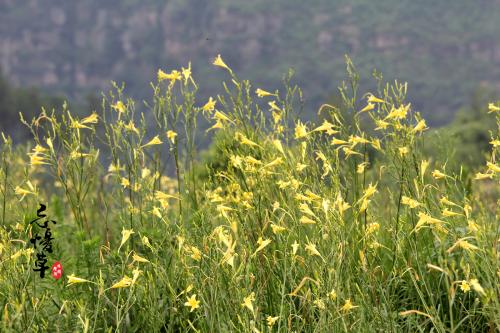
1. Reasonable close planting. Using close planting can give play to the population advantage, increase the number of tillers, bolting stalks and flower buds, and achieve the goal of increasing yield. Generally, wide and narrow row cultivation is mostly used, with wide rows 60-75 cm, narrow rows 30-45 cm, hill spacing 9-15 cm, planting 2-3 plants per hill, planting 45,000-75,000 plants/hm2, and reaching 1.5 million-2.25 million plants/hm2 in the full production period.
2. Appropriate deep planting. The root mass of daylily grows from around the shortened stem, and has the characteristic of 1 layer per year, with the rooting position moving upward year by year from bottom to top, so appropriate deep planting is conducive to the plant surviving and growing vigorously, and the suitable planting depth is 10-15 cm. After planting, fixed-root water should be applied, and before the autumn shoots emerge the soil should be kept moist regularly, to benefit the growth of new shoots.
3. Intertillage and earthing up. Daylily has a fleshy root system and needs a fertile and loose soil environment to benefit the growth and development of the root mass. During the growth period, according to growth and soil compaction, intertillage should be carried out 3-4 times, with the 1st time carried out when the young shoots are just emerging, and the 2nd-4th times carried out during the bolting period together with intertillage for earthing up.
4. Fertilization. Daylily requires sufficient winter fertilizer (base fertilizer), early application of seedling fertilizer, heavy application of bolt fertilizer, and supplementary application of bud fertilizer.
Winter fertilizer (base fertilizer). It should be carried out when the aboveground part of the daylily stops growing, that is, after the autumn shoots wither from frost or at planting time, mainly with organic fertilizer, applying 30,000 kg/hm2 of high-quality farmyard manure and 750 kg/hm2 of superphosphate.
Seedling fertilizer. Seedling fertilizer is mainly used for emergence and leaf growth, promoting early and rapid leaf growth; seedling fertilizer should be applied early rather than late, and should be applied as a top dressing when daylily begins to sprout, with 150 kg/hm2 of superphosphate and 75 kg/hm2 of potassium sulfate.
Bolt fertilizer. The bolting period of daylily is an important period of transition from vegetative growth to reproductive growth, and this period requires more fertilizer, so it should be applied as a top dressing when the flower stalks begin to emerge, with 225 kg/hm2 of urea, 150 kg/hm2 of superphosphate and 75 kg/hm2 of potassium sulfate.
Bud fertilizer. Bud fertilizer can prevent daylily from fertilizer deficiency and premature aging, increase the bud-setting rate, extend the picking period and increase yield; it should be applied within 7-10 days after picking begins, with 75 kg/hm2 of urea as a top dressing. At the same time, during the picking period, about every 7 days spray the leaves with 0.2% potassium dihydrogen phosphate, plus 0.4% urea, plus a 1%-2% superphosphate (filtered) aqueous solution, and additionally spray once with 15-20 mg/kg of 920 after 17:00, which has an obvious effect on strengthening buds and preventing bud shedding.