Key Points and Management Methods for Growing Baby Chinese Cabbage
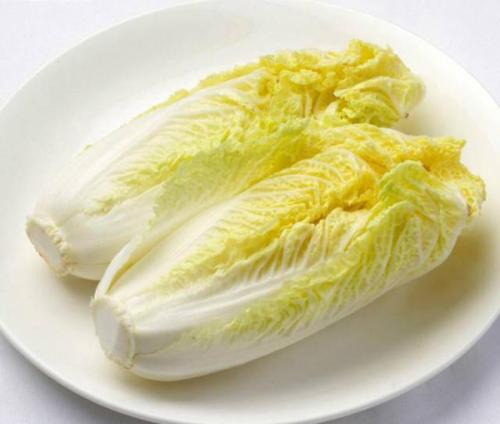
Baby Chinese Cabbage (Baby Chinese Cabbage or Baby Cabbage; the translation has yet to be standardized), also known as miniature napa cabbage, is a new vegetable variety introduced from Japan (some say Korea), and has begun to gain favor in China in recent years. Its appearance is the same as that of napa cabbage, but its size is only one-fourth to one-fifth that of napa cabbage, like a "simulated miniature version" of napa cabbage, which may be why it is called baby Chinese cabbage.
Baby Chinese Cabbage Growing Techniques
1. Sowing.
Early spring sowing: from mid-January to early March, sow in batches for seedling raising in greenhouses with small tunnels added inside; in the early period, it is best to use electric heating wires for warming.
Autumn sowing: sow and raise seedlings from early August to mid-September; generally, 128-cell plug trays with substrate are used for seedling raising to ensure the seedlings have enough room to grow, with 40-50 grams of seed used per mu.
2. Seedling stage management.
The temperature is generally controlled at 20-25°C. When 70% of seedlings have emerged, the daytime temperature should be controlled at 20-22°C, and the night temperature should be 13-16°C, to prevent vernalization and bolting caused by excessively low night temperatures. For seedlings raised in mid-January, when the seedlings have five true leaves and one heart leaf, they can be planted in the greenhouse and covered with plastic film. For seedlings raised in early February, when the seedlings have three true leaves and one heart leaf, they are planted in the greenhouse or small tunnel with plastic film mulching added.
For sowing in late February, when the seedling age is 20-25 days, plant in a small tunnel or use plastic film cultivation. Autumn seedling raising occurs during the high-temperature period, so shaded seedling raising is best to reduce direct sunlight, and micro-sprinkler facilities should also be used to increase humidity and create environmental conditions suitable for the growth of vegetable seedlings. It is advisable to cover with black shade netting; if the plug trays are placed in the greenhouse, directly cover the shade netting on the roof or frame of the greenhouse so that the plug trays form dappled shade.
In summer, choose a plot with good ventilation, dryness, and drainage to build the seedling bed. Generally, 5-7 days before planting, carry out hardening of seedlings by changing light and temperature, remove the shade netting, and water once heavily, so that the seedlings adapt to the open-field environment, with flexible management according to the weather.
3. Field management
Baby Chinese cabbage has a short growing period, so fertilizer and water management should be strengthened to promote rapid growth of the head. After the seedlings recover, apply 0.5% urea by watering to make the seedlings grow robustly; when entering the rosette stage and having 10 true leaves, apply 40 kg per mu of 45% (15-15-5) compound fertilizer; during the heading stage, spray potassium dihydrogen phosphate on the leaves 2-3 times, which helps the head become solid, preferably on cloudy days or at 4 p.m. on sunny days.
Water requirements differ at different growth stages. In early spring, the water requirement is low; after the seedlings recover, almost no watering is needed, as too much watering, together with low temperatures, makes disease more likely. When the leaf area gradually increases, growth speeds up, the root system deepens, and the water requirement is much greater than at the seedling stage, but during the rosette stage the water must not be excessive, to avoid excessive vegetative growth and susceptibility to disease; only during drought should small amounts of water be applied as appropriate, and in the late heading stage water should be controlled. Remove old leaves and diseased leaves in time to increase ventilation and reduce the occurrence of disease.
4. Pest and disease control
Diseases. The main seedling-stage diseases are damping-off and Rhizoctonia rot, which can be controlled by spraying 72.2% Previcur at 400-600 times dilution or 64% Shaduji at 500 times dilution, spraying 2-3 times during the entire seedling stage; do not arbitrarily increase the dosage, to avoid phytotoxicity. The main diseases during the growing period are downy mildew, soft rot, viral disease, and black rot.
Downy mildew can be controlled with 72% Kailu at 600-700 times dilution, soft rot can be controlled with 72% agricultural streptomycin sulfate at 3000 times dilution, and viral disease can be controlled with 20% moroxydine hydrochloride-copper at 500 times dilution, used 3 times consecutively, spraying once every 7-10 days.
Insect pests. The main insect pests are cabbage webworm, flea beetle, imported cabbageworm, diamondback moth, beet armyworm, tobacco cutworm, aphids, etc. Cabbage webworm, imported cabbageworm, and diamondback moth can be controlled with Bacillus thuringiensis at 300-800 times dilution, flea beetle can be controlled with 2.5% Decis at 6000 times dilution, and aphids can be controlled with 36% Shiyaluo at 1500-2000 times dilution.
5. Harvesting
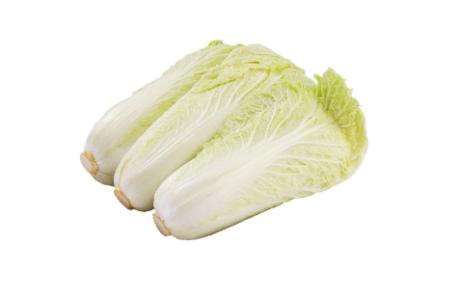
Baby Chinese cabbage is generally harvested 50-55 days after planting, when the compactness is 70-80%; if too tight, it is not convenient for packaging. Remove the outer leaves, process each plant into a head with a net weight of 170-200 grams, put 3 heads per bag, then box them, with 30 bags per box; after precooling, they can be transported and sold.
The above is an introduction to baby Chinese cabbage growing techniques. I hope this article can be helpful to everyone. If you want to learn more, you can go to the Agricultural Friends--Baby Chinese Cabbage Channel to see more information about baby Chinese cabbage.
Nutritional Value