Key Techniques for Growing Water Arum and Field Management Methods
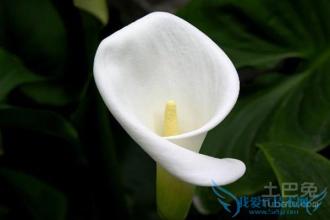
Water arum (Calla palustris L.) is a perennial aquatic herb. The rhizome is creeping, cylindrical and stout, reaching up to 50 cm in length; the scale leaves are lanceolate and acuminate. On mature stems the petioles are cylindrical, with sheaths at the lower part; the sheath is 7-8 cm long; the leaf blade is 6-14 cm long. The peduncle is 15-30 cm long; the spathe is green on the outside and white on the inside, with a 1 cm long tip, persisting in fruit and not enlarging. The spadix is 1.5-3 cm long and about 1 cm thick at flowering; the infructescence is nearly spherical, broadly ellipsoid, with a stalk 5-7 mm long. Flowering period is June-July, fruiting period is August.
Planting Methods
Carry out crop rotation as required, till the land thoroughly, apply sufficient base fertilizer, and irrigate enough to ensure good soil moisture. Select high-quality varieties and dress the seed with Xin Gaozhi Mo (New High-Lipid Film), which can repel underground pests and diseases, effectively kill harmful pathogens, isolate viral infection, without affecting the imbibition and germination function, strengthen respiration intensity, and improve the seed germination rate. Sow at the proper time and arrange the planting density reasonably.
(1) Carefully select taro seed: seed taro should be of pure variety, with strong terminal buds, free of mechanical damage and free of pests and diseases. The size of seed taro is best at 25 corms per kg. When keeping seed in the field, choose plants with higher single-plant yield as seed.
(2) Crop rotation: taro should not be grown continuously; generally water arum and rice are rotated once every 2-3 years. Taro fields should be given plenty of organic fertilizer as base fertilizer, and the soil should be fertile clay soil. When puddling and plowing the field, mix in a large amount of organic fertilizer such as barnyard manure and green manure as base fertilizer, and form low beds with ditches 140-150 cm wide, or plant without forming beds.
(3) Determine planting density according to variety: varieties of the kui taro type and multi-head taro type are relatively tall and are planted more sparsely, about 800 plants per 667 sq m; varieties of the multi-corm taro type are relatively short and can be planted appropriately densely, about 1000-1200 plants per 667 sq m.
(4) Pay attention to topdressing potassium fertilizer: generally topdress 5-6 times, with an interval of 15-20 days each time. On the basis of applying sufficient organic base fertilizer, early topdressing should be light, as high concentration easily causes stiff seedlings; from mid-July to mid-August, apply one heavy topdressing each time. These two applications need added potassium fertilizer.
(5) Throughout the entire cultivation process of water arum, the field water depth must be kept at 3-5 cm. Throughout the entire cultivation process of water arum, the field water depth must be kept at 3-5 cm. Fertilize promptly according to crop needs; generally topdress 5-6 times, with an interval of 15-20 days each time, achieving a reasonable and matching NPK ratio, while spraying Xin Gaozhi Mo to enhance fertilizer efficiency. Spray Zhuang Jing Ling at the proper time, which can make the plant stems stout, the leaves thick, the leaf color fresh and tender, and the plant luxuriant, with a strong natural taste. At the same time it can enhance disaster resistance and reduce the amount of pesticides and chemical fertilizers.
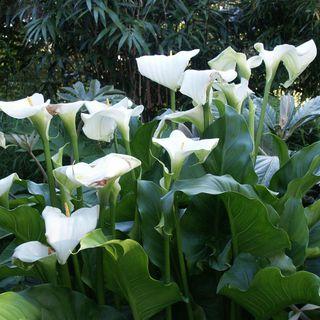
1. Water layer management: In the early growth stage of water arum, keep 2 to 5 cm of shallow water in the field to promote root development. Later, as the plant grows, appropriately deepen the water level to 5 to 8 cm; it should not be too deep, so as to maintain good aeration. In the midsummer season of July to August, when the temperature often reaches above 30 degrees Celsius, in order to lower the soil temperature, the water level can be deepened to 13 to 17 cm, and cool water should be irrigated in the morning and evening with timely water changes. After the autumn cools, the water level should gradually become shallower; about 20 days before harvest, drain the field water and keep the soil moist.
2. Topdressing: On the basis of applying sufficient base fertilizer, topdressing still needs to be done in split applications. Generally, after the seedlings emerge in directly sown taro fields or after the transplanted taro seedlings have established after raising seedlings, apply 1 topdressing of dilute fertilizer water. Apply 75 to 120 kg of urea per hectare by broadcasting to promote seedling growth. Afterwards, when the mother taro and daughter taro begin to swell, combine with earthing up and topdress 2 to 3 times; generally when the plants grow tallest, when the underground mother taro begins to swell and subsequently when the daughter taro begins to swell, apply 1 topdressing each time, applying about 22500 kg of decomposed manure per hectare along the planting rows each time, plus 300 to 450 kg of potassium sulfate, and earth up after topdressing. After that, no further topdressing should be done, so as to avoid excessive vegetative growth of the plants in the late stage and delayed maturity.
3. Removing old leaves and sprouting leaves: In the middle and late growth stages, remove the yellowing old leaves on the outer part of the plants, preserving green leaves, so as to improve field ventilation and light penetration. For the tiller seedlings formed by the premature sprouting of the terminal buds of daughter taro growing on the newly formed mother taro, their leaf clusters must be bent over or removed in time; then cover them with soil, so as to avoid affecting ventilation and light penetration, consuming nutrients, and making the daughter taro thin and small. It is mainly used in the shallow-water and wetland greening of garden waterscapes.