A Detailed Guide to Pittosporum Planting Methods and Technical Key Points
Pittosporum (scientific name: Pittosporum tobira) is an evergreen shrub or dicotyledonous plant of the Pittosporaceae family and the Pittosporum genus, reaching up to 6 m tall. Its young branches are covered with brown soft hairs and bear lenticels. The leaves are clustered at the tips of the branches, biennial and leathery. The umbel or corymbose umbel is terminal or nearly terminal; the flowers are white and fragrant, later turning yellow. The capsule is globose, with ridges or triangular, 12 mm in diameter. The flowering period is from March to May, and the fruit ripening period is from September to October.
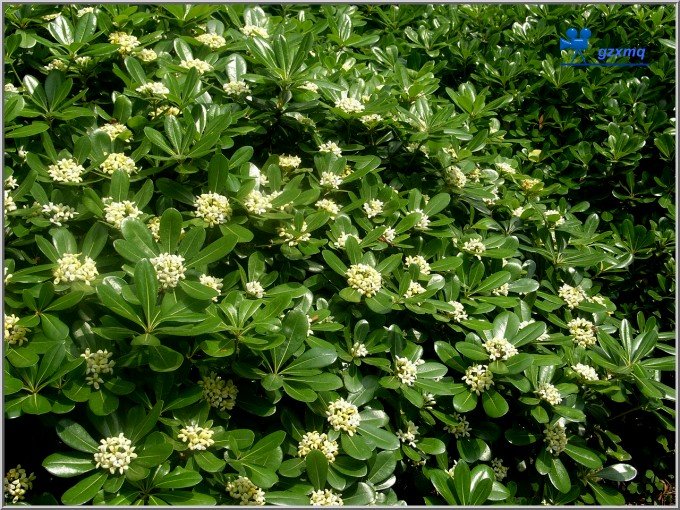
Growth Habits
In South China, it can safely overwinter under full light. It grows best from the Yangtze River basin to the north of Nanling. North of the Yellow River, it is mostly grown in pots and kept indoors to protect it from the cold during winter. Its adaptability to light is also fairly strong; it is relatively shade-tolerant and also quite tolerant of strong sunlight, but grows best in semi-shade.
It likes light and also grows well in semi-shade. In summer it can be placed outdoors, and if conditions permit, it can be placed in a cool shaded spot. Strong light does no harm to the plant. It likes a warm, humid climate and fertile, moist soil, is tolerant of slight saline-alkaline conditions, and can resist wind and moisture. The suitable growth temperature is 15-30°C. In winter, place it in a cool but frost-free indoor area. Pittosporum can endure freezing temperatures, but for good growth, the minimum night temperature should be kept above 13°C.
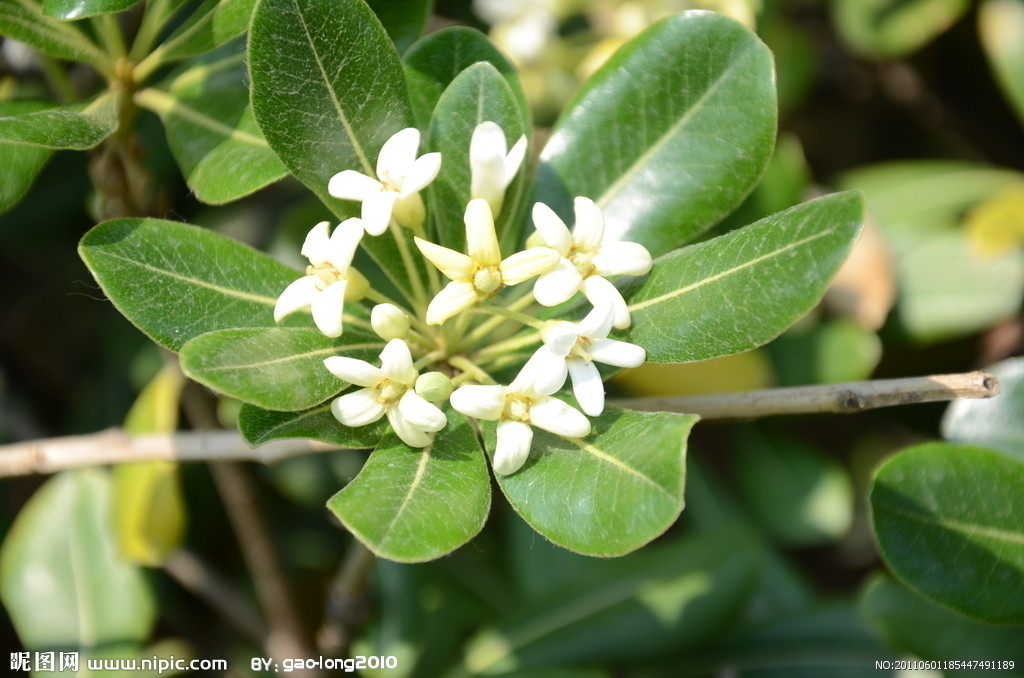
How to Grow Pittosporum
1. Potting: When potting pittosporum, it must be planted with its original soil ball, placed in a deep pot. Add a ring of hard plastic about 5-8 cm high along the upper inner rim of the pot, and place plenty of broken tiles at the bottom of the pot. When potting, the roots can be raised accordingly, with the potting soil slightly lower than the plastic ring, so that deep-pot shallow planting does not affect survival.
2. Light: Pittosporum has fairly strong adaptability to light. In summer it can be placed outdoors, and if conditions permit it can be placed in dappled shade. Strong light does no harm to the plant.
3. Temperature: Pittosporum requires air humidity of around 50%. The suitable growth temperature is 15-30°C. In winter, place it in a cool but non-freezing indoor area, with a minimum temperature of 5°C.
4. Watering: Pittosporum consumes a large amount of water in summer, so it should be watered frequently. In winter, if the temperature is relatively low, the amount of watering should be reduced accordingly.
5. Fertilizing: During the growing season, apply fertilizer once every two weeks to pittosporum; no fertilizer is needed at other times.
6. Repotting: Young potted pittosporum plants should be repotted once a year, while mature plants should be repotted once every 2-3 years. The potting soil is prepared by mixing 1/3 leaf mold with 2/3 clay or loam. When repotting, dead roots must be pruned away, and new culture soil rich in organic matter should be added to the pot.
7. Pruning: Pittosporum has strong branching ability and is tolerant of pruning. In early spring it needs pruning and shaping to maintain a graceful tree form. If you want to inhibit its growth and promote more branches and leaves, cut the top when it grows to the corresponding height. Some also prune it into various shapes.